Shoppers looking for a verifiable reduction in sugar
You want to distinguish a ‘reduced sugar’ claim from a recipe that is simply lower in fat, and find out how much sugar the label says it contains.


If reducing sugar is your priority, look for a clear ‘reduced sugar’ claim, then check the ‘of which sugars’ figure per 100 g or 100 ml. A dressing described as ‘light’ may be lower in fat without meeting this criterion. Before ordering, also check the ingredients and allergens in the specific recipe you’ve chosen.
You want to distinguish a ‘reduced sugar’ claim from a recipe that is simply lower in fat, and find out how much sugar the label says it contains.
You’re looking for a ready-to-use sauce described as ‘light’ in terms of fat. Sugar and salt are still figures you’ll need to check separately.
You check the ingredients in the exact recipe before ordering, particularly if mustard, milk or other allergens are a concern for you.
Start with what matters most to you: reduced sugar, a recipe that’s lower in fat, or the ingredients. The same ‘light’ claim doesn’t necessarily meet all three needs.
| Criteria | What to check | Who it’s for |
|---|---|---|
| Reduced sugar | Look for the exact claim, then compare the ‘of which sugars’ figures on the same per-100 g or per-100 ml basis. | If I’m ordering a lower-sugar dressing, I want to distinguish a stated reduction from the amount of sugar in the product. Around 44% of shoppers rank this check as their top priority. |
| Fat and everyday use | Check the fat, sugar and salt figures, and make sure the pack size suits how often you’ll use it. | If I’m mainly looking for a ready-to-use sauce that’s lower in fat, I don’t want to confuse that with a reduction in sugar. This is the priority for around 33% of shoppers. |
| Ingredients and allergens | Check the ingredients list and allergens for the specific pack you plan to order. | If certain ingredients are a problem for me, I need to check the recipe rather than rely on its name alone. This is the main concern for around 23% of shoppers. |
A dressing may be described as lower in fat without making any claim about reduced sugar. These claims refer to different criteria.
If sugar is a key factor in your choice, look for an explicit claim and check the ‘of which sugars’ figure too.
A balsamic, tomato or honey flavour doesn’t tell you how much sugar the dressing contains.
Compare the ‘of which sugars’ figures on the same basis, then check the fat, salt and ingredients according to your priorities.
A claim about sugar or fat doesn’t tell you everything about the ingredients. Depending on the recipe, it may contain allergens such as mustard or milk.
If you have a relevant allergy or intolerance, check the details for the exact product before placing your order.
The range includes dressings described as light or lower in fat, with recipes such as plain, fine herbs and shallot.
The brand offers, among other options, plain and mustard-flavoured lower-fat dressings.
Amora’s light mustard dressing is a flavoured recipe available in a 38 cl pack.
These two Maille dressings give you different recipes to consider for salads. If you’re buying because you want to reduce your sugar intake, check the exact claim and nutrition information for each one before choosing.
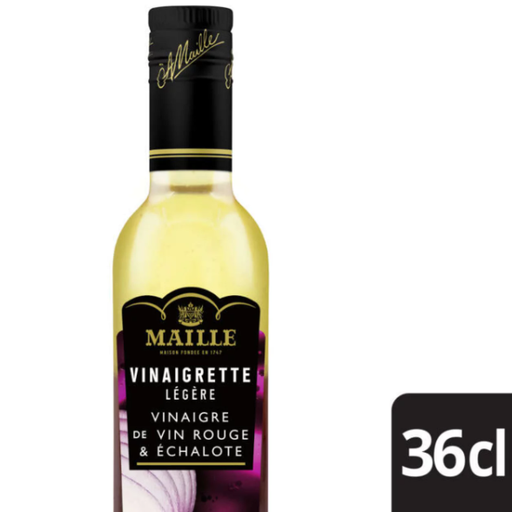 Image unavailable
For salads and raw vegetables, compare the ‘of which sugars’ figure per 100 g before choosing this recipe.
If mustard or sesame is a concern for you, check the exact product labelling and storage instructions after opening.
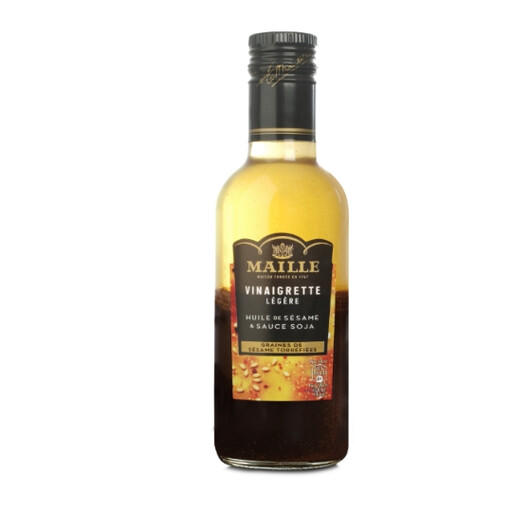 Image unavailable
For a rice salad, check the nutrition information for this soy and sesame recipe rather than guessing its sugar content from the words ‘Light Soy’.
If soy, wheat, sesame or mustard is a concern for you, check the allergen information for the product you choose.
Under European Union Regulation (EC) No 1924/2006, a claim that a nutrient has been reduced requires a decrease of at least 30% compared with a similar product. A dressing simply described as ‘light’ doesn’t necessarily meet the criteria for a reduced-sugar product.
Before comparing the figures, check the ‘of which sugars’ line on the same basis, per 100 g or per 100 ml. The DGCCRF explains that presenting nutrition information per 100 g or 100 ml makes it easier to compare prepacked foods.
No: ‘light’ may refer to a reduction in fat, not sugar. Auchan’s listings for lower-fat dressings show why it’s important to check the fat and ‘of which sugars’ figures separately for each recipe.
Check the labelling for the exact product and any allergens that concern you. Depending on the dressing, the recipe may contain mustard, milk or other allergens. In France, consumers must be informed if substances or products listed in Annex II of Regulation (EU) No 1169/2011 are present in the finished product, as Légifrance explains.