For a night in, only choose pasta described as ‘reduced in sugars’ if the claim is based on a comparison with a similar product. ‘Wholemeal’ or ‘high-protein’ alone isn’t enough. Compare the ‘of which sugars’ figures on the same basis, then consider the sauce, portion sizes and pasta shape. If carbohydrates are your priority, check the ‘carbohydrates’ figure too.
Who is this choice for?
People looking for a verifiable reduction in sugars
You want to tell a comparative claim apart from a simple sugar value shown on the pack. Before choosing, check which similar product was used for the comparison and how much of a reduction is claimed.
People putting together a meal to share
You choose pasta to go with the sauce and toppings, and decide how much to serve. Anses distinguishes sugars from starches, so the pasta’s ‘of which sugars’ figure alone doesn’t tell you everything about the whole dish.
People prioritising a different carbohydrate profile
Your priority is the carbohydrate content rather than a ‘reduced in sugars’ claim. Konjac or soya alternatives may be worth comparing, provided you check the ingredients and choose a format that suits your recipe.
What should you check?
First decide whether your priority is a proven reduction in sugars, the carbohydrates in your recipe or the dish you’re planning to serve. You can then compare the labels of products that suit your evening.
| Criteria |
What to check |
Who is it for? |
| Claimed reduction in sugars |
The similar product used as a reference, the stated reduction and the ‘of which sugars’ figure per 100 g. |
I want to distinguish a proven reduction from a sugar value that simply looks low. Around 33% of consumers put this evidence first. |
| Sugars in the whole dish |
The nutritional information for the pasta and sauce, as well as the portions you plan to serve. |
If I’m preparing a meal for several people, the sauce and serving size also matter to my choice. This is a priority for around 27% of consumers. |
| Carbohydrates |
The ‘carbohydrates’ and ‘of which sugars’ figures separately, followed by the ingredients in the product you’re considering. |
I’m mainly looking for a different carbohydrate profile and may consider an alternative to wheat pasta. Around 20% of consumers prioritise this. |
| Recipe and guests |
A shape that suits the dish and the ingredients list for the product you choose. |
To serve a dish that works for my recipe and guests, I start with the format and ingredients. This comes first for around 20% of consumers. |
Common misconceptions to avoid
-
Assuming all carbohydrates are sugars
Anses distinguishes sugars from starches, which are also carbohydrates. So an alternative chosen for its carbohydrate content won’t necessarily meet your needs if you’re looking for pasta with a ‘reduced in sugars’ claim.
Depending on your goal, compare either the ‘carbohydrates’ or ‘of which sugars’ figure on the labels of the products you’re considering.
-
Taking ‘wholemeal’ or ‘high-protein’ to mean ‘reduced in sugars’
These terms describe different characteristics. A product’s fibre or protein values don’t, by themselves, prove that its sugar content has been reduced compared with a similar product.
Check each point separately. According to European Commission guidance, a ‘reduced in sugars’ claim requires a reduction of at least 30% compared with a similar product.
Brands to consider
Barilla
The range includes classic, wholemeal and Protein+ pasta, which you can compare according to what matters for your recipe.
- Barilla lists 6.5 g of fibre and 3.5 g of sugars per 100 g for its wholewheat Penne Rigate.
- These figures apply to this particular product; ‘wholewheat’ doesn’t prove a reduction in sugars.
Panzani
The brand offers a range of pasta shapes, as well as wholewheat and Les Protéinées ranges.
- Panzani describes its Les Protéinées range as made with durum wheat, wheat protein and peas.
- The term ‘high-protein’ doesn’t, by itself, tell you whether the product has a lower sugar content than a similar one.
Lustucru
Worth considering if cooking time is important when planning your meal.
- Lustucru recommends a 3-minute cooking time for its quick-cook spaghetti.
- This cooking time applies to this particular product and says nothing about a reduction in sugars.
Carrefour
The retailer sells pasta under its own brand as well as products from other brands, giving you a choice of formats to compare.
- The products listed include pasta from Carrefour, Barilla, Panzani and Lustucru.
- Being stocked in a particular aisle doesn’t tell you the nutritional values of each product: check its label.
E.Leclerc
The retailer’s ranges include a variety of shapes, including wholemeal and gluten-free pasta.
- E.Leclerc’s listings include Turini wholewheat penne and Bio Village wholewheat twists.
- If you’re choosing based on sugars, compare the nutritional information and any claims made for the specific product.
Related Joybuy product
This konjac option is for people considering an alternative to wheat pasta for a sauce, soup or stir-fry. It shouldn’t be confused with pasta carrying a ‘reduced in sugars’ claim.
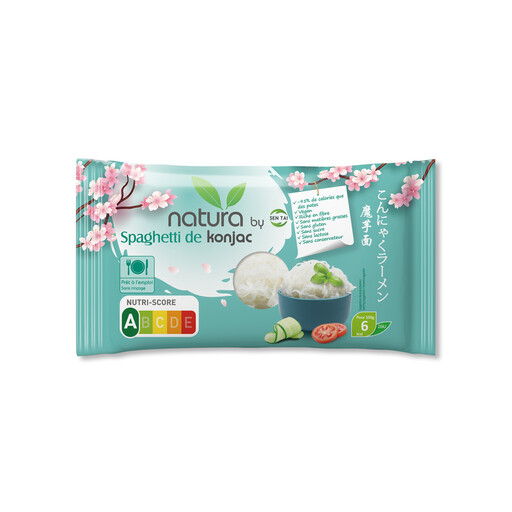 Image unavailable
Natura Konjac Spaghetti 250 g
Worth considering if you’d like to try a konjac alternative in a dish with sauce, a soup or a stir-fry.
250 g pack: check how much you’ll need for your guests and read the nutritional information on the packaging.
View on Joybuy
Frequently asked questions
What does ‘reduced in sugars’ mean for pasta sold in France?
It’s a comparative claim, not simply a low sugar value on the pack. According to European Commission guidance, the reduction must be at least 30% compared with a similar product. Check the stated comparison before relying on this claim.
Is low-carbohydrate pasta necessarily reduced in sugars?
No: the two terms refer to different information. Anses distinguishes sugars from starches. Compare the ‘carbohydrates’ figure if that’s your priority. If you’re looking for a reduction in sugars, check the ‘of which sugars’ figure and any comparative claim.
How should you store dried pasta after buying it?
Follow the instructions for the product you’ve bought. For its quick-cook spaghetti, Lustucru recommends storing it in a cool, dry place.


