Unsalted, blanched or roasted almonds are not automatically lower in fat: the Monoprix Courses and Auchan product listings for the varieties reviewed show 52 to 57 g of fat per 100 g. For a shared office snack tin, choose plain almonds if that is what you’re looking for. Only rely on a ‘reduced-fat’ claim after comparing the product with a clearly identified reference. A flavoured mix is a different choice, even if its fat content per 100 g is different.
Who is this choice for?
Anyone looking for reduced-fat almonds
If reducing fat is your priority, compare the figures per 100 g and check which product is being used as the reference. A ‘unsalted’, ‘blanched’ or ‘roasted’ label alone does not tell you whether a product meets this need.
Anyone organising office snack breaks
For a shared tin, the pack size and storage instructions once opened matter just as much as the type of almonds. Keep the original packaging handy so everyone can identify the product.
Anyone mindful of allergens
Before filling a communal tin, check the exact packaging for almonds and any ‘may contain’ warnings. Even a short ingredients list is no reason to skip this check.
What should you check before buying?
For an office snack tin, first distinguish plain almonds from mixes, then check how the product can be shared and stored.
| What to consider |
What to check |
Who is it for? |
| Reducing fat |
Fat per 100 g, ingredients and the reference product used for any ‘reduced-fat’ claim. |
If I’m looking for genuinely reduced-fat almonds, ‘unsalted’ alone isn’t enough to decide. Around 50% of consumers prioritise a fat reduction that can be compared. |
| Pack size and storage |
Pack size and the storage instructions to follow once opened. |
For a tin that’s topped up throughout the day, I want to be able to store the product as directed on its packaging; this is the top priority for around 30% of consumers. |
| Allergens and added ingredients |
Ingredients list, ‘may contain’ warnings and any seasoning. |
In a shared space, I need to be able to clearly show what’s in the tin before anyone helps themselves. For around 20% of consumers, checking allergens and added ingredients comes ahead of other considerations. |
Common misconceptions to avoid
-
Assuming ‘unsalted’ means ‘reduced-fat’
Not having added salt relates to the salt content. The Monoprix Courses and Auchan listings for the almonds reviewed show 52 to 57 g of fat per 100 g, including for varieties that are unsalted or roasted without added salt.
Before relying on a fat-reduction claim, compare the ‘fat’ figure per 100 g with that of a clearly identified reference product.
-
Mistaking a mix for reduced-fat almonds
The Monoprix Courses listing for a Seeberger almond and cranberry mix shows 29 g of fat and 34 g of sugars per 100 g. These figures describe the mix, not plain almonds.
Check the ingredients list and compare like-for-like products if you’re looking for differences between almonds.
-
Leaving a large bag open in the tin
The listing for Auchan roasted almonds with no added salt says to seal the bag tightly and consume within 15 days of opening. Instructions may vary from one product to another.
Keep the packaging, follow its instructions and choose a quantity that suits how often the tin is topped up.
-
Removing the label from a shared tin
Almonds are an allergen. The Monoprix Courses Vico listing also mentions that the product may contain traces of peanuts and other nuts. Warnings vary by product.
Keep the label and any ‘may contain’ warnings accessible, rather than offering something whose contents can’t be identified.
Brands to know
Vico
Natur’ & Bon unroasted, unsalted almonds in a 180 g bag, according to the Monoprix Courses listing.
- The listing names almonds as the ingredient.
- It shows 53 g of fat per 100 g and mentions possible traces of peanuts and other nuts.
Auchan
Roasted almonds with no added salt in a 400 g bag, according to the Auchan listing.
- The listing gives the pack size and storage instructions for once the bag is opened.
- It shows 52 g of fat per 100 g: ‘no added salt’ does not mean ‘reduced-fat’.
Seeberger
Unsalted roasted almonds in a 150 g bag, according to the Monoprix Courses listing.
- The small bag lets you choose a limited quantity to top up the tin.
- The listing shows 57 g of fat per 100 g; check the bag for allergen warnings too.
Carrefour Le Marché
Shelled almonds in a 200 g bag, according to the Carrefour listing.
- The listing declares almonds as the ingredient.
- At 52 g of fat per 100 g, this product does not demonstrate a reduction in fat.
Nut&Me
Natural blanched almonds in a 200 g bag, described on a Carrefour listing.
- The listing makes it easy to distinguish blanched almonds from other types.
- It shows 52.52 g of fat per 100 g: ‘blanched’ does not mean reduced-fat.
An option on Joybuy
This flavoured corn snack may suit you if you’re happy to choose a mix rather than plain almonds for the office tin. It shouldn’t be chosen as a reduced-fat variety of almonds.
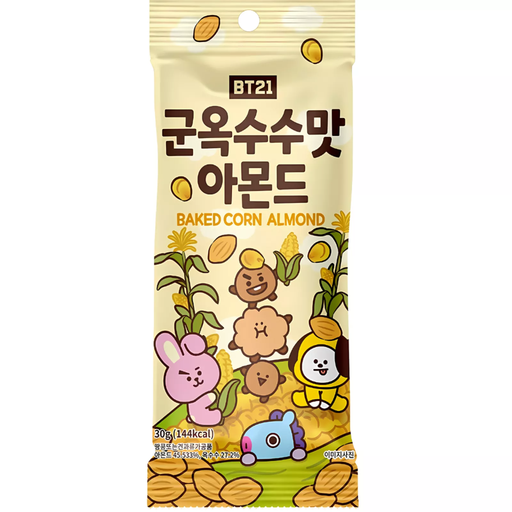 Image unavailable
BT21 almonds with roasted corn flavour, 30 g
A small portion for the office if you’re happy with a corn-flavoured product rather than plain almonds. The bag contains 30 g; its different ingredients don’t mean the almonds are reduced-fat. Before adding it to a shared tin, check the ingredients, allergens and any ‘may contain’ warnings on the packaging.
View on Joybuy
Frequently asked questions
How can I tell if almonds are reduced-fat?
Compare the fat per 100 g with that of a clearly identified reference product, then check the wording on the packaging. The Monoprix Courses and Auchan listings for the plain almonds reviewed show 52 to 57 g per 100 g; ‘unsalted’ or ‘unroasted’ doesn’t prove that the fat content has been reduced.
Are roasted unsalted almonds lower in fat than unroasted almonds?
The preparation method alone doesn’t tell you. The listings show 52 g of fat per 100 g for Auchan roasted almonds with no added salt, 57 g for Seeberger unsalted roasted almonds and 53 g for Vico unroasted, unsalted almonds. Compare the labels of the products you’re interested in.
How should I store almonds for an office snack tin?
Follow the instructions on the packaging you’ve bought and reseal the product after use. For its roasted almonds with no added salt, Auchan advises sealing the bag tightly and consuming the almonds within 15 days of opening. Don’t automatically apply this timeframe to other products.
What should be visible on a shared tin of almonds?
Keep the packaging or a label where people can check the ingredients and any ‘may contain’ warnings. The French Directorate-General for Competition Policy, Consumer Affairs and Fraud Control (DGCCRF) says that allergenic ingredients must be highlighted on the labels of prepacked foods. Check the warnings for the exact product before sharing it.


