Households replacing a fridge or freezer
If your fridge or freezer runs all the time, look for a suitable storage capacity before comparing annual consumption. ADEME and the European Commission provide both figures to help you choose.


Prioritise the appliance that makes the biggest difference to your household, rather than comparing figures directly across different categories. ADEME points out that refrigeration runs continuously, while dishwasher and cooking appliance consumption depends on the cycles you use. To compare models in the same category, check their consumption and choose a capacity that suits your needs.
If your fridge or freezer runs all the time, look for a suitable storage capacity before comparing annual consumption. ADEME and the European Commission provide both figures to help you choose.
If you run cycles regularly, consider electricity and water use alongside the capacity you need for your dishes. The Eco programme figures provided by ADEME and the European Commission offer a useful basis for comparing models.
If you use your hob or oven frequently, consider how often you cook, how many cooking zones you need and the oven’s capacity. Use ADEME’s guidance as a starting point, and relate it to how you cook.
If you want to reduce the energy consumption of your kitchen appliances, start with the area you want to improve, then compare models with a similar capacity in the relevant category. The consumers below are grouped by their main need, although any household may have other priorities too.
| Priority | What to check | Consumers concerned |
|---|---|---|
| Continuous refrigeration | Compare kWh/year and fridge and freezer capacities for models that meet the same storage needs. | If my fridge or freezer stays on day and night, I want to avoid choosing more capacity than I need. Around 36% of consumers would make this their priority. |
| Dishwasher cycles | Check kWh per 100 cycles, litres per cycle and place settings; note which programme the figures relate to. | If I wash dishes often, I want to limit water and electricity use without having to run extra cycles because the capacity is too small. This would be the main concern for around 29% of consumers. |
| Cooking on the hob | Check the number and size of the cooking zones, and make sure your pans are compatible if you’re considering induction. | If I regularly cook meals on the hob, I want a layout suited to the way I cook, rather than simply choosing a higher power rating. Around 21% of consumers would prioritise this. |
| Oven cooking | Compare usable capacity and the stated consumption for the same cooking mode across ovens of a similar size. | If I cook several dishes or large meals, I need enough room without choosing an oven that’s too big for what I usually cook. Around 14% of consumers would make this their priority. |
According to ADEME and the European Commission, refrigeration is shown in kWh/year, while dishwasher consumption is given in kWh per 100 cycles. The figures therefore relate to different types of use.
First compare appliances in the same category and with a similar capacity. Then consider how often you use them when deciding which replacement to look at.
A large fridge or freezer can be useful, but ADEME notes that a fridge’s size and features affect its consumption. An energy rating alone isn’t enough to compare appliances with different capacities.
Work out how much storage space you need before comparing the kWh/year figures for your shortlisted models.
The dishwasher consumption figure is based on a reference programme. According to ADEME, this is often the Eco programme, so the figure won’t necessarily reflect your quick or intensive cycles.
If you mainly use other programmes, check their consumption in the manual for the model you’re considering.
Worth considering for a freestanding fridge freezer or built-in oven that suits your kitchen setup.
Worth considering if the type of dishwasher installation is a key constraint in your kitchen.
Worth considering for different dishwasher formats if the fit and noise level are important to your choice.
These appliances let you explore three of the options covered here: a large-capacity fridge freezer, a tabletop dishwasher and a built-in induction hob. Compare their features with your needs and kitchen setup. Their inclusion in this selection doesn’t allow you to compare their consumption with that of an oven.
 Image unavailable
Worth considering if you need plenty of fridge and freezer space and want a four-door design. The product name lists a capacity of 467 L, Total No Frost technology and an E rating. Before comparing its consumption, check the capacity of each compartment, the dimensions and the kWh/year figure in the documentation for this model.
 Image unavailable
Worth considering if a tabletop design and capacity for 6 place settings suit your dishes. The product name lists 7 programmes, a D rating and 47 dB. Check the connections, then look at the kWh per 100 cycles and litres per cycle on the label for this model.
 Image unavailable
Worth comparing if you need the storage space offered by a 495 L multi-door appliance. The product name lists an E rating. Compare the compartment capacities, dimensions and kWh/year figure with those of appliances that meet the same needs.
 Image unavailable
Worth considering if a total capacity of 444 L meets your needs. The product name lists an E rating, frost-free operation and 40 dB. Check the fridge and freezer capacities, installation dimensions and kWh/year figure to see if it’s right for you.
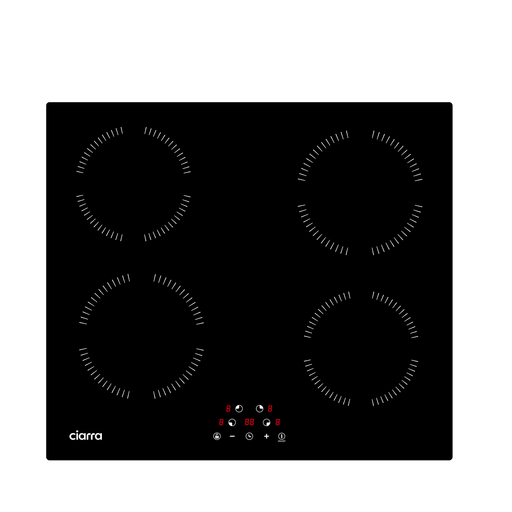 Image unavailable
Worth considering if you use several cooking zones and have pans that work with induction. The product name lists 4 zones and 9 power levels. Check the cut-out dimensions and required electrical supply. These features alone aren’t enough to determine how much energy your cooking will use.
No. Their labels are based on different periods of use. According to ADEME and the European Commission, fridges show kWh/year alongside storage capacities, while dishwashers show kWh per 100 cycles and litres per cycle. First compare models within each category, then consider your own usage to decide which appliance to look at first.
No. Consider it alongside the appliance’s capacity and consumption figure. ADEME notes that a dishwasher’s reference figure often relates to the Eco programme. If you mainly use other programmes, check their figures in the manual too.
According to the Ministry for the Ecological Transition, it gives a score out of 10 to indicate how repairable a product is. When choosing a dishwasher, consider this score as well as the electricity and water consumption shown on its label: it doesn’t measure how much energy or water the appliance uses.