
Livraison le jour même ou le lendemain

Qualité garantie

Débloquez vos offres de bienvenue: Livraison GRATUITE | Jusqu'à -80 % | 30 jours d'essai gratuits à JoyPlus
Téléchargez l'application
Choosing a red PLA filament might seem simple, but the sheer number of available options can be dizzying. Between standard PLA, tougher red PLA+, red silk PLA with its glossy finish, and even high-speed 3D filament, every spool has its specialty. Whether you're into rapid prototyping, mechanical parts, or decorative objects, finding the right 3D printing material is the key to success.
This guide is here to help you make sense of it all, understand the nuances, and choose the filament that will elevate your 3D prints.
To make the right choice, keep these points in mind. They will guide you to the most suitable filament for your printer and your projects.
Your project will dictate the choice of filament.
The vast majority of consumer 3D printers use 1.75 mm PLA filament. Always check your machine's compatibility before ordering, although this diameter has become the de facto standard. As for packaging, the 1 kg spool is the most common and often the most economical format. It offers a good balance between material quantity and easy storage.
Every filament has its own quirks. Before buying, take a look at the nozzle and bed temperatures recommended by the manufacturer. A high-speed filament won't have the same requirements as a silk PLA. Following these recommendations is the best way to prevent clogged nozzles, part detachment (the infamous warping), or poor layer adhesion.
We have selected three top contenders, each catering to a specific need.
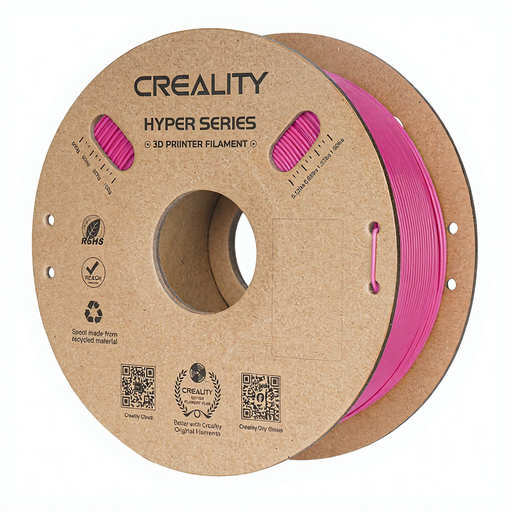
Why we like it: This filament is specifically formulated for very high-speed printing. According to Creality, its increased fluidity and rapid-cooling formula ensure excellent surface quality, even at top speeds of 600 mm/s on compatible machines.
Advantages:
Who is it for? Ideal for makers with a fast 3D printer (like the Creality K1 series, Ender-5 S1, or competing models) who want to produce prototypes or small batches at lightning speed.
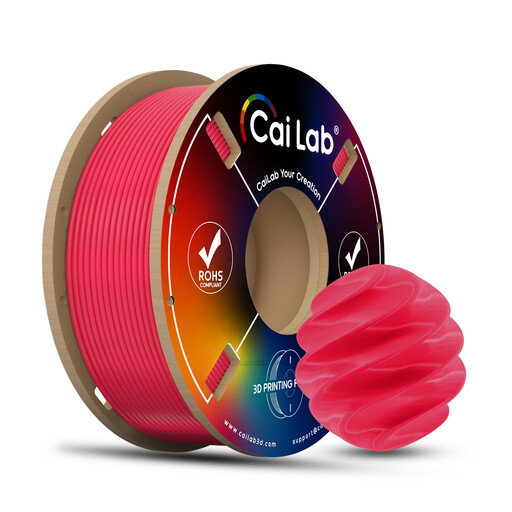
Why we like it: CaiLab's PLA+ is positioned as a versatile and more durable filament. The "Bio" label highlights the plant-based origin of PLA, while the "PLA+" designation promises improved mechanical properties over standard PLA.
Advantages:
Who is it for? This is the perfect all-rounder for makers looking for a reliable everyday red 3D printer filament. It's suitable for both beginners and more advanced users printing parts that require a step up in strength from classic PLA.
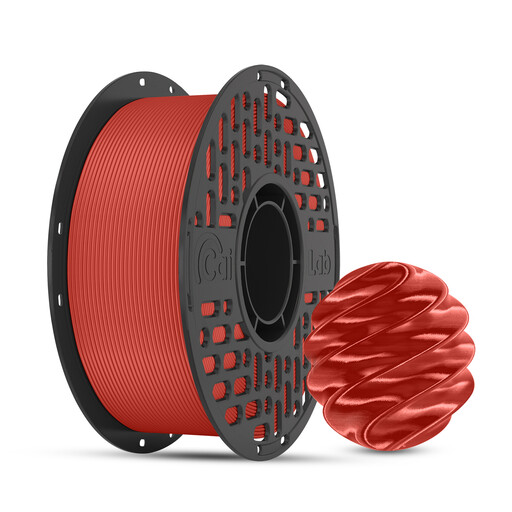
Why we like it: Here, it's all about the aesthetics. Red silk PLA contains additives that give it a glossy finish and a satin-like appearance that catches the light in a way no standard PLA can.
Advantages:
Who is it for? This filament is for creators who prioritise the visual appeal of their prints. If your goal is to create parts with an immediate "wow" factor without post-processing (sanding, painting), look no further.
Our selection covers the most common uses, but the world of filament is nearly infinite. Looking for a specific shade of red, a different material, or simply more options? Take a look at our full catalogue.
? Explore our full range of red PLA filaments
PLA+ is an "enhanced" version of PLA. Manufacturers add additives to improve its mechanical properties, most often its flexural strength and impact resistance. The result: it's less brittle than standard PLA. In practice, this makes it more suitable for creating simple mechanical parts or frequently handled objects. In terms of printing, the experience remains very similar to that of a classic PLA.
Absolutely. A high-speed 3D filament will work just fine on a standard printer. Simply use it with your usual speed settings (typically between 40 and 80 mm/s). You won't get the dramatic time savings, but the print will turn out perfectly. Conversely, pushing a standard PLA to very high speeds often results in under-extrusion and poor print quality.
To maximise the satin effect of red silk PLA, aim for the higher end of the manufacturer's recommended temperature range, while maintaining a moderate speed (often between 30 and 60 mm/s). A slightly higher temperature helps the additives responsible for the shine to bond better. Also, limit part cooling fan speed: overly aggressive cooling can dull the final finish.