
Livraison le jour même ou le lendemain

Qualité garantie

Débloquez vos offres de bienvenue: Livraison GRATUITE | Jusqu'à -80 % | 30 jours d'essai gratuits à JoyPlus
Téléchargez l'application
Buying a pack of 24 25 cl cans of Red Bull gives you a supply for the office, trips, gaming sessions or an event. However, a larger pack does not necessarily mean better value. You may get tired of a particular flavour, the sugar content varies between recipes, and it is worth checking the caffeine content before filling your fridge.
Here are the key criteria to consider when comparing 250 ml Red Bull cans and choosing the pack that best suits your habits in France.
Names such as Red Bull limited edition or flavoured Red Bull catch the eye, but do not always give a clear indication of the ingredients. A recipe with red berries, watermelon or blueberry may contain sugar, while some sugar-free products use sweeteners.
Always check:
A pack of 24 Red Bull cans may seem like a good deal, but the price per can allows for a more reliable comparison. The pack generally contains 6 litres in total, equivalent to 24 portions of 250 ml. Divide the pack price by 24, then compare offers featuring the same flavour and ingredients.
Also consider the storage space required and the best-before date shown on the cans. Buying in bulk only makes sense if the volume matches your expected consumption.
A 250 ml can of the products featured here contains approximately 80 mg of caffeine, equivalent to 32 mg per 100 ml according to the product information. Drinks containing more than 150 mg of caffeine per litre must display a specific statement indicating their high caffeine content, together with a warning aimed particularly at children and pregnant or breastfeeding women.
Remember to add up the caffeine from other drinks and products consumed during the day: coffee, tea, caffeinated fizzy drinks or food supplements. The recommendations on the packaging remain the key guidance to consult before consumption.
The 24 x 25 cl format is suitable for households, offices and events where individual portions are required. The cans are easy to store and serve chilled, but a full case naturally takes up more space than a smaller assortment.
For a regular purchase, check:
The classic versions and several flavours contain approximately 11 g of sugar per 100 ml, equivalent to around 27.5 g per 250 ml can. The Red Bull sugar-free version featured in this selection states 0 g of sugar and approximately 2 kcal per 100 ml, with sweeteners such as acesulfame K and sucralose.
This is not about saying that one recipe is better for everyone: the choice depends on your tastes, eating habits and the nutritional information you are looking for. Read the label for the exact product, as recipes may vary according to the flavour and distribution market.
Choosing the right flavour is essential to prevent a pack from being left at the back of the cupboard. Options include:
Special editions can sometimes be harder to find in shops. Before ordering, check the full product name, the images of the can and the ingredients.
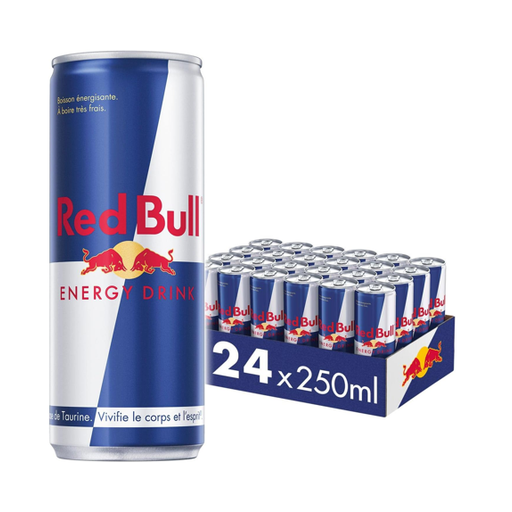
Why this choice suits this profile : The classic recipe lets you try the format without having to choose a flavoured edition straight away. It is also suitable for a shared purchase at home or in the office.
The name and pack size are clearly stated, reducing the risk of accidentally ordering a sweetened edition or a different flavour.
24 x 250 ml cans, approximately 80 mg of caffeine per can and detailed nutritional information.
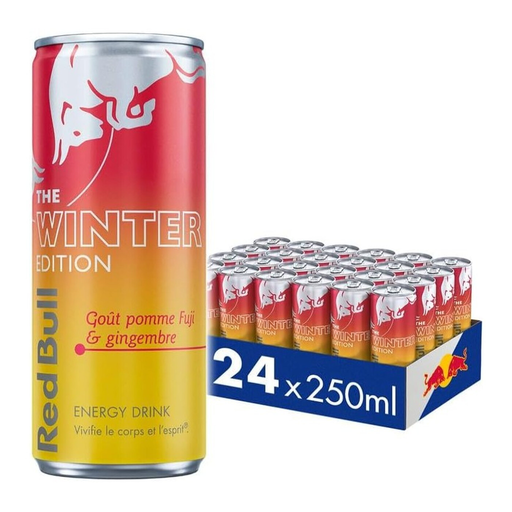
Why this choice suits this profile : This edition offers a less traditional combination, ideal if you want a change from the classic Red Bull energy drink.
The flavour is clearly specified in the title and description, helping you avoid confusing a fruit-flavoured edition with the classic recipe.
Fuji apple and ginger flavour, 24 cans and a recipe containing 11 g of sugar per 100 ml.
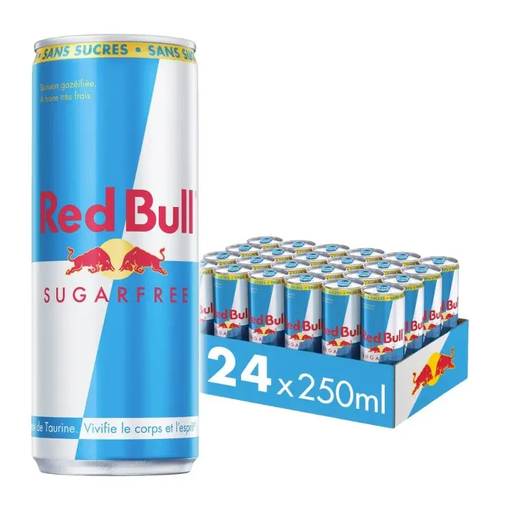
Why this choice suits this profile : The sugar-free version is aimed at people who want to avoid sugar in this type of drink, whether at the office, during a gaming session or on the go.
The product information states 0 g of sugar and clearly distinguishes the sweeteners from those used in the classic recipe.
Approximately 2 kcal per 100 ml, 24 x 250 ml cans and storage in a cool, dry place.
We have put together a complete, real-time-updated list of products that meet these strict selection criteria and European safety regulations.
Store the cans in a cool, dry place, away from direct sunlight and excessive heat. For a more enjoyable taste, serve the drink well chilled. Once opened, drink it promptly and do not leave an opened can in the fridge for several days.
The aluminium can is lightweight and recyclable, provided it is sorted according to local recycling instructions. For an event, arrange a stable storage area and avoid leaving the drinks in direct sunlight.
The products featured generally contain approximately 80 mg of caffeine per can, equivalent to 32 mg per 100 ml. Always check the label of the product you buy and add up the other sources of caffeine consumed during the day.
The classic version contains approximately 11 g of sugar per 100 ml, while the sugar-free version featured in this selection contains 0 g of sugar and uses sweeteners. The taste and energy value may therefore differ.
The best-before date is shown on the packaging or underneath the cans. As long as the pack remains unopened and is stored in a dry place at a moderate temperature, refer to this date. Once opened, a can should be consumed promptly.