
Livraison le jour même ou le lendemain

Qualité garantie

Débloquez vos offres de bienvenue: Livraison GRATUITE | Jusqu'à -80 % | 30 jours d'essai gratuits à JoyPlus
Téléchargez l'application
Buying a Red Bull energy drink in a pack makes it easy to stock up at home, in the office or for a shop. But you still need to pick the right option. A flavour you enjoy on its own might not go down well at an event, while a large pack loses its appeal if the best-before date is too close or the cans have been stored poorly.
Before you confirm a bulk Red Bull purchase, there are three pitfalls to avoid:
The Red Bull 25 cl format, which is 250 ml, works well for individual consumption and fits neatly into a fridge or cupboard. A Red Bull pack of 24 x 250 ml gives you roughly 6 litres of drink in total. This volume can be a good fit for:
For a smaller need or just to try a flavour, a 12-can pack reduces the risk of being left with unused stock. Always compare the total price against the unit price before choosing an energy drink in a pack.
The sugary options featured here often contain around 11 g of sugar per 100 ml, which is nearly 27.5 g per 250 ml can. Their energy value is usually about 110 to 115 kcal per can, depending on the recipe. According to the product sheets we've looked at, the sugar-free versions have roughly 0 g of sugar and 2 to 3 kcal per 100 ml, while containing sweeteners such as acesulfame K or sucralose.
The term "sugar-free" does not mean "caffeine-free". So when comparing a caffeinated energy drink, you need to look at two things separately:
Check the label on the product you receive: the recipe and nutritional information can differ depending on the market or the edition.
The product sheets for several items show around 32 mg of caffeine per 100 ml, which is nearly 80 mg for a 250 ml can. In the UK and the European Union, drinks containing more than 150 mg of caffeine per litre must carry a warning stating their high caffeine content and advising against consumption by children and pregnant or breastfeeding women.
Follow the recommendations printed on the can. Anyone sensitive to caffeine should be particularly careful. Also, avoid adding up caffeine sources throughout the day and do not treat an energy drink as a hydration drink during prolonged exercise.
Store the cans in a cool, dry place away from heat and direct sunlight. Before ordering a large quantity, also check the best-before date.
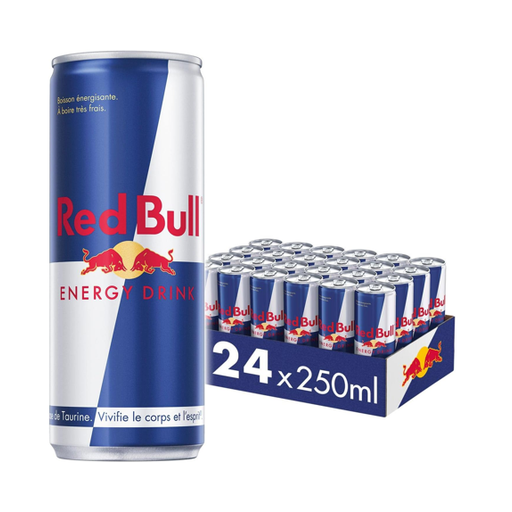
Why this suits this profile: The classic recipe lets you discover the 250 ml format without having to choose a particular flavour. The 24-can pack works well for shared consumption at home or in the office.
The product page clearly states the 24 × 250 ml pack size and the indicative values per can. This makes it easier to calculate the unit price and your total consumption.
Individual 250 ml format, 24-can pack, approximately 32 mg of caffeine and 11 g of sugar per 100 ml according to the product sheet.
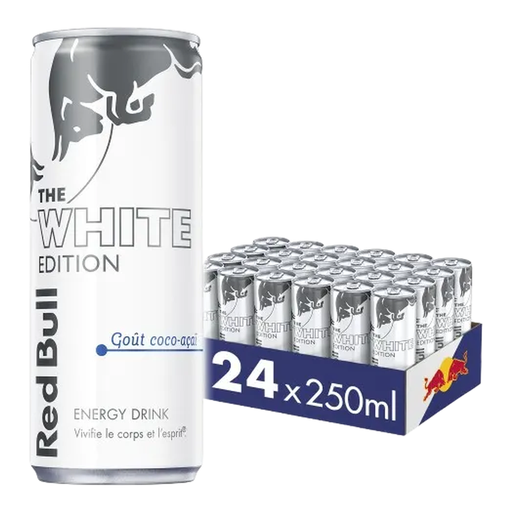
Why this suits this profile: This edition is aimed at those who enjoy a different, fruity profile with notes of coconut and acai.
The flavour profile is clearly stated: it is better not to rely on the can colour alone to guess the taste.
Pack of 24 × 25 cl, approximately 11 g of sugar per 100 ml and contains caffeine, taurine and B vitamins according to the product sheet.
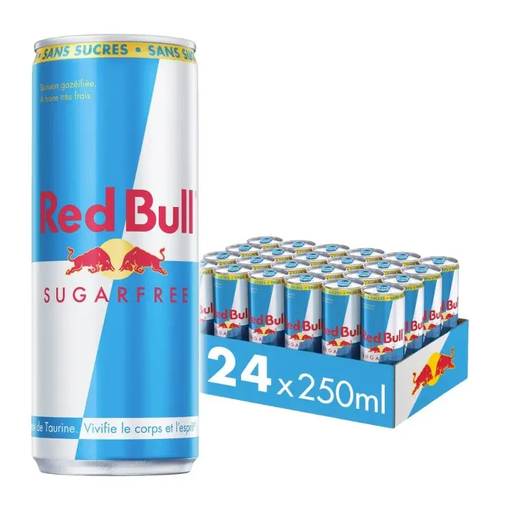
Why this suits this profile: The sugar-free version is ideal for those who want to cut down on sugar while still enjoying an individual format and a decent stock.
The product page clearly distinguishes the absence of sugar from the presence of caffeine: "sugar-free" should not be understood as "stimulant-free".
0 g of sugar and approximately 2 kcal per 100 ml according to the product sheet, with a pack of 24 x 250 ml cans.
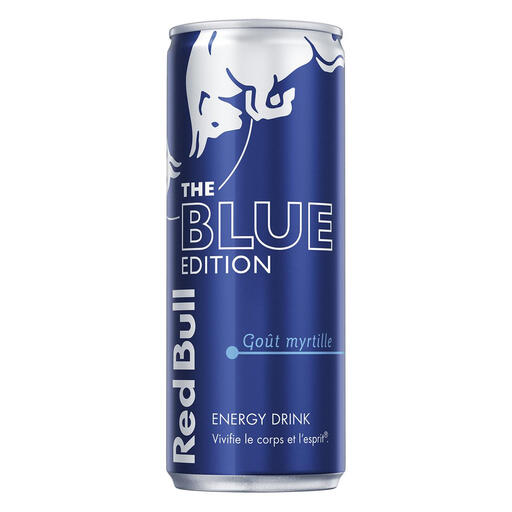
Why this suits this profile: The single can lets you try the Blueberry flavour before moving on to a larger pack.
The small format means you do not have to invest in 24 cans before confirming you like this fruity flavour.
250 ml can, blueberry flavour, approximately 45 kcal and 11 g of carbohydrates per 100 ml according to the product sheet.
We have compiled a complete, real-time selection of products that meet these criteria as well as European safety regulations.
The product sheets for several options show around 80 mg of caffeine per 250 ml can, which is nearly 32 mg per 100 ml. The exact amount should be checked on the label of the product you receive. Remember to add up any other sources of caffeine you consume during the day.
The classic version typically contains sugar, at around 11 g per 100 ml for the products featured here. Red Bull Sugar-Free replaces it with sweeteners and has a lower energy value. However, both versions can contain caffeine: the choice therefore depends on the taste you are after, the composition you prefer and your individual tolerance.
Keep unopened cans in a cool, dry place away from sunlight and heat sources. In a shop, office or for an event, rotate the boxes according to their best-before dates. Serve the cans chilled, but do not freeze them.