
Livraison le jour même ou le lendemain

Qualité garantie

Débloquez vos offres de bienvenue: Livraison GRATUITE | Jusqu'à -80 % | 30 jours d'essai gratuits à JoyPlus
Téléchargez l'application
Choosing a kitchen bin? It's far from a trivial purchase; it's a decision that impacts your kitchen's daily organization, hygiene, and even its style. A hasty choice often leads to buyer's remorse: a slamming lid, a failing mechanism, or materials that don't age well. As the Product Recommendation Manager at Joybuy, I'll guide you through the common pitfalls to help you find a model that is both practical, durable, and will make your life easier.
Before you start, here are the three classic pitfalls that turn a purchase into a regret:
To avoid these disappointments, here are the features that truly make a difference in daily use.
The first and most obvious question: what volume and how many compartments do you need?
A dual-compartment bin is the key to efficient and seamlessly integrated recycling in your kitchen.
The opening system is a detail that makes all the difference in terms of hygiene and convenience.
The choice of material isn't just about looks: it determines your bin's lifespan and how much time you'll spend cleaning it.
Rather than an endless catalogue, we've matched specific models to real-world needs, always keeping our criteria of practicality and durability in mind.
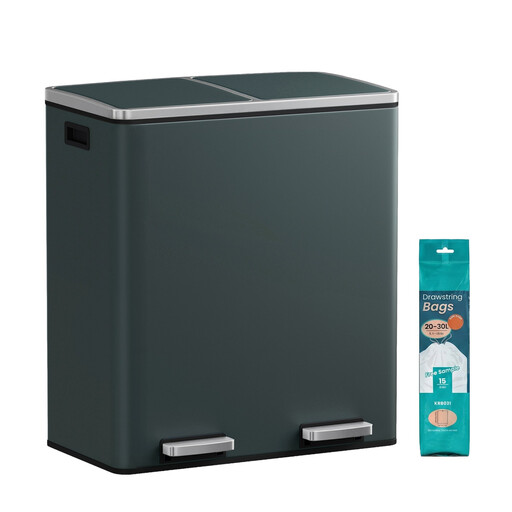
Why this model? With its total 60 L capacity split into two 30 L buckets, this bin is perfectly sized for a family. It allows you to easily separate general waste from recycling in a single container, keeping your kitchen neat and organized.
It sidesteps the flimsy mechanism trap with its sturdy pedals and soft-close system, ensuring quiet and long-lasting use.
Its large 60 L capacity is ideal for recycling, and its removable inner buckets with handles simplify emptying.
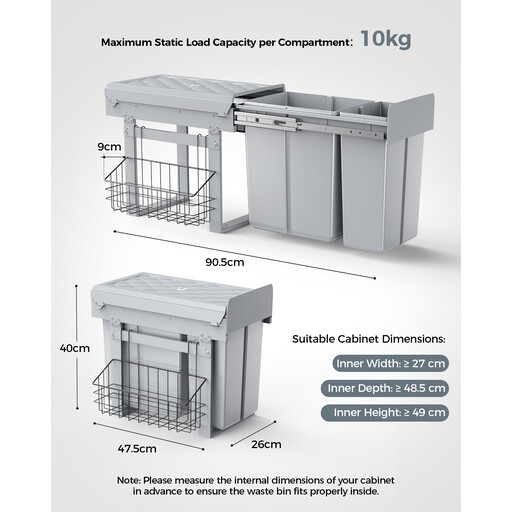
Why this model? This built-in bin is the dream solution for fans of minimalist kitchens. It hides away in a base cabinet (from 30 cm wide) and frees up floor space, all while offering a complete sorting solution with its two compartments.
Integrated into the cabinet, it avoids the pitfall of materials exposed to knocks and stains. Its system on full-extension runners is designed for smooth, heavy-duty use, making it far more reliable than entry-level external mechanisms.
Total discretion and saves floor space. The sliding system provides easy access to the buckets, even in a narrow cabinet.
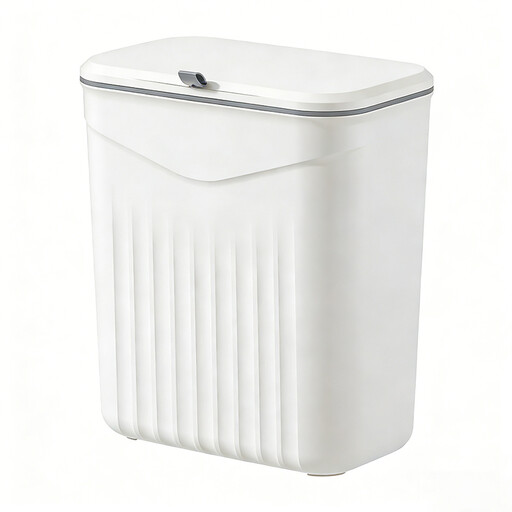
Why this model? Perfect as a kitchen compost caddy or for small spaces. This model hangs on a cabinet door, allowing you to scrape peelings directly from the countertop without bending down.
It avoids the misleading capacity trap by fully embracing its role as a supplementary bin. Its purpose isn't to hold everything, but to offer an ultra-practical solution for prep waste.
Drill-free installation thanks to its hook. Its elevated position is a real plus for hygiene and comfort during meal prep.
We've compiled a complete selection of products that meet our standards for quality and durability.
For a family of four, a total capacity of 50 to 60 litres is generally recommended to avoid having to empty it daily. A dual-compartment bin of 2?x?30?litres is a popular configuration, as it makes it easy to separate general waste from packaging intended for recycling.
Use a soft, damp microfibre cloth with a drop of washing-up liquid or a mixture of water and white vinegar. Always wipe in the direction of the steel's grain to avoid micro-scratches. Immediately dry with a clean, dry cloth to prevent water spots and restore a flawless finish.
The durability of a pedal bin depends entirely on the quality of its mechanism. Models with a wide pedal and a soft-close (dampened) system tend to be much more robust because they are subject to less impact and wear. This is a key criterion that not only ensures the product's longevity but also better daily hygiene by avoiding any contact with the lid.