
Livraison le jour même ou le lendemain

Qualité garantie

Débloquez vos offres de bienvenue: Livraison GRATUITE | Jusqu'à -80 % | 30 jours d'essai gratuits à JoyPlus
Téléchargez l'application
Choosing a new recycling bin? A minor detail, you might think. Yet, this seemingly trivial purchase has a direct impact on the daily organisation and hygiene of your kitchen. With an overwhelming number of options, it's easy to be tempted by the wrong model and turn a practical item into a source of frustration. To help you avoid this disappointment, let's review the classic mistakes you should never make.
The most common pitfalls aren't always obvious on the shelf. These include:
To make the right choice, focus on a few essential points that will make all the difference in the durability and ease of use of your kitchen bin.
The ideal volume depends on the size of your household, but also (and most importantly) on the recycling guidelines in your area.
Ensure the volume of each compartment is well-suited to your respective waste output to avoid constantly emptying them.
This is an action you'll repeat dozens of times a day. The pedal bin remains the undisputed champion for its impeccable hygiene. Inspect the design of the pedal and lid hinge: metal systems are a guarantee of longevity. An added bonus? A soft-close lid, a convenient feature that prevents slamming and preserves the mechanism over the long term.
The material directly impacts your bin's design, sturdiness, and ease of maintenance.
To help you make an informed decision, here are a few models that perfectly illustrate these criteria, tailored to different profiles and needs.
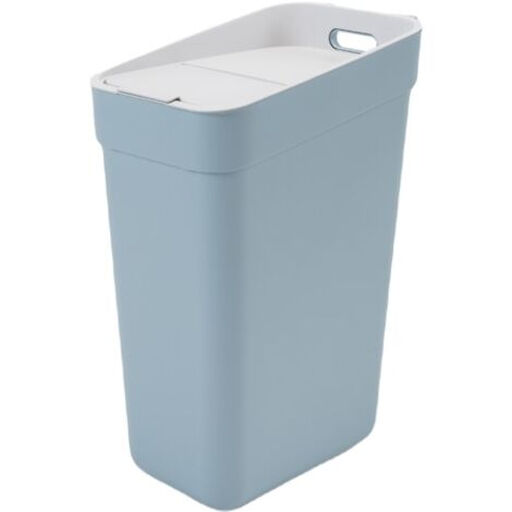
Why we chose it: Perfect for single people or couples in flats, where every square inch counts. Its clever design allows you to dedicate one bin to a specific type of waste (e.g., packaging) and add more as your needs grow.
This model bypasses complex and therefore fragile pedal mechanisms. Its high-quality plastic design (made from 70% recycled material) is a breeze to clean and resists lingering odours.
Made from recycled plastic, it aligns with a consistent eco-friendly approach. Its modular design allows it to be stacked or wall-mounted for maximum space-saving.
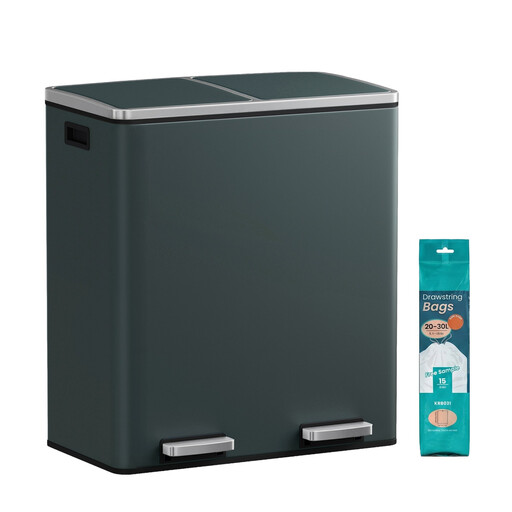
Why we chose it: The perfect solution for a family of 3 to 4. The generous capacity of this 2-compartment bin allows you to manage both general waste and a significant flow of packaging in a single, elegant unit.
It removes any ambiguity about its volume by clearly stating it has two 30L bins. Its stainless steel bin structure is a guarantee of durability and hygiene, while its soft-close pedal mechanism is built for heavy use.
The *soft-close* lid is a real bonus for a quiet kitchen. The removable inner buckets, complete with handles, make emptying and cleaning much simpler.
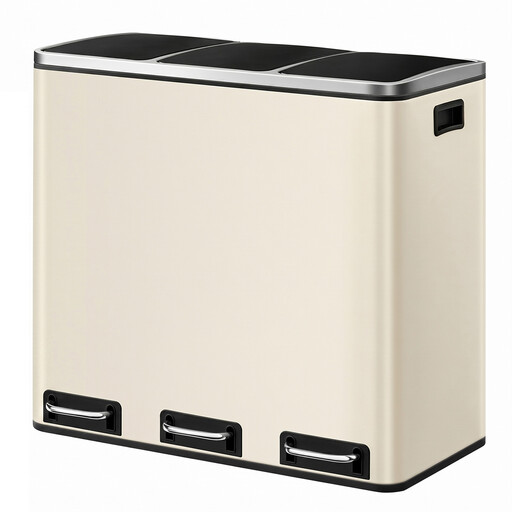
Why we chose it: This is the all-in-one solution for households that practise advanced sorting (general waste, packaging, glass, or food waste). This 3-compartment bin centralises waste management and prevents cluttering the kitchen with multiple bins and bags.
Each compartment has its own pedal and soft-close lid, a sign of sturdiness. The all-steel construction ensures excellent longevity and easy maintenance.
The recycling organisation is optimised in a footprint that remains compact. Its minimalist design and beige finish allow it to blend seamlessly into modern kitchen decors.
Discover our full selection of products that meet our quality criteria and the latest sorting guidelines.
For routine maintenance, a damp microfibre cloth with a little soapy water (washing-up liquid) is all you need. Rinse with clean water, then dry immediately with a dry cloth to prevent water spots. For stubborn stains, a mixture of water and white vinegar works wonders. Most importantly, never use an abrasive sponge, as it will scratch the stainless steel.
It all depends on the quality of its mechanism. An entry-level model with plastic parts will show signs of wear in less than a year. Conversely, a well-made bin with a metal pedal and hinges can easily last you for 5 to 10 years, or even longer.
For a family of four, aim for a total volume of 50 to 60 litres. The most common configuration is a 2-compartment bin with 2?x?30-litre sections: one for general waste (30L bag) and a second for recyclables (30L or 50L bag, depending on the type of waste). This ensures you won't have to empty the bins every day.