
Livraison le jour même ou le lendemain

Qualité garantie

Débloquez vos offres de bienvenue: Livraison GRATUITE | Jusqu'à -80 % | 30 jours d'essai gratuits à JoyPlus
Téléchargez l'application
Choosing a recycled cotton tablecloth is a choice that is both stylish and responsible. Yet, with a plethora of options on the market, it's easy to make a mistake, and a good intention can quickly turn into a disappointing purchase. Between vague "eco-friendly" labels and unfulfilled promises of easy care, how can you navigate the choices?
As a product expert at Joybuy, my mission is to help you separate fact from fiction to make an informed choice. Here are the red flags to watch out for and the essential criteria for finding the tablecloth that will beautifully and sustainably adorn your table.
To avoid making a mistake, rely on a few objective technical characteristics. They are the true guarantee of quality for your future recycled cotton tablecloth.
Most high-quality recycled cotton tablecloths are made from a blend, often 80% recycled cotton and 20% polyester. This is a smart combination: the cotton provides softness and a natural look, while the polyester reinforces the fabric's structure, reduces wrinkling, and improves its durability.
The non-negotiable criterion is Oeko-Tex certification. The Standard 100 by Oeko-Tex label guarantees that every component of the product, from the thread to the dye, has been tested for and declared free of harmful chemical substances. It's an assurance of transparency and safety for your family.
The dyeing method is paramount. Opt for "yarn-dyed" tablecloths. This technique involves dyeing the yarn even before it is woven, unlike printing on finished fabric. The result? The colours are locked deep within the fibre, offering far superior resistance to washing and light. This is the secret to durable table linen that retains its vibrancy.
Finishes, such as a neat "saddle stitch," are not just a minor detail. They reflect the care taken in manufacturing and prevent the edges from fraying, ensuring better longevity.
A tablecloth should dress the table elegantly. For a rectangular tablecloth, measure the length and width of your tabletop, then add between 20 and 30?cm for the drop on each side. For example, for a 110 x 210?cm table, a 170x250 tablecloth will provide a perfect 20?cm drape.
If you often host guests or have children, a stain-resistant tablecloth can truly simplify your life. This water-repellent treatment allows liquids to bead up on the surface, giving you time to blot them up before they penetrate the fibres. Also, check that the tablecloth is indeed machine-washable at a reasonable temperature (30 or 40?°C) for hassle-free maintenance.
To put theory into practice, here are three models that check all the boxes, each meeting a specific need.
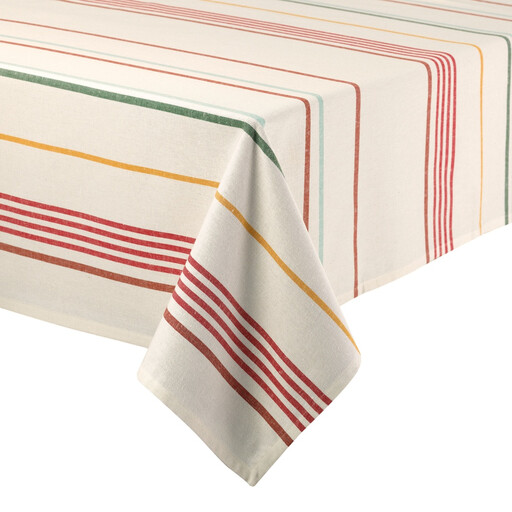
Why we love it: Ideal for those who love to set cheerful and welcoming tables. Its colourful stripes bring a touch of timeless energy, perfect for family meals and dinners with friends alike.
The yarn-dyed manufacturing ensures the vibrant colours won't fade, avoiding the pitfall of false durability. This is a tablecloth designed to last, not just to impress for one evening.
Composition of 80% recycled cotton and 20% polyester for structure. Machine-washable for easy care after large gatherings.
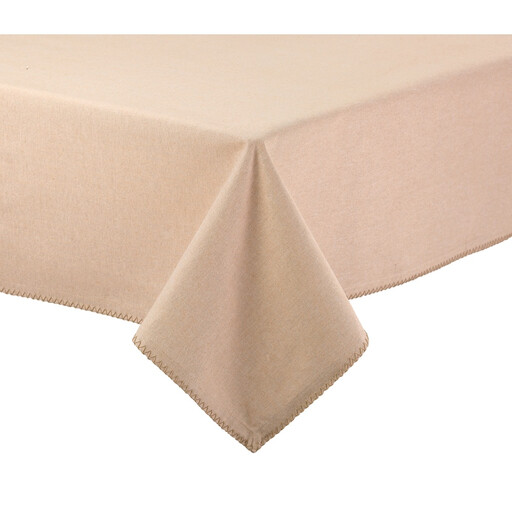
Why we love it: Perfect for everyday use, this tablecloth from the Winkler brand combines understated aesthetics with great practicality. Its natural colour fits into any decor, while its design is made for real life.
It directly addresses the pitfall of complex care thanks to its stain-resistant treatment. Its Oeko-Tex certification is a guarantee of transparency, a far cry from vague marketing claims.
Effective stain-resistant treatment and a neat saddle stitch finish. The recycled cotton comes from textile industry scraps.
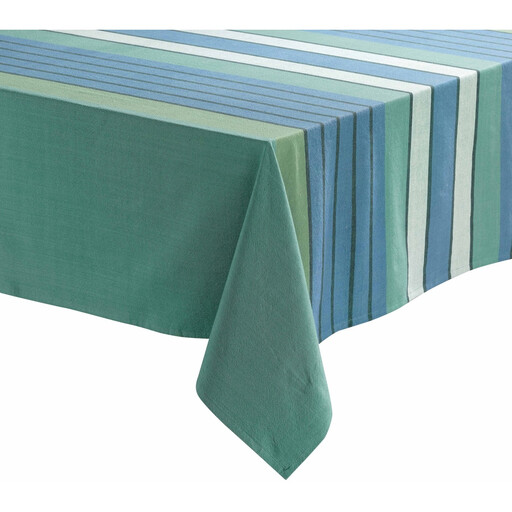
Why we love it: For those who see table linen as a decorative element in its own right. The deep "peacock blue" hue and subtle stripes create a chic and contemporary atmosphere.
Its quality weave ensures excellent structure and a pleasant feel, unlike "pretty but fragile" tablecloths. It's a stylish investment that doesn't sacrifice quality.
Rich colour and subtle design for a sophisticated table. Coordinates perfectly with napkins from the same range for a harmonious set.
We have compiled a complete and up-to-date list of products that fully meet these strict selection criteria and current regulations.
Most of these tablecloths can be machine-washed at 30 or 40?°C. Avoid high temperatures and bleaching agents to preserve the fibres and colours. Air-drying is always preferable to a tumble dryer. The trick to minimise ironing? Remove the tablecloth from the machine as soon as the cycle is finished and hang it out flat.
Yes, a quality treatment is very effective against everyday spills. It creates a water-repellent effect that prevents liquids (water, wine, coffee, etc.) from immediately soaking into the fabric. This gives you time to blot the spill with an absorbent cloth. Be careful, you must act quickly and never rub, as this can set the stain. The effectiveness may also diminish over time with repeated washing.
Organic cotton is grown without chemical pesticides or fertilisers, which is better for the planet and for farmers. Recycled cotton, on the other hand, comes from upcycling textile waste (production scraps or used clothing). Its production requires no new cotton cultivation, which saves considerable amounts of water and energy. Both are eco-responsible approaches, but they address different issues: one relates to agricultural production, the other to waste management.