Home cooks without an external duct
You want to reduce cooking grease and odours without creating an external outlet. Your first priority is making sure the cooker hood and its filters are compatible with recirculation.


If you don't have a suitable external outlet, choose a cooker hood whose exact model is compatible with recirculation, then check which filter and installation kit you need. This mode filters the air before returning it to the kitchen. It requires regular maintenance, may not remove every odour and is no substitute for ventilating your home.
You want to reduce cooking grease and odours without creating an external outlet. Your first priority is making sure the cooker hood and its filters are compatible with recirculation.
If your kitchen opens onto a living room or workspace, check the noise level at the speed you expect to use, as well as the size and installation method.
You want to know how often the filters need replacing or cleaning. Check the instructions and make sure any regenerable filter is compatible with the exact model of cooker hood.
Start by confirming that recirculation is supported and checking which parts your kitchen needs. Then compare filtration, noise and access to the filters. An advertised airflow rate alone is not enough to tell you how well odours will be reduced.
| Criteria | What to check | Who it's for |
|---|---|---|
| Compatibility with your kitchen | Check the manual for the exact model to confirm recirculation is supported, then check the dimensions and the reference number of any required kit or filter. | Without a usable outlet, I want to keep my kitchen as it is, avoid ducting work and make sure I don't buy a cooker hood that can't be adapted. Around 33% of consumers put compatibility first. |
| Odours and grease | Check which filters are compatible and, when comparing models, look for measurements taken using the same test method in recirculation mode. | When I cook, I want to reduce odours and greasy deposits, while knowing that the air will be returned to the room. For around 25% of consumers, reducing these is the priority. |
| Noise and maintenance | Compare noise levels at similar operating speeds and check the instructions for replacing or cleaning the filters. | In an open-plan kitchen, I don't want to interrupt conversations or choose a maintenance routine I can't keep up with. Around 25% of consumers put quiet operation and maintenance first. |
| Fitting in with your kitchen units | Check the space on the wall or inside the unit, the route for the recirculated air and access to the filters. | I want to keep the space above the hob as clear as my kitchen layout allows, without making the cooker hood difficult to access. This is the main consideration for around 17% of consumers. |
A wall-mounted cooker hood lets you keep your existing hob, but it remains visible. An integrated extractor can be fitted inside a compatible wall unit; a hob with an integrated extractor, on the other hand, means replacing your hob and checking the space available in the base unit. In every case, check the air outlet route specified in the manual for the model you choose.
Converting it may require a filter, a kit and model-specific air outlet components. Siemens, for example, recommends checking kit compatibility using the appliance's E-Nr/FD reference.
Make a note of the full model reference and check it against the kit and filter references listed in the manual before you buy.
Depending on the model, installation may also require a suitable flexible duct or deflector.
UFC-Que Choisir measures odour reduction and grease capture separately. In recirculation mode, filtered air is returned to the kitchen, so these measurements don't guarantee that there will be no odours in your home.
If test results are available for the model you're considering, look at the conditions under which they were measured. Keep your home ventilated; don't connect an extraction-only cooker hood to a mechanical ventilation system (VMC) or chimney.
According to UFC-Que Choisir, the installation method affects performance and noise. The airflow rate listed in a product specification doesn't, on its own, tell you how well the cooker hood reduces odours in recirculation mode.
First check that it is compatible with your kitchen and that you can access the filters, then compare noise levels and any test results for recirculation mode.
Filters used in recirculation mode need replacing or maintaining, depending on their type. A so-called long-life filter isn't compatible with every cooker hood and must still be maintained according to the manufacturer's instructions.
Find the reference for the compatible filter and follow its instructions for cleaning, regeneration or replacement.
A regenerable filter takes time to clean according to the required procedure.
The range includes standalone cooker hoods and hobs with integrated extractors, worth considering if you're also thinking of replacing your hob.
The brand offers cooker hoods and recirculation kits, which should be checked together against the appliance reference.
The range lets you compare integrated extractors, decorative cooker hoods and some regenerable filters.
Compare standard and long-life OdourClean filters based on which cooker hood they're compatible with and how you want to maintain them.
These wall-mounted models are available with a recirculation mode, so you can keep your existing hob. Compare their width with the space available, then check the manual for the filters required and a noise level that suits how you cook.
 Image unavailable
If you want to keep a hob against a wall in a kitchen without an external outlet, this model offers recirculation. Check the available space and the parts needed for this set-up.
Stated width: 60 cm; stated airflow rate: 580 m³/h; three speeds. This airflow rate alone doesn't tell you how well odours will be reduced.
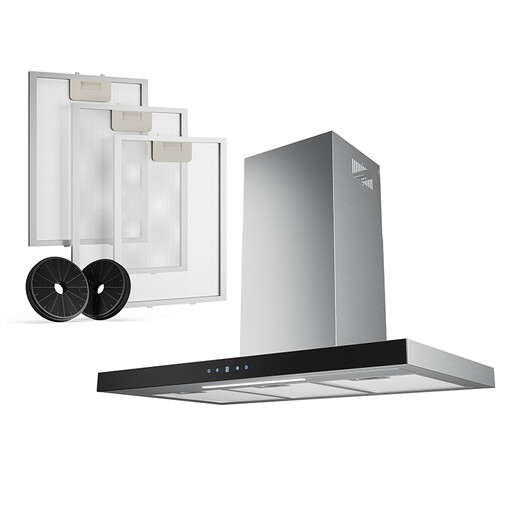 Image unavailable
This wall-mounted cooker hood offers recirculation if your kitchen can accommodate its 90 cm width. A carbon filter is listed as included; check its reference and the installation requirements in the manual.
Stated width: 90 cm; stated airflow rate: 564 m³/h. If you have an open-plan kitchen, also compare the noise level at the speed you expect to use.
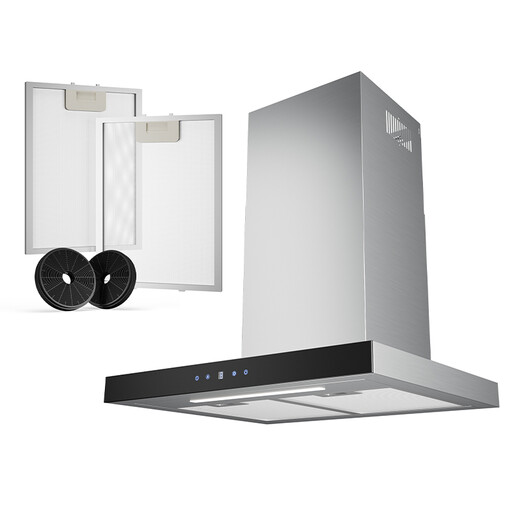 Image unavailable
This 60 cm wall-mounted model offers recirculation without replacing your hob. Compare its width with your cooking area and check the installation requirements in the manual.
A carbon filter is listed as included. Check its reference so you can plan maintenance, and consider the noise level if your kitchen is open-plan.
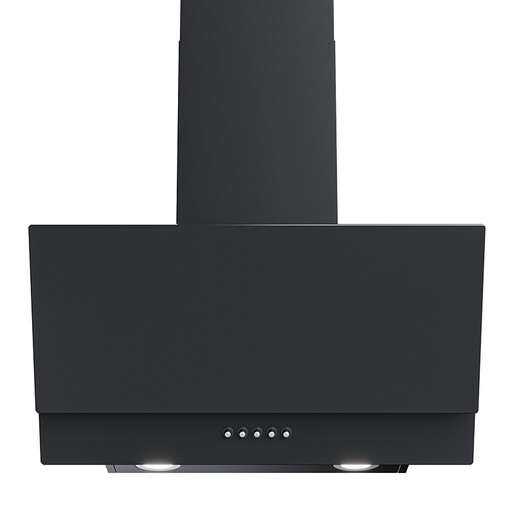 Image unavailable
This angled black glass cooker hood offers recirculation for a 60 cm wall-mounted installation. Check the available dimensions and make sure you can access the filter after installation.
A carbon filter is listed as included. Find the reference for a replacement and compare the noise level with your expected usage.
No. Odour reduction varies depending on the cooker hood and its filters. UFC-Que Choisir measures it using an odour-reduction coefficient. Check the conditions of any test for the model you're considering, but don't assume this means there will be no odours at all in your kitchen.
No. It filters the air it draws in and returns it to the kitchen; it doesn't vent air outside. Keep your home's ventilation system in place and have any proposed changes checked before work begins.
How often depends on the filter compatible with your cooker hood and its usage instructions. As examples for specific models, Elica recommends replacing its Long Life CFC0166361 filter every two years, while Electrolux states that its OdourClean Plus filter lasts two to three years when maintained according to the instructions.
Before carrying out work that alters the property, check your tenancy agreement and which permissions apply to your plans. For agreed work in a furnished rental, ANIL advises that the nature and terms of the work should be specified with the landlord. Depending on the property, also check any building regulations and technical requirements.