
Livraison le jour même ou le lendemain

Qualité garantie

Débloquez vos offres de bienvenue: Livraison GRATUITE | Jusqu'à -80 % | 30 jours d'essai gratuits à JoyPlus
Téléchargez l'application
A rechargeable portable fan slips into your bag, keeps you cool on public transport, or offers a refreshing breeze at a concert. The trouble is, product specs often mix up motor speed, maximum battery life, and the actual cooling power you’ll feel. The result? A fan billed as “turbo” can turn out to be noisy, heavy, or impractical for everyday use.
Before you head to the checkout, watch out for these three common pitfalls:
Battery capacity is measured in milliamp-hours (mAh). It gives you an idea of the energy reserve, but it doesn’t let you directly compare the battery life of two different fans. The speed you select, the battery’s condition, and the surrounding temperature all affect the actual runtime.
For a pocket fan you’ll use on the go, a battery of 2,500 to 5,000 mAh is a common range in this selection. Also, check the charging time and the connector type:
Lithium-ion batteries should be charged with a cable and adapter that are in good condition. Avoid exposing them to high heat for long periods, and check the rules for transporting batteries when you fly.
A powerful fan isn’t necessarily the best choice for every situation. At your desk, on a train, or in a quiet room, a gentle setting will be far more pleasant. Outdoors, a turbo fan with a concentrated airflow can be much more effective.
Compare the following in particular:
Take the term silent fan with a pinch of salt if no noise level in decibels is given. When in doubt, stick to a low setting at work, on public transport, or anywhere noise needs to be kept to a minimum.
A rechargeable USB-C handheld fan is practical in a queue, on a walk, or during a break outdoors. A foldable model can also sit on a desk or bedside table. For hands-free use, a bladeless neck fan is another option, especially when you’re on the move, on a gentle hike, or at an event.
Check the dimensions, weight, whether it comes with a wrist strap, and how stable the stand is. For a concert fan, a compact size and a lock to prevent accidental activation are particularly useful. In any case, don’t block the air intakes and keep the fan away from moisture if it isn’t advertised as water-resistant.
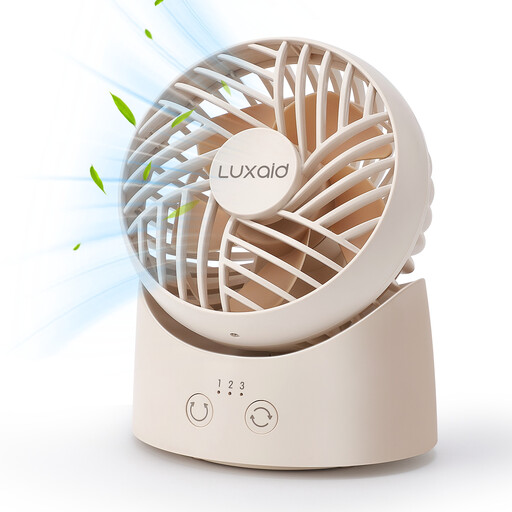
Why this choice suits this profile: Its compact desk size and 3 speeds are ideal for first-time use, whether at home or at work. USB-C charging means you can reuse the cables you already have.
The spec sheet states a real capacity of 1,800 mAh, despite a different figure on the packaging. This makes comparisons with other models much clearer.
60° oscillation, 3 speeds, claimed battery life of up to 8 hours, and USB-C charging.
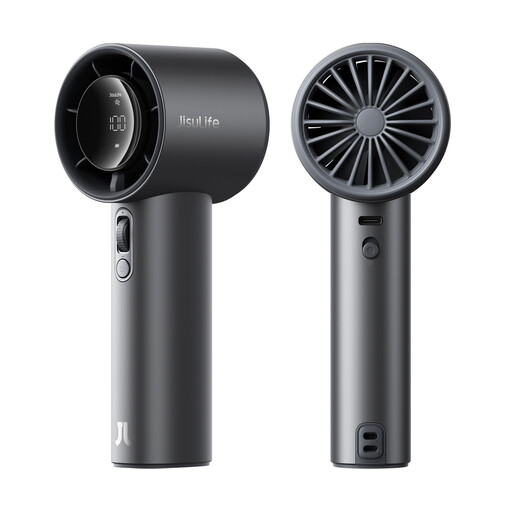
Why this choice suits this profile: Its 100-level control is perfect for those who want to fine-tune the airflow, from a gentle breeze to a more intense cooling blast outdoors.
The screen shows the speed and battery level. The spec sheet also distinguishes the maximum battery life from the usage range depending on the settings.
5,000 mAh battery, LED display, 100-level adjustment, and claimed fast charging between 1.5 and 2 hours with a compatible input.
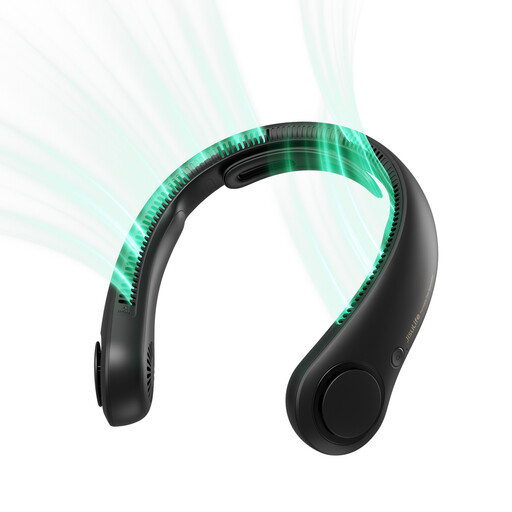
Why this choice suits this profile: Worn around the neck, it frees your hands for a walk, an event, or light activity. Its bladeless design is ideal for anyone who doesn’t want to hold a device all the time.
Its 5 levels and battery life range of 2.5 to 16.5 hours provide far more useful benchmarks than a single maximum figure.
5,000 mAh battery, USB-C charging, hands-free operation, and a claimed weight of around 280 g.
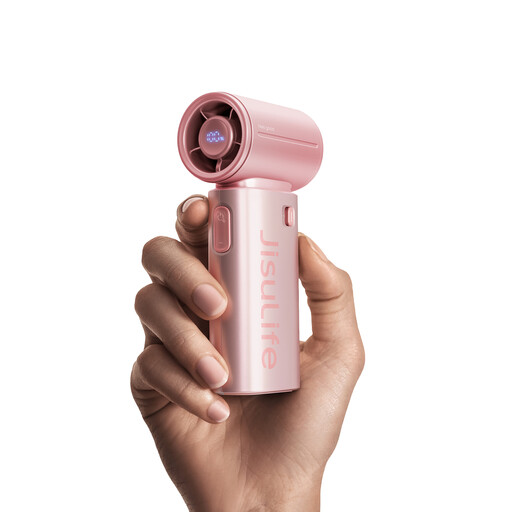
Why this choice suits this profile: With claimed dimensions of 3.7 × 5.7 × 12.3 cm and a weight of 180 g, it slips easily into a bag and is perfect for frequent travel.
The digital display shows the speed and battery level. The 5 settings also prevent you from running it at full power all the time.
Motor claimed to reach up to 27,000 RPM, airflow up to 10 m/s, 5,000 mAh battery, and claimed battery life of 3 to 22 hours depending on the speed setting.
We’ve put together a comprehensive, real-time updated list of products that meet these strict selection criteria as well as European safety requirements.
It all depends on the battery capacity and the compatible charger. The models in this selection claim around 1 to 4 hours for a full charge. Always check the manual and use a suitable adapter. Also, avoid leaving the fan in direct sunlight while charging.
Battery life varies significantly depending on the speed you select. A model claiming up to 22 hours may only last a few hours at full power. To compare fans, look at the full range provided by the manufacturer and choose models that show the remaining battery level.
Power consumption is generally low for a device of this size. As a guide, a 5,000 mAh battery at 3.7 V represents about 18.5 Wh before charging losses. The cost depends on your supplier’s rate and how often you charge it. To estimate it, simply multiply the energy recharged in kWh by the price per kWh.