
Livraison le jour même ou le lendemain

Qualité garantie

Débloquez vos offres de bienvenue: Livraison GRATUITE | Jusqu'à -80 % | 30 jours d'essai gratuits à JoyPlus
Téléchargez l'application
A rechargeable portable fan can be incredibly useful on the underground, in a queue, in a poorly ventilated office or during an evening outdoors. The key is choosing the right model. A battery that does not last long enough, poorly directed airflow or endless charging: a purchase that should make life easier can quickly end up forgotten in a drawer.
Before comparing technical specifications, it is worth avoiding three common pitfalls.
If the device is intended for use around children, check that it has a suitable grille or a bladeless design. The latter does not eliminate every risk, however. Like any electrical appliance, the fan should be kept out of the reach of young children and used in accordance with its instructions.
Capacity, expressed in mAh, is a useful basis for comparison, but it is not enough to predict battery life. A 5,000 mAh model may last several hours at high speed and considerably longer at the lowest setting. Pay particular attention to the stated battery life for each speed, charging time and whether the device can be used while charging.
A USB-C fan fits easily into a modern set-up, whether you are using a smartphone charger, power bank or compatible laptop. Even so, check that the cable is included and that the recommended charger meets the device’s input specifications. If you are travelling by plane, also check the airline’s rules regarding the transport of lithium batteries.
Depending on the model, airflow is expressed in litres per second or metres per second. This can help you compare devices designed for use in a room or for sustained operation. With a mini portable fan, however, ergonomics and the distance between the air outlet and your face are often more important than a figure highlighted on the packaging.
The term quiet fan should therefore be treated with some caution. Noise levels vary according to the selected speed, the surface on which the device is placed and the motor frequency. When a value is provided, such as 75 dB for some floor ventilation devices, it gives an indication of the intended use: it is more suited to drying or workshop environments than to a bedroom.
A foldable fan slips easily into a bag and can also be used on a desk. A rechargeable handheld fan with a wrist strap is practical in queues, at concerts or on public transport. A hands-free neck fan, meanwhile, leaves your hands free during a walk, outdoor work or a festival. Its weight and the pressure it places on your neck should nevertheless be taken into account.
For a room, a bladeless tower fan is discreet and generally distributes air over a wider area. Check its dimensions, weight, base stability and how easy it is to clean. Connected features, such as app control, can be useful if you genuinely intend to schedule operating times, control the device remotely or adjust its performance automatically.
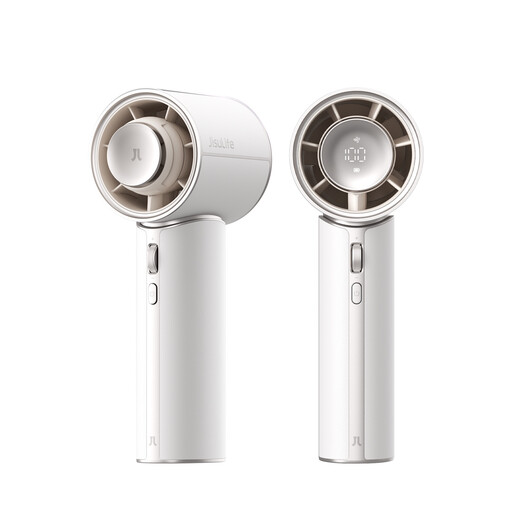
Why this suits this profile: Weighing 180 g and supplied with a retractable wrist strap and pouch, this model makes it easy to get started with a pocket fan.
The display shows the airflow level and remaining battery, reducing the risk of an unpleasant surprise when it comes to battery life.
4,250 mAh battery, 100 advertised speed levels and a 2- to 3-hour charging time.
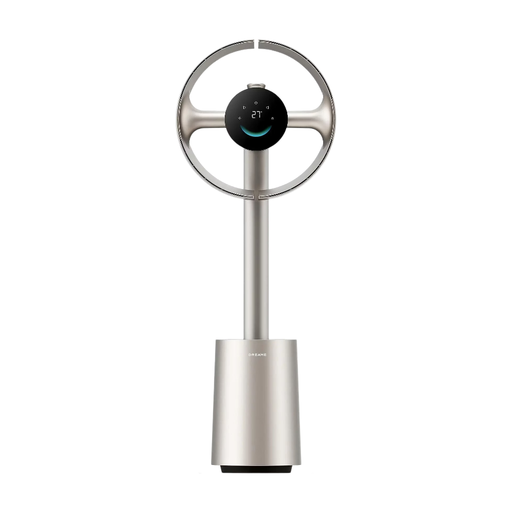
Why this suits this profile: This domestic model is designed for those who want to schedule ventilation and integrate their appliance into a connected home environment.
The specifications state horizontal oscillation of up to 180° and vertical oscillation of up to 90°, rather than relying on a vague promise of broad air distribution.
Washable main filter, touchscreen, magnetic remote control and app control, according to the product specifications.
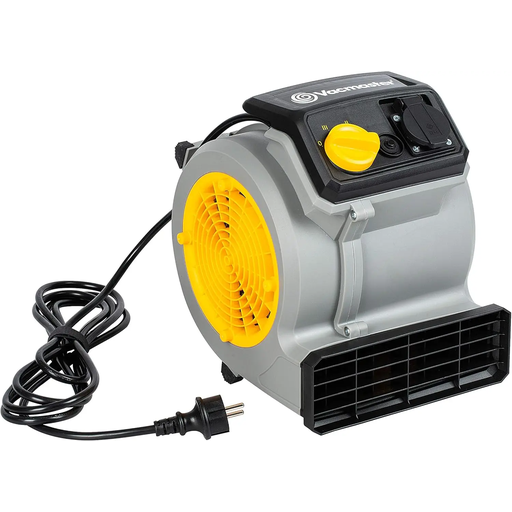
Why this suits this profile: Its floor-standing design is intended for workshops, basements, gyms and spaces that require strong air circulation.
Its specifications mention three speeds, an adjustable angle and an airflow rate of 245 l/s — concrete details that are far more useful than a simple promise of powerful airflow.
124 W motor, tilt adjustment of up to 45° and an integrated socket for connecting several devices. Indoor use only.
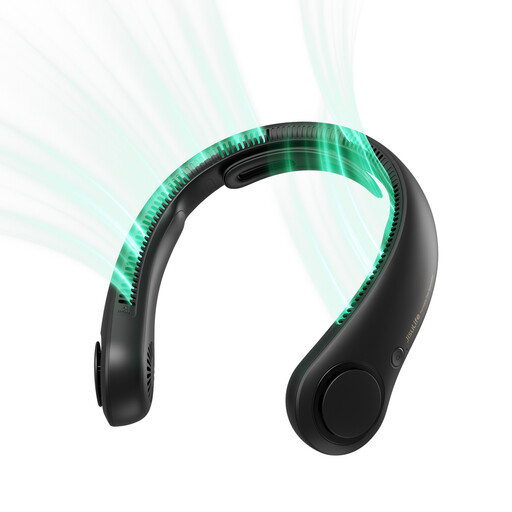
Why this suits this profile: Weighing 282 g, this hands-free neck fan is ideal for commuting, walks, concerts and any activity where holding a device becomes inconvenient.
The specifications detail battery life according to usage: from 2.5 to 16.5 hours, with USB-C charging stated to take 3 to 4 hours.
Five speeds, 5,000 mAh battery, bladeless design and the option to use it while charging, according to the description.
It depends on the battery capacity and the charger used. The models featured generally state a charging time of 2 to 5 hours. Check the instructions and use a cable in good condition. If the battery becomes unusually hot, swells or deforms the casing, stop using the device immediately.
Avoid exposing the device to intense heat, moisture or direct sunlight, particularly in a car. Clean the grilles and air outlets regularly to prevent the motor from having to work harder. If you store the fan for an extended period, keep it in a dry place and follow the manufacturer’s recommendations. In particular, avoid leaving the battery completely discharged for several months.
Consumption depends on the device’s power and how long it is used. A battery-powered model mainly uses electricity while charging, whereas a domestic fan that remains plugged in continuously depends directly on its rated power. To estimate the cost, consider the power in watts, how often you use it and the tariff charged by your electricity supplier.