
Livraison le jour même ou le lendemain

Qualité garantie

Débloquez vos offres de bienvenue: Livraison GRATUITE | Jusqu'à -80 % | 30 jours d'essai gratuits à JoyPlus
Téléchargez l'application
Getting up at night, whether to go to the bathroom, check on a child, or get a glass of water, shouldn't be an obstacle course. The solution? A rechargeable motion-sensor night light—simple and effective for moving around safely in the dark. However, the market is flooded with models that make tempting promises but often deliver disappointing performance.
As a product expert for Joybuy, my mission is to help you see things more clearly. Let's break down the pitfalls to avoid and the criteria that truly matter, so you can make a smart purchase that will meet your needs for years to come.
In photos, many models look alike. In reality, their quality varies dramatically. Here are the deal-breakers that can turn a good idea into a useless gadget after just a few months:
To avoid these pitfalls, rely on objective technical specifications. They are your best guide for judging the quality and suitability of a wireless LED night light.
Battery life is directly dependent on the battery's capacity, measured in milliampere-hours (mAh). For standard use in detection mode, a battery of at least 500 mAh is recommended to ensure several weeks of peace of mind between charges. Also, check the charging port type: a USB-C port, now universal, is far more convenient than the outdated Micro-USB port.
Two specs to watch closely:
The best night light is one that adapts to your home, not the other way around. The smartest mounting systems usually combine:
This versatility is particularly useful for wireless closet lighting or in areas where a permanent installation is not an option.
Rather than a soulless catalogue, here are products that meet specific needs and avoid the pitfalls we've just discussed.

Why we recommend it: This set is perfect for lighting strategic passageways like a hallway and a child's bedroom. Its compact size and availability as a night light pack make it a budget-friendly and practical choice for a first-time setup.
The spec sheet mentions a 500 mAh battery, providing a quantifiable basis for evaluating battery life (up to 10 hours of cumulative lighting), a far cry from empty promises.
Offers 3 colour temperatures (warm, cool, mixed) and 5 brightness levels, allowing you to adjust the lighting for any situation: a soft glow for the night, a brighter light for a staircase.
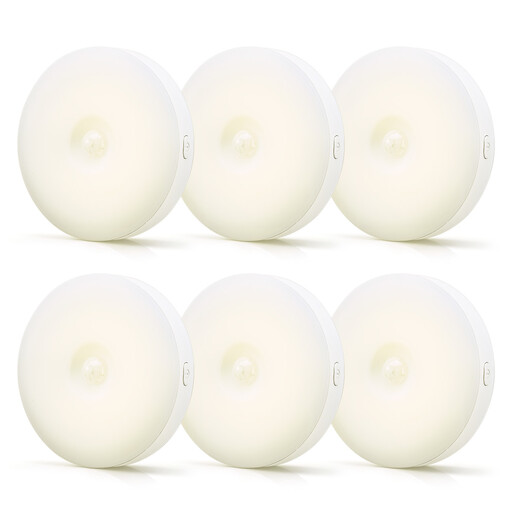
Why we recommend it: Ideal for those who want to equip multiple areas at once (stairs, closets, garage, basement). This 6-pack offers a turnkey and cost-effective solution to cover all the home's needs.
The mounting system combines an adhesive metal plate and a hanging strap. This versatility bypasses the problem of a single adhesive that may not be suitable for all surfaces.
The PIR sensor offers an extended range of up to 6 metres, which is above average, making it highly effective in long hallways or large rooms.
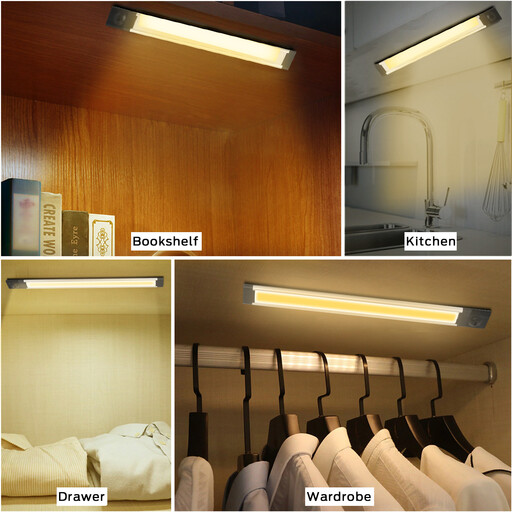
Why we recommend it: For those looking for more than just simple pathway lighting. Its power is suitable for illuminating a workbench in a garage, the inside of a large walk-in closet, or a workshop, without having to install wired lighting.
This model goes beyond simple detection by integrating gesture control for power and brightness adjustment. It's a clever solution that overcomes the limitations of a classic sensor in high-traffic areas.
Its high brightness of 400 lumens and wide colour temperature range (2800K to 6500K) make it a true accent lighting tool, far more versatile than a simple night light.
Beyond their practical aspect, these night lights are also valuable allies in children's rooms, ensuring more peaceful nights and tear-free wake-ups.
We have compiled a complete list of products that meet our demanding selection criteria and current safety regulations.
It's important to distinguish between two components. The LEDs themselves have a very long lifespan, often over 30,000 hours, which translates to many years of use. The weak link is the rechargeable battery. Like a smartphone battery, it will lose capacity after several hundred charge cycles (typically 2 to 4 years, depending on use).
For maximum adhesion, preparation is key. Clean the surface with a cloth dampened with rubbing alcohol to remove any dust or grease. Press firmly on the adhesive plate for at least 30 seconds. If possible, wait a few hours before attaching the magnetic night light to allow the adhesive time to set.
No, and that's its main advantage. The PIR sensor itself consumes a negligible amount of energy. The light only turns on when motion is detected in the dark and automatically shuts off after a short period (often 15 to 30 seconds). This intermittent operation allows the battery to last for weeks, or even months, unlike a continuous-on mode.