
Livraison le jour même ou le lendemain

Qualité garantie

Débloquez vos offres de bienvenue: Livraison GRATUITE | Jusqu'à -80 % | 30 jours d'essai gratuits à JoyPlus
Téléchargez l'application
Tired of fumbling for a switch in the dark, squinting during detailed DIY projects, or being left in total darkness during a power outage? The rechargeable LED lamp is the simple, smart solution to all these daily hassles. Say goodbye to tangled cables and the chore of replacing batteries.
This guide is here to help you see things more clearly. We'll break down the essential criteria for making the right choice and present our selection of models that shine with practicality, without the unnecessary marketing jargon.
Before you take the plunge, consider what the primary use of your future lamp will be. Here are a few points to guide you.
Lighting a wardrobe has different requirements than illuminating a workbench or a camping tent.
Expressed in milliampere-hours (mAh), battery capacity is the crucial factor: it dictates the runtime. Logically, a 2000?mAh battery will last much longer than a 450?mAh model, but the lamp will also be bulkier.
Also, consider the charging port. USB-C is establishing itself as the new European standard. It ensures faster charging, and its reversible connector is far more convenient than the outdated Micro USB.
Some models do more than just light up; they include game-changing features:
We have selected three models with distinct profiles, chosen for their technical specifications and intelligent design.
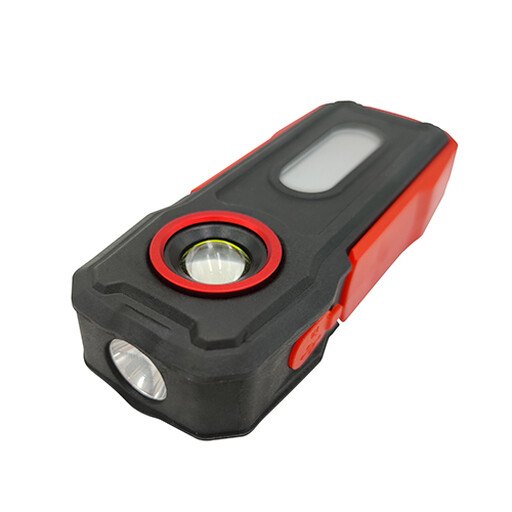
What sets it apart
Much more than a simple flashlight, this model is a true 3-in-1. It combines a powerful spotlight, an ambient lantern, and a power bank function to charge your devices. Its magnetic base and 180° rotating stand make it the ideal tool for DIY, car repairs, or as an emergency light.
Key Features
Who is it for?
For DIY enthusiasts, campers, drivers… and anyone looking for a robust and reliable portable lighting and charging solution.
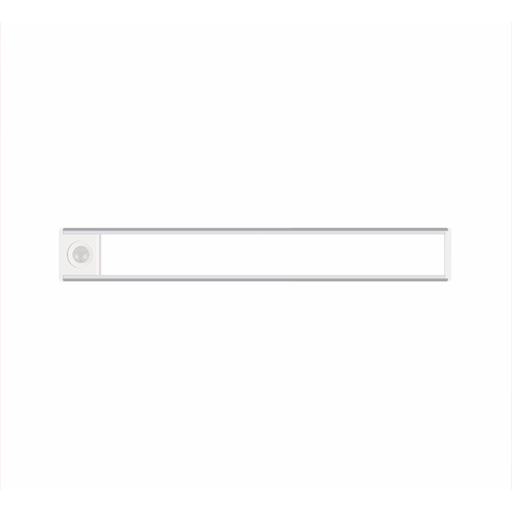
What sets it apart
This LED strip light with a motion sensor is supremely discreet. At just 10?mm thick and with its magnetic attachment, it can be installed in seconds without any tools under a shelf, in a drawer, or along a staircase. It brings light exactly where it's needed.
Key Features
Who is it for?
Ideal for anyone wanting to add a wireless closet light, mark a staircase, illuminate the inside of a cabinet, or even equip a camper van, all without running a single cable.
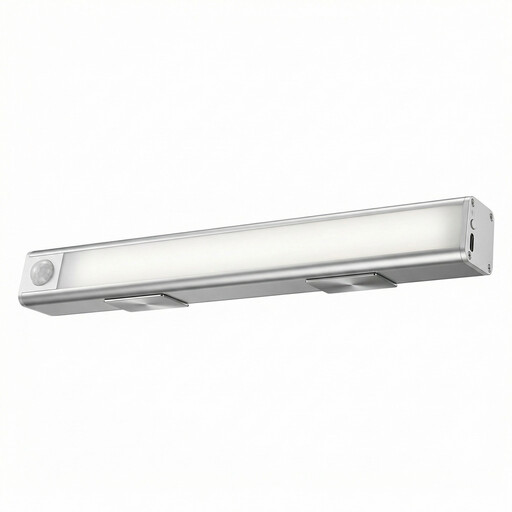
What sets it apart
It's the same great concept, but in an XL version. This 60?cm model offers all the benefits of its smaller sibling, but with double the lighting area and superior brightness. Its 190?lumens, spread across 114 LEDs, deliver powerful and even light, perfect for a large wardrobe, a long hallway, or a countertop.
Key Features
Who is it for?
The perfect solution for large closets, kitchen countertops, garages, or poorly lit hallways that would benefit from a dead-simple installation and 100% automatic operation.
None of these models check all your boxes? Don't worry. For more specific needs, such as outdoor security or special installations, other solutions are available.
Discover our full range of security lights
1. What is the lifespan of a rechargeable LED lamp? It's important to distinguish between two components. On one hand, the LED diodes have an exceptional lifespan, often rated for tens of thousands of hours, which translates to many years of use. On the other hand, the rechargeable battery's life is measured in charge cycles (usually several hundred). In practice, your lamp will work flawlessly for several years before its battery life begins to noticeably decrease.
2. How does a motion sensor on an LED strip light work? Most use a passive infrared (PIR) sensor. In simple terms, it doesn't project any light but instead detects the heat (infrared radiation) emitted by a moving body, like a person or an animal. As soon as it senses movement within its detection range, it triggers the lamp to turn on for a set period before switching off again.
3. Can I leave my LED lamp plugged in all the time? It's not ideal. Although most modern devices are protected against overcharging, leaving a lithium-ion battery constantly plugged in at 100% can accelerate its wear. The best practice? Unplug the lamp once it's fully charged, and only plug it back in when the light starts to dim.