
Livraison le jour même ou le lendemain

Qualité garantie

Débloquez vos offres de bienvenue: Livraison GRATUITE | Jusqu'à -80 % | 30 jours d'essai gratuits à JoyPlus
Téléchargez l'application
A rechargeable electric toothbrush can simplify your daily routine, provided you choose a model that truly suits your mouth, your sensitivity and your lifestyle. Price differences are often explained by sensors, brushing modes, battery life or accessories. However, some marketing claims deserve a closer look.
A high number of movements per minute does not, on its own, guarantee a better result. A sonic toothbrush works through rapid vibrations, while an Oral-B model with a round head relies on oscillating-rotating technology. In both cases, how you guide the brush, the duration of brushing and the pressure you apply remain decisive factors.
Connected models can offer several programmes, different intensity levels and detailed tracking via an app. These features can help structure your routine, but they also push up the price and add a layer of complexity. For everyday use, a two-minute timer, a quadrant change reminder and a gentle intensity can be more than enough.
A rechargeable brush needs compatible heads, typically replaced every three months or so, depending on the manufacturer's recommendations or the condition of the bristles. Check their availability and price before making a purchase. A cheap handle can quickly become expensive if refills are scarce or sold at a premium.
A Philips Sonicare toothbrush uses sonic technology: the head's vibrations accompany cleaning along the gumline and between teeth. The Philips Sonicare Series 2100 HX4022/01 claims up to 31,000 movements per minute and offers two intensity levels.
Oral-B models with a round head focus more on each individual tooth. This shape can suit those who prefer to work zone by zone, but it should not be used like a manual toothbrush, scrubbing vigorously.
A pressure sensor is particularly useful for adults who tend to press too hard. Depending on the model, the alert can take the form of a vibration, an audible signal or a light indicator. This feature does not replace a gentle touch, but it helps correct excessive pressure.
If you have sensitive teeth, also opt for a soft or extra-soft head and at least one low-intensity mode. If you experience persistent pain, irritation or unusual bleeding, stop using the brush and seek advice from a healthcare professional.
A built-in two-minute timer, accompanied by a signal every 30 seconds, helps distribute time across the four zones of your mouth. The claimed battery life varies greatly depending on settings and frequency of use. The figures provided by manufacturers usually correspond to specific conditions, for example two two-minute brushing sessions per day.
For travel, check for a travel case, the type of charger supplied and its compatibility with your sockets or cables. A USB charge can be practical on the go, while a charging glass or magnetic base is better suited to a fixed setup.
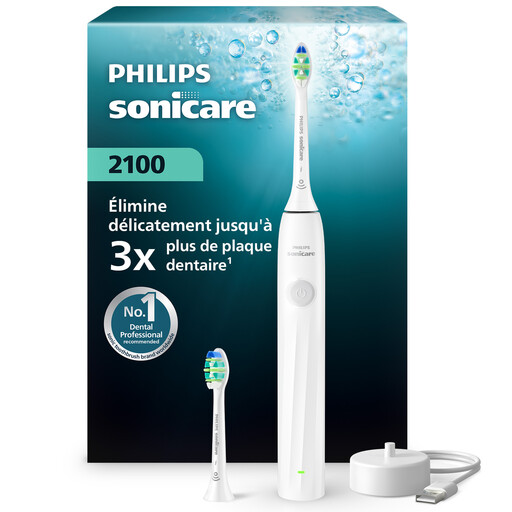
Why this choice suits this profile: Its rechargeable operation, two intensities and brushing guide make it a good entry point for switching from a manual to an electric toothbrush.
It focuses on the essentials rather than piling on programmes: two intensities, EasyStart, SmarTimer and QuadPacer.
Sonic technology, claimed battery life up to 14 days and an InterCare head included.
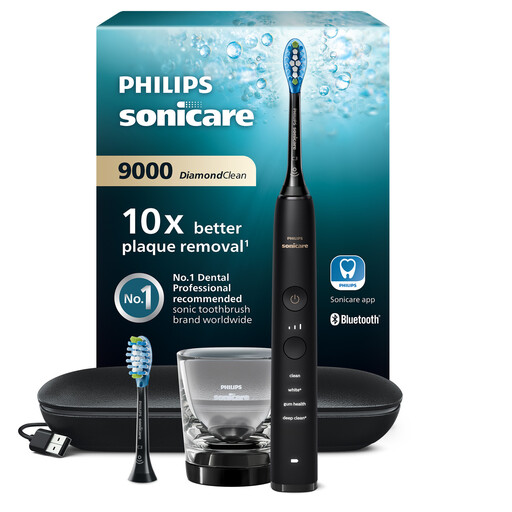
Why this choice suits this profile: It is aimed at users who want to customise their routine down to the smallest detail and enjoy an elegant charging station at home.
Its four modes and three intensities allow you to fine-tune settings, while the pressure sensor alerts you if you press too hard.
Philips Sonicare app, charging glass, travel case with charger and claimed battery life up to 14 days.

Why this choice suits this profile: Its S2 Sensitive head and case meet the needs of those looking for gentle brushing, both at home and on the go.
The gentle mode, pressure sensor and extra-soft head reduce the risk of using excessive intensity.
Two modes, three intensities, claimed battery life up to 21 days and travel case included.
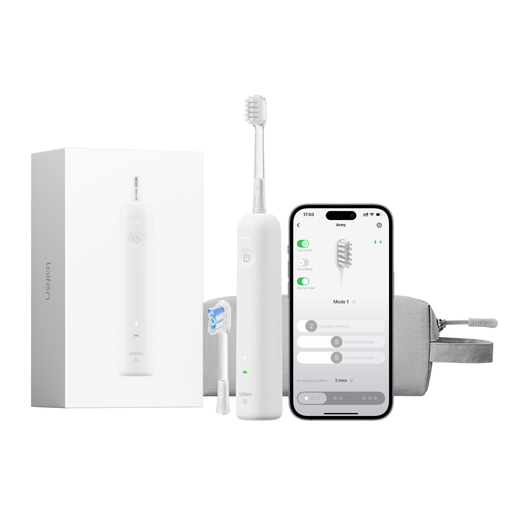
Why this choice suits this profile: Customisation via the app, USB-C charging and claimed battery life up to 50 days are perfectly suited to on-the-go lifestyles.
Its long battery life reduces the need for recharging, while the timer and zone reminder structure each session.
Three customisable modes, dedicated app, USB-C charging and IP68 water resistance rating as claimed by the manufacturer.
We have put together a comprehensive, regularly updated selection of products that meet these exacting criteria, as well as European safety regulations.
The lifespan depends on the battery, frequency of use and maintenance. A claimed battery life of 14 to 21 days suits most households, while a more enduring model will prove practical for travel. The built-in battery is generally not designed to be replaced by the user.
On top of the handle price, you need to factor in replacement heads and, occasionally, a subscription to an app or specific accessories. Before choosing, compare the price of compatible heads over twelve months. The charger and case supplied can also save you from additional purchases.
It can be suitable if it offers a low intensity, a soft head and a pressure sensor. Start gradually, without pressing, and follow the manufacturer's recommendations. If you experience persistent pain or bleeding, seek advice from a dentist rather than simply adjusting the brush settings.