
Livraison le jour même ou le lendemain

Qualité garantie

Débloquez vos offres de bienvenue: Livraison GRATUITE | Jusqu'à -80 % | 30 jours d'essai gratuits à JoyPlus
Téléchargez l'application
Ready-to-eat cooked chestnuts tick all the boxes when you're after a simple snack: no cooking, no peeling and virtually no washing up. They slip easily into a bag for a break at the office, a journey, a hike or a family treat. But it's worth knowing the difference between peeled chestnuts, cooked sweet chestnuts, desserts and flavoured products.
Before you fill your basket, there are three pitfalls worth paying attention to.
For a chestnut to enjoy as it is or to use as chestnuts for cooking, go for a short ingredient list. Products that contain only chestnuts or peeled chestnuts let you know exactly what you're buying and eating.
On the other hand, a chestnut dorayaki, a chestnut-filled bread or a pastry may contain wheat flour, egg, milk, soya, oil, preservatives or sweeteners. That's not necessarily a problem – it just means the product has a different purpose.
In food, the term edible sweet chestnuts usually refers to certain chestnuts selected for their large size and non-divided kernel. Nothing to do with horse chestnuts, which are not edible.
Chestnuts are mainly a source of carbohydrates and contain very little fat. According to the available data, plain cooked chestnuts typically provide 178 to 206 kcal per 100 g, with around 34 to 42.6 g of carbohydrates. These differences can be due to the variety, cooking method and any added sugar.
Take the time to compare:
A chestnut purée or an apple-chestnut dessert will be better suited to a recipe or a spoon dessert than to a snack on the go.
An individual or resealable pouch makes it easy to carry, but doesn't guarantee a long shelf life after opening. The instructions often recommend keeping the product in a cool, dry place away from light, then consuming it quickly once the pouch is opened.
For use at work, while travelling or hiking, check:
Organic chestnuts must carry a certification and the corresponding regulatory labelling. Simply referring to a natural origin is not enough to prove a product is organic.
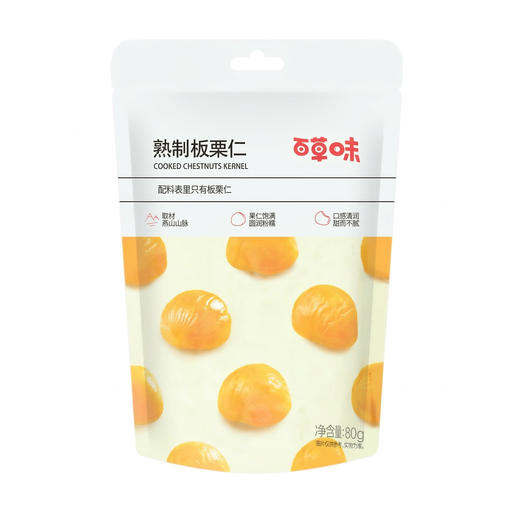
Why this choice suits this profile: At 80 g, this pouch is ideal for trying the product or enjoying an individual break without committing to a larger size.
The product page states it is 100% chestnut kernels, with no added flavourings or sugar mentioned.
Ready to eat, it provides 185 kcal and 1.9 g of fat per 100 g according to the information supplied.
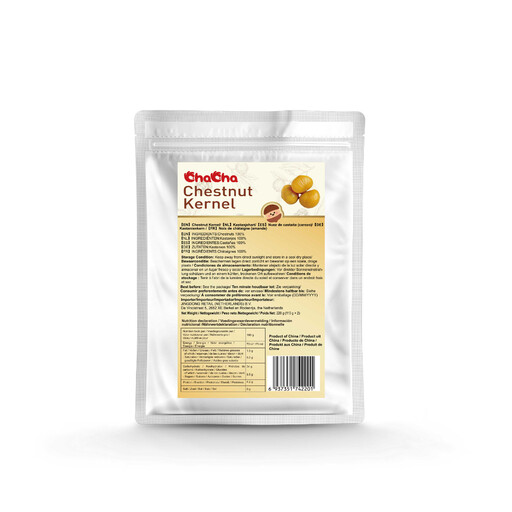
Why this choice suits this profile: Its two 110 g portions are easy to share and offer a generous amount for regular chestnut lovers.
The product page states it is made exclusively from chestnut kernels, packed in individual portions.
According to the product page, expect 178 kcal, 34 g of carbohydrates and 0 g of salt per 100 g.
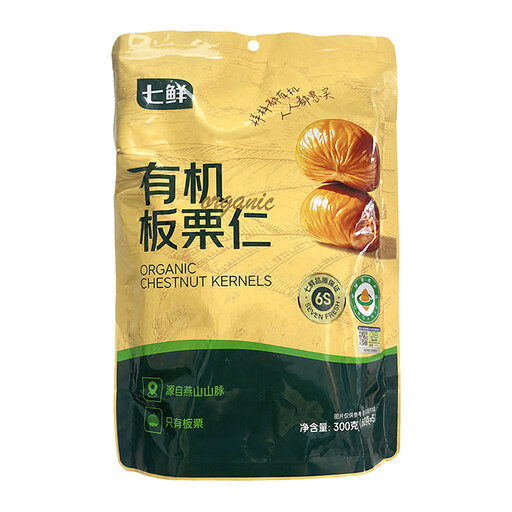
Why this choice suits this profile: Its 300 g format is ideal for families, regular cooking and anyone who uses chestnuts as an ingredient.
The product page shows ready-to-eat kernels with no extra preparation needed, and an ingredient list focused on chestnuts.
The stated data shows 185 kcal, 40.2 g of carbohydrates and 0 g of fat per 100 g.
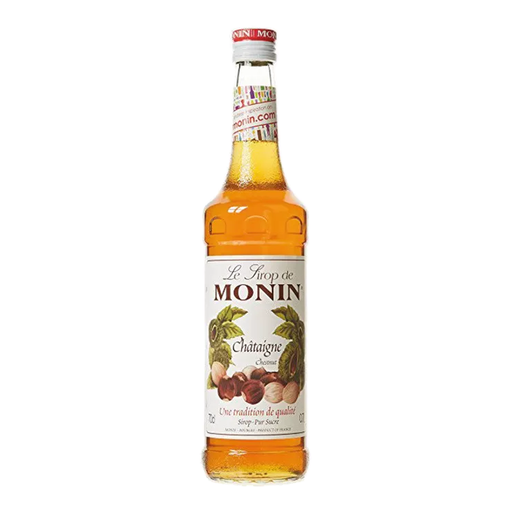
Why this choice suits this profile: This chestnut syrup is for those who want to flavour a latte, cappuccino, hot drink or dessert.
The label clearly distinguishes the flavoured syrup from a pouch of whole chestnuts: sugar, preservative and colouring are all listed.
The bottle contains 70 cl and the product page recommends a 1:8 dilution ratio.
Products intended for babies need separate checking. An apple-chestnut purée labelled from 4 months, such as the Good Goût product, should be given according to the stated age and the recommendations on the packaging. After opening, the product page advises keeping it in the fridge and consuming within 48 hours. For a baby, the product labelling should always take priority over a general assessment of its texture or composition.
We've put together a complete, real-time updated selection of products that meet these exacting criteria and European safety regulations.
Yes, when they carry the words "ready to eat". You simply open the pouch. Do check the storage instructions and consume the contents quickly after opening.
It depends on the product. Some product pages recommend eating it immediately; others allow storage in the fridge, in a sealed container, for 24 hours. The instructions on the packaging of the product you receive always take precedence.
Yes. Plain kernels can be used to make chestnut purée, a filling, a soup or an apple-chestnut dessert. For a sweet recipe, taste the product first so you can adjust the amount of sugar. Pre-prepared products, such as dorayaki or filled bread, are designed to be eaten as they are.