For serving with coffee
A ready-to-eat croissant needs no baking or cutting. If its ingredients matter to you, check the ingredients list and allergen information for the product you choose.


For a croissant to enjoy with your coffee straight away, choose one that’s ready to eat. If you can prepare your afternoon snack in advance, a ready-to-bake croissant is another option. For spreading or filling, choose a whole croissant that you can cut lengthways: the words “thick cut” alone don’t guarantee a particular cut or size.
Your choice mainly depends on how much time you have and what you want to do with the croissant once it’s served.
A ready-to-eat croissant needs no baking or cutting. If its ingredients matter to you, check the ingredients list and allergen information for the product you choose.
Choose a whole croissant that’s large enough to cut lengthways. Bridor uses this cut in a croissant sandwich recipe; it’s part of the preparation, not a feature guaranteed by the words “thick cut”.
A product clearly labelled ready to bake lets you plan the baking before serving. Allow enough time and follow the storage and baking instructions for the product you buy.
For coffee and an afternoon snack, first decide whether you want to serve the croissant as it is, cut it open to add a filling or bake it before serving.
| Priority | What to check | Who it’s for |
|---|---|---|
| Ready to serve | Check that the croissant is ready to eat, then look at its ingredients and allergen information. | If I’m serving coffee without planning any preparation, I want to be able to put the croissants straight on the table. Around 33% of consumers would prioritise this convenience. |
| A croissant to fill | Check the size and condition of the whole croissant to see whether you can cut it lengthways. | If I want to turn my afternoon snack into something more substantial, like toast or a sandwich, I’ll first look for a croissant I can open and fill. Around 42% of consumers would make this their priority. |
| Baking before your afternoon snack | Look for the words “ready to bake” and follow the baking and storage instructions on the packaging. | When I’m planning an afternoon snack in advance, I can set aside time and equipment for baking. Around 25% of consumers would prioritise being able to bake the croissants before serving. |
This describes the recipe; it doesn’t tell you the size of the croissant or how well it will hold together once opened. A Bridor recipe shows a croissant cut lengthways for filling, but doesn’t make “thick cut” a product specification.
If you’re planning to spread or fill it to make a sandwich, first choose a whole croissant that’s the right size for your recipe, then open it carefully.
A croissant that needs baking requires preparation before your afternoon snack. It won’t meet the same need as a pastry you can put straight on the table.
Check the instructions before buying. For a quick break with no baking, choose a croissant that’s ready to eat.
Baking also takes time and requires equipment to be available when you’re ready for your afternoon snack.
Ingredients vary from one product to another. The all-butter croissant featured by Lidl France lists wheat, milk and eggs among its ingredients.
Check the allergen information for the specific product, or ask the seller if you’re buying an unpackaged pastry.
These examples show different formats and ways to enjoy croissants. They don’t guarantee that you’ll find a pre-sliced croissant or that a product will be available in every shop.
A bakery and pastry manufacturer whose French recipe features a croissant cut lengthways for a sandwich.
A retailer with a range of croissants and pain au chocolat, with the selection varying from shop to shop.
The retailer features, among other products, a pack of six EPI D’OR all-butter croissants weighing 360 g.
Its bakery and pastry range includes, among other things, pre-split vienna baguettes.
Lidl France publishes the ingredients for one of its all-butter croissant products.
The retailer features a pack of six MANNAPAIN® all-butter croissants that are ready to bake.
These croissants are mainly suited to an afternoon snack that you prepare before serving; one of the products is already filled. If you want a plain croissant to open and fill, check the product size before choosing.
 Image unavailable
For an afternoon snack you’ve planned in advance, these croissants need to be baked before serving. Follow the baking and storage instructions on the packaging.
Pack size: six croissants weighing 420 g. If you’d like to open them and add a filling, check that they’re the right size for your recipe.
 Image unavailable
This product is a good choice if you can bake the croissants before coffee, rather than serving them straight away.
Pack size: six croissants weighing 360 g. Check the packaging for baking and storage instructions, and make sure the croissants are the right size if you plan to fill them.
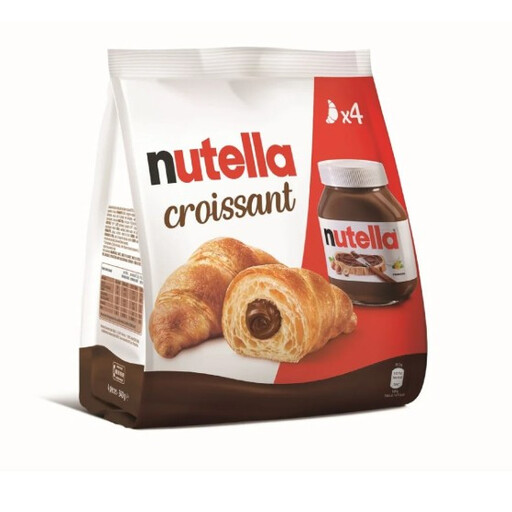 Image unavailable
These croissants are already filled, making them a sweet treat, but they’re not the right choice if you want a plain croissant to open and fill yourself.
Pack size: four croissants weighing 340 g. Check the packaging for preparation and storage instructions, as well as allergen information.
No. This phrase doesn’t guarantee that the croissant will be cut into thick slices. For a filling, choose a whole croissant that’s the right size for you, then cut it lengthways, as shown in a Bridor sandwich recipe.
Check the allergen information for the exact product, whether it’s packaged or sold loose. For example, Lidl France lists wheat flour, butter containing milk and eggs in the ingredients for its all-butter croissant.
Choose a ready-to-eat croissant if you want to serve it straight away. A ready-to-bake croissant is a good choice when you have the time and equipment to prepare it before your afternoon snack. Follow the instructions for the product you’ve bought, rather than using instructions for a different product.
Follow the storage instructions for the croissant and each ingredient you add. If the filling needs to be kept chilled, keep it cold during transport and until serving. Anses warns that breaking the cold chain can encourage bacteria to grow.