Households that take out frozen portions every day
If you want to find a meal without rummaging through your entire stock, consider an upright freezer with drawers. Check that the drawer layout also suits the size of your containers.


For neatly organised portions you can find every day, start by looking at upright freezers and the space you’ll need to install one. A chest freezer is a better fit for bulk storage if you have a dedicated area of floor space; an under-counter model is more suited to providing extra capacity. If you’re short of space for both chilled and frozen food, you could also consider replacing your existing fridge freezer, after checking how much of its capacity is dedicated to freezing.
If you want to find a meal without rummaging through your entire stock, consider an upright freezer with drawers. Check that the drawer layout also suits the size of your containers.
A chest freezer can store extra supplies in a separate room, as long as you leave enough space to open the lid. The room temperature must also be suitable for the model you choose.
An under-counter freezer is worth considering if you want to store a few extra portions. Compare its usable capacity with your needs, and check that the door can open fully and there’s enough clearance for installation.
Start with how often you take out frozen meals, then compare the capacity you want with the space you actually have available.
| Feature | What to check | What I need |
|---|---|---|
| Access to portions | Compare drawers, compartments and baskets. Check that your meals and bags fit and are easy to find. | I take out portions almost every day: an organised upright freezer saves me from having to move everything around. With a chest freezer, I plan how to store food at the bottom. |
| Capacity and footprint | Compare the usable capacity with the amount of food you want to store, then measure the height, width and depth of the space. Remember to allow room for the door or lid to open. | I only need a little extra space, so I don’t want to give the appliance more room than necessary. If I’m stocking up, I check that a chest or upright freezer will actually fit. |
| Room for installation | Check that the room’s minimum and maximum temperatures fall within the range specified for the model. Leave the ventilation clearances stated in the manual. | The freezer will go in a garage or pantry, so I check that it’s suitable for that specific room rather than assuming all chest freezers can cope with the cold. |
| Maintenance and noise | Check the defrosting method, noise level in dB(A) and annual energy consumption in kWh in the model specifications. | Noise matters to me if the kitchen is near the living area. I also want to know whether defrosting will be part of routine maintenance. |
| Replacing your fridge freezer | If you’re replacing your fridge, distinguish its total capacity from the capacity dedicated to freezing, and check the installation dimensions. | I need more space for fresh food as well as frozen meals, so a larger fridge freezer could meet both needs without adding a separate appliance. |
Capacity doesn’t tell you whether the appliance will fit in the space, whether the door will open far enough or whether your portions will be easy to reach.
Measure the space and the delivery route, then compare the interior layout with your containers and how often you’ll need to access them.
The permitted ambient temperature range depends on the model, not just its style. For example, Bosch specifies a range of 10 to 43 °C for climate class SN-T. That alone won’t cover a garage where the temperature drops below 10 °C.
Compare the room’s temperatures throughout the year with the freezer’s specifications and manual. Check that the specific model is rated for lower temperatures before choosing it.
Two models designed for the same space can require different levels of maintenance or have different noise levels.
Check the defrosting method, dB(A) and kWh/year for each model, especially if it will be near a living area.
These models are examples of different styles to compare; their features don’t automatically apply to other models from the same brand.
The FNe 5217 Pure NoFrost is an example of a dedicated upright freezer.
The CF200EWN offers a useful point of comparison for a chest freezer.
The GTV15NWEB is an example of an under-counter freezer to consider for extra capacity.
The WHK 22373 X6EA is worth considering if you’re also replacing your main fridge.
These options include an upright freezer for organising portions, two chest freezers for extra storage, a compact vertical model and a fridge freezer to consider if you’re replacing your fridge as well.
 Image unavailable
Worth considering if you want to organise portions in drawers and access your supplies regularly.
The product title lists a capacity of 161 l, No Frost and energy class C. Before choosing where to put it, check its dimensions, ventilation requirements and permitted ambient temperatures.
 Image unavailable
This fridge freezer is worth considering if you’re also replacing your main fridge, rather than looking to add a separate freezer.
The product title lists Total No Frost and energy class E. Compare the freezer compartment’s capacity with your needs, then check the installation clearances in the manual.
 Image unavailable
For a little extra storage, its removable basket helps you separate some foods. Items at the bottom will take more organising than in an upright freezer with drawers.
The product title lists energy class E. Check how much room you’ll need to open the lid and the permitted temperature range for the room.
 Image unavailable
This capacity is suited to a small amount of extra storage rather than a large stock of ready meals.
The product title mentions drawers, a reversible door and energy class E. If you’re considering installing it under a worktop, check the dimensions, ventilation and door clearance; also check how it defrosts.
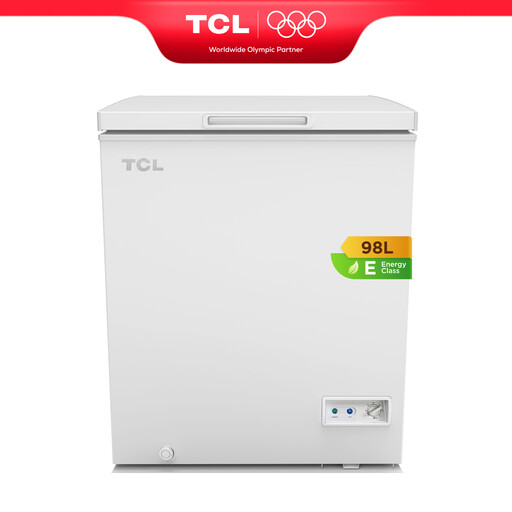 Image unavailable
This chest freezer adds extra storage. The included basket helps keep some foods within easy reach, while items at the bottom need to be organised separately.
The product title mentions a counterbalanced lid and energy class E. Check the dimensions, lid clearance and suitability for the room temperature. If you’re storing frozen meals long term, also check the freezer mode settings.
Yes, as long as the garage temperature stays within the range permitted for that specific model. For example, Bosch lists 10 to 32 °C for climate class SN and 10 to 43 °C for SN-T. These ranges won’t be suitable for a garage where the temperature drops below 10 °C. Check the product information and manual if the room could get colder.
Measure the height, width and depth of the space, as well as the delivery route. Allow room for the door or lid to open fully and for the ventilation clearances specified in the model’s manual.
Compare their stated annual energy consumption in kWh, taking their usable capacity and type into account. Also check the energy label and installation requirements: the energy rating alone doesn’t tell you which capacity will meet your needs.