
Livraison le jour même ou le lendemain

Qualité garantie

Débloquez vos offres de bienvenue: Livraison GRATUITE | Jusqu'à -80 % | 30 jours d'essai gratuits à JoyPlus
Téléchargez l'application
Reading a novel, an instruction manual or an email becomes far less enjoyable when you have to squint constantly at small print. Ready-made reading glasses offer a simple solution for improving near vision, whether at the office or at home. The trick, however, is choosing the right strength, a suitable frame and a build quality that matches how you intend to use them.
Some marketing claims should be taken with a pinch of salt. A stylish frame will never make up for a poorly chosen strength, and an ultra-lightweight model won't necessarily be the best companion for heavy use. Here are the criteria to consider before ordering presbyopia glasses or magnifying glasses.
Reading glasses generally come in several magnification levels. The references 150D, 200D, 250D, 300D, 350D and 400D correspond to graduated strengths, often presented as roughly equivalent to 1.5 to 4 dioptres, depending on the marking used by the manufacturer.
Choosing the highest value simply because it magnifies the text more can quickly become uncomfortable. The simplest approach is to start from the strength of your current pair, if you already use one, and then consider your usual reading distance. A pair designed for a book held a few dozen centimetres away won't necessarily meet the same needs as a model used in front of a screen.
Half-rim, rimless and full-rim models don't distribute weight in the same way. A frame that is too flexible may slip on your nose, while a very lightweight structure can feel less reassuring if the glasses are carried without a case.
Before placing an order, check in particular:
Reading glasses are occasional aids for near vision. They do not replace a prescribed pair and must not be used for driving, operating machinery or protecting against splashes. If you experience headaches, eye strain or persistent discomfort, stop wearing them and seek advice from an eye care professional.
For occasional use, a moderate strength may be sufficient. The 150D to 250D references in this selection correspond to light to intermediate magnification needs. The 300D to 400D values are aimed more at people who want stronger magnification for deciphering very small print.
This indication obviously does not replace an individual prescription. If you frequently switch between distance and near vision, a pair dedicated specifically to reading will generally be more practical than prolonged wear with an unsuitable correction.
The right choice therefore depends less on trends than on how often you use them, your storage habits and your personal preferences. The red, silver and transparent tea colour options also make it easy to find reading glasses for men and women that complement both professional and casual outfits.
For glasses for reading at the office and at home, choose a pair that stays securely in place without putting excessive pressure on your nose or temples. Clean the lenses with a microfibre cloth and store the glasses in a case whenever you're not wearing them. Also avoid intense heat and prolonged exposure to sunlight, which can damage certain materials.
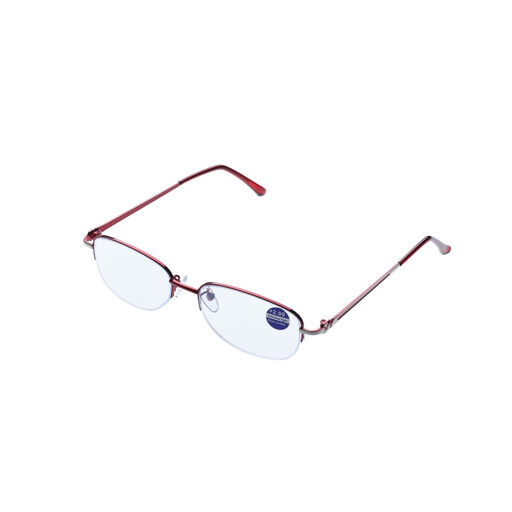
Why this choice suits this profile: this red half-frame pair is ideal for those who want to start with a light magnification. Its unisex style works well for everyday use, both at home and in the office.
The 150D strength prevents you from starting with the highest magnification level when your needs are only moderate.
A red half-frame with a unisex design, described as suitable for use both at the office and at home.
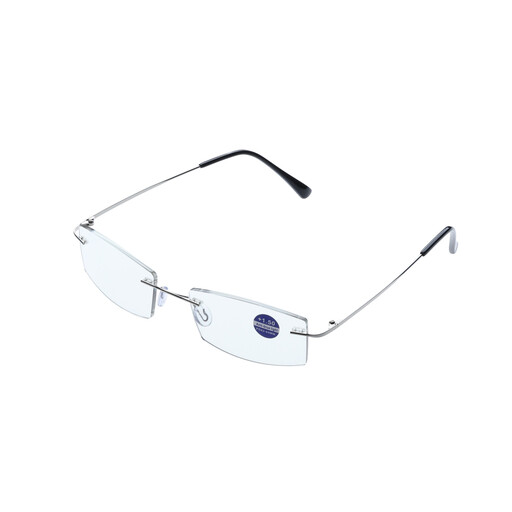
Why this choice suits this profile: this silver rimless model offers a discreet look and high magnification, making it suitable for people who regularly read small print.
The product page clearly states the 400D strength and rimless design, making it easy to compare before buying.
A silver colour, unisex design and clearly stated magnification level.
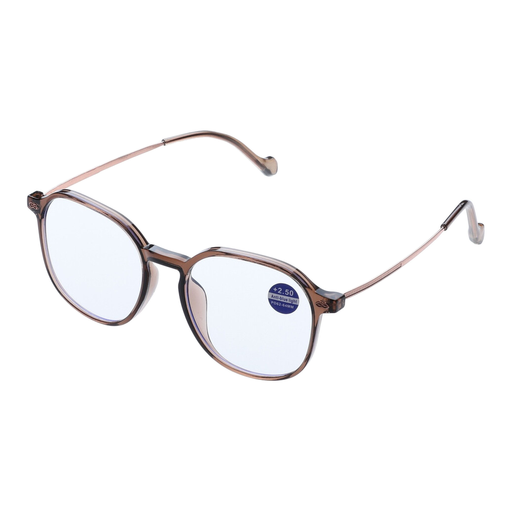
Why this choice suits this profile: its full-rim design and 300D strength make it suitable for regular use when reading books, documents or screens, with a understated look.
The lenses are fully surrounded by the frame, which reduces their direct exposure during storage and transport.
A full-rim frame, 300D strength, a protective case mentioned on the product page and intended use at both the office and at home.
We've compiled a complete, real-time updated selection of products that meet these strict criteria, as well as European safety regulations.
Compare it with the strength of your current pair, if you already use one. If not, start with a moderate strength and take into account the distance at which you usually read. Any discomfort, distorted vision or headaches should prompt you to seek professional advice.
This depends on the quality of the frame, how often you use them and how you store them. A case, cleaning with a microfibre cloth and protection from excessive heat all help to preserve the lenses and frame. Replace the glasses if they become scratched, warped or no longer stay properly centred.
Yes, provided the strength and reading distance suit you in both cases. A screen placed further away than a book may, however, require some adjustment. Reading glasses are not intended for driving or for protection against occupational hazards.