
Livraison le jour même ou le lendemain

Qualité garantie

Débloquez vos offres de bienvenue: Livraison GRATUITE | Jusqu'à -80 % | 30 jours d'essai gratuits à JoyPlus
Téléchargez l'application
Reading a label, a novel or a message on a screen quickly becomes tiresome when small print starts to blur. Ready-made reading glasses offer a practical solution for near vision, particularly for presbyopia. But you still need to choose a pair that suits your habits: not all frames and magnifications are created equal.
Before placing an order, three mistakes are particularly common:
To avoid a disappointing purchase, it is better to take a close look at the magnification, the shape of the frame and the intended use.
The power is usually expressed in dioptres, sometimes written as "150D", "300D" or "400D". For this range, these indications most often correspond to approximately +1.5 to +4 dioptres. The higher the number, the greater the magnification — but the closer the focusing distance also becomes.
For a first pair, a moderate power can be suitable for reading a newspaper, a book or a label. More powerful models can be useful for deciphering very small print, provided you are comfortable with a shorter reading distance.
If your two eyes do not have the same prescription, if you regularly suffer from headaches or if your eyesight is changing quickly, seek advice from an optician or another vision professional before choosing a standard model.
Classic reading glasses have a full frame that completely surrounds the lenses. Their stable structure lends itself well to prolonged use, both at the office and at home. Half-frame models, on the other hand, allow you to look over the lenses without taking the glasses off — handy for quickly switching between a document and a person in front of you.
A rimless frame is more discreet, while a full frame generally protects the edges of the lenses better against everyday knocks. Also remember to check the width of the frame, the length of the arms and the fit on your nose: the lenses must remain well centred in front of your eyes.
Glasses with a case can be easily stored in a drawer, a work bag or on a bedside table. The case prevents scratches when the pair is not in use. For cleaning, use a clean microfibre cloth and avoid household cleaning products or harsh solvents.
Please note, these glasses are not protective equipment. They must not be worn for driving, operating machinery or protecting against splashes.
The models below correspond to different near-vision uses. The powers and features shown are those stated on the product pages.
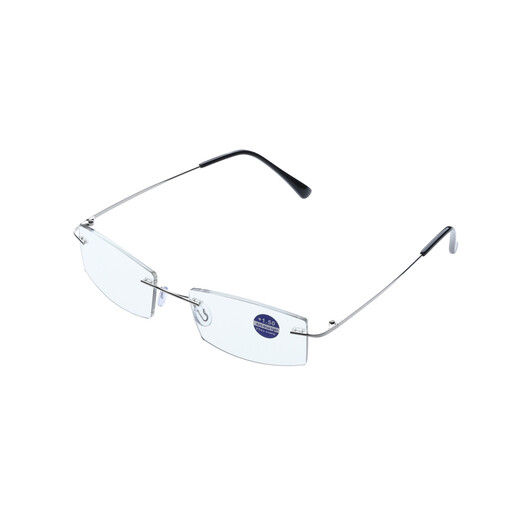
Why this model might suit you: With their 150D power, these glasses are a reasonable starting point for those who want to try a reading pair for everyday texts, at the office or at home. Their silver rimless frame remains discreet.
This moderate power avoids starting with too strong a magnification. You will still need to check that the reading distance suits you and that the pair remains comfortable.
A 150D power and a silver rimless design. The model is presented as unisex and suitable for both the office and home.
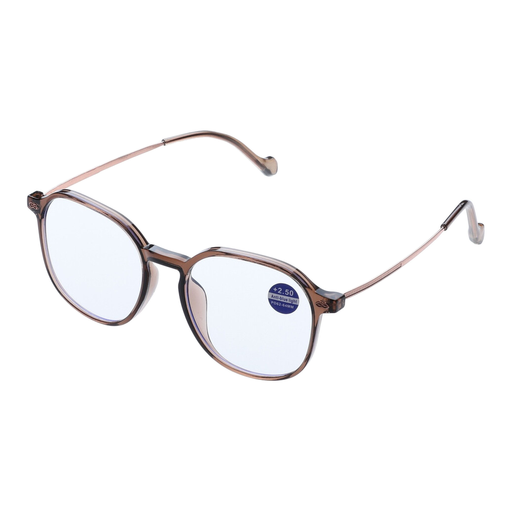
Why this model might suit you: This full-frame pair is aimed at those who want a classic style and good stability for reading documents, books or screens in different environments.
The product page mentions a full frame and a protective case. Two useful features to avoid problems caused by careless storage or a frame that lacks stability.
A 300D magnification, a transparent tea-coloured full frame and a case included. The model is listed as unisex.
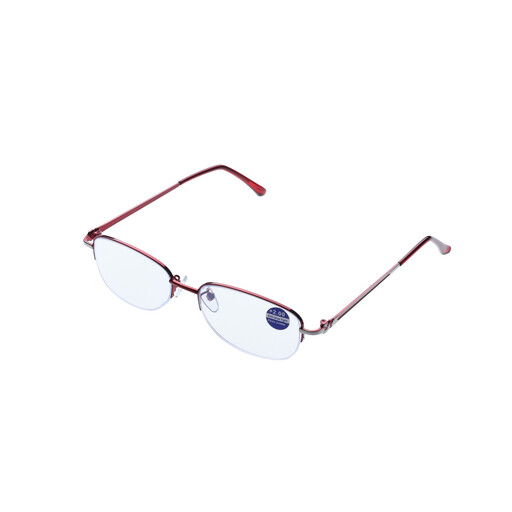
Why this model might suit you: Its 400D power is aimed at those who need to decipher particularly small print. Its half-frame also allows you to look over the lenses without removing the glasses.
The half-frame makes it easy to switch from reading to looking at a distance. However, such a high magnification must be used at the distance where it remains truly comfortable.
A 400D power, a red half-rim frame and a design described as unisex for the office or home.
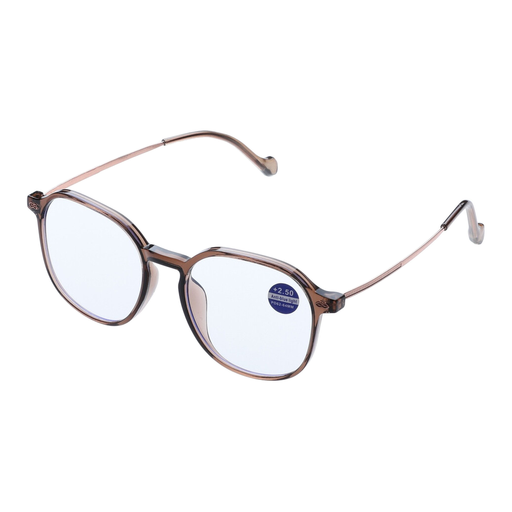
Why this model might suit you: Its full frame and intermediate power can suit someone who often reads reports, books or screens and wants to keep a dedicated pair at their workspace.
The full frame promotes good stability during long reading sessions. To avoid smudges and scratches, store the pair in its case and clean the lenses with a microfibre cloth.
A 350D magnification, a transparent tea-coloured full frame and use described for both the office and home.
We have selected a complete and regularly updated range of products that meet these selection criteria as well as European safety requirements.
There is no universal power. Models around 1.5 to 2 dioptres can be a good starting point for reading everyday texts, while higher powers are more suited to closer reading. The best guide remains the distance at which the text stays clear and comfortable. If you are unsure between several powers, a professional opinion can help you avoid an unsuitable choice.
Yes, provided the distance between your eyes and the screen matches the focusing zone of the lenses. Reading glasses are designed for near vision and can become uncomfortable with a screen placed further away. Remember to adjust the brightness, adopt a comfortable position and take regular breaks.
It all depends on the quality of the frame, how often you use them and how you store them. A pair handled with care can remain functional as long as the lenses, arms and frame are in good condition. Replace them if they become warped, scratched or if wearing them causes persistent discomfort.