
Livraison le jour même ou le lendemain

Qualité garantie

Débloquez vos offres de bienvenue: Livraison GRATUITE | Jusqu'à -80 % | 30 jours d'essai gratuits à JoyPlus
Téléchargez l'application
Reading a novel, deciphering instructions or working on a screen quickly becomes less comfortable when small print lacks sharpness. Reading glasses offer a practical solution, whether for occasional use or everyday wear, at home or in the office. The key is choosing a pair that suits your habits, your reading distance and the level of magnification you actually need.
Price alone isn't enough to decide between two models. A frame that slips, a poorly chosen strength or lenses that are difficult to clean can quickly turn a bargain into an accessory that stays at the bottom of a drawer.
A more powerful pair of magnifying glasses isn't necessarily more comfortable. Excessive magnification reduces the area of sharpness and can force you to hold the book or screen too close. In this selection, the strengths range from approximately 1.50 to 4.00 dioptres, depending on the notation used in each product's description.
For a first purchase, it's better to start with a strength close to one you've used before rather than picking a high value at random. If you experience persistent discomfort, headaches or eye strain, remove the glasses and seek advice from an eye care professional.
Glasses that slip down your nose alter the centring of the lenses and make reading less enjoyable. A full-frame design completely surrounds the lenses and generally offers reassuring stability for regular use. Half-frame and rimless models are more discreet, but their durability and stability depend more on their construction and how they are handled.
An elegant colour or shape won't make up for a pair that's poorly suited to your reading distance. For professional use, check that the frame remains comfortable during long sessions spent with documents or a screen. At home, a case and easy cleaning also help limit scratches and dust build-up.
Optical power is expressed in dioptres. In listings, a mention such as 150D, 200D or 300D generally corresponds to a magnification level presented in this form by the seller. Always check the description of your chosen model to confirm the exact value and recommended use.
These guidelines are not a substitute for a personalised prescription. Ready-to-wear reading glasses are not prescription glasses and must not be used for driving.
Classic reading glasses with a full frame completely surround the lenses and remain a sensible choice for frequent use. A half-frame allows you to look over the lenses without removing the glasses, which can be handy for switching between a page and a conversation. Rimless glasses focus on discretion and lightness, but generally require more care when handling.
For reading glasses for the office and home, check the strength, the grip of the temples, the width of the frame and whether a case is included. If you use multiple spaces, leaving one pair at the office and another by your armchair can save you from forgetting them and from constant handling.
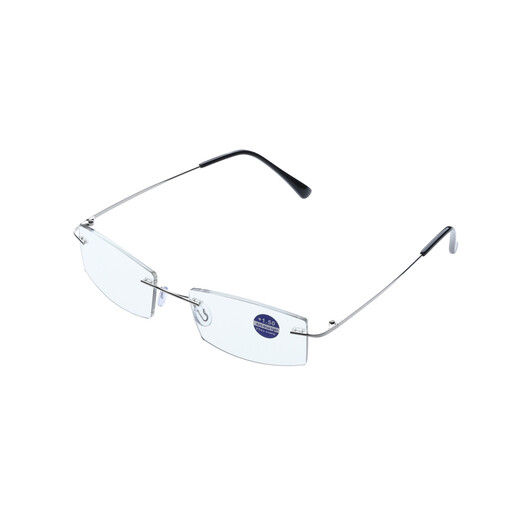
Why this choice suits this profile: with their 150D strength and rimless design, these glasses make a discreet first pair for occasional reading.
Its low strength reduces the risk of choosing too high a magnification straight away without checking your needs.
Silver rimless frame, unisex design and 150D strength stated in the product name.
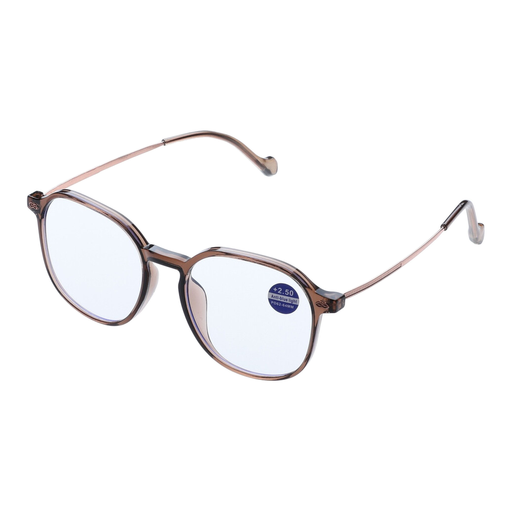
Why this choice suits this profile: this classic full-frame pair fits easily into a regular reading routine, whether at work or at home.
The full frame surrounds the lenses and promises more stable hold than a particularly minimalist model.
300D strength, transparent tea colour, full frame and protective case mentioned in the product description.
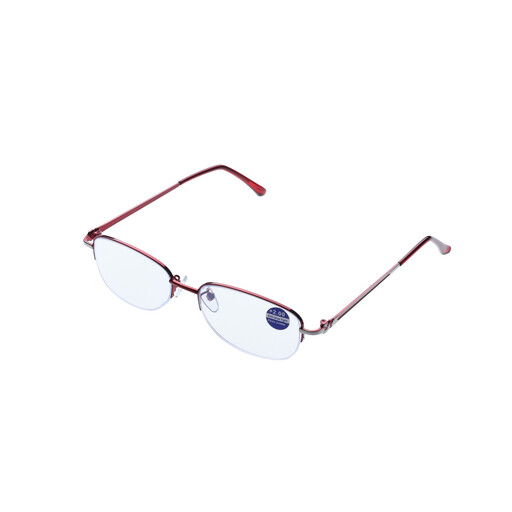
Why this choice suits this profile: the half-frame makes it easy to switch from the page to your surroundings, while the 400D strength is aimed at those seeking high magnification.
The description specifies the strength and frame type, so you don't choose a pair based on colour alone.
Red half-frame, unisex design and 400D strength as stated.
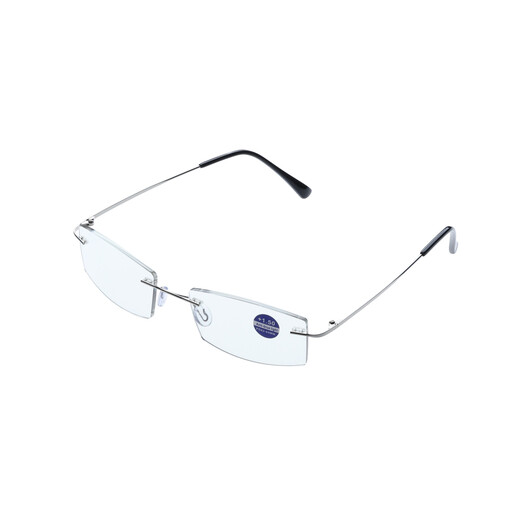
Why this choice suits this profile: their silver rimless design is aimed at adults looking for a discreet unisex pair.
The description clearly states the rimless design and 300D strength, two things to check before buying.
Rimless design, silver colour, 300D strength and design dedicated to reading.
We've put together a complete selection, updated in real time, of products that meet these strict criteria as well as European safety requirements.
Start by comparing the strength of your current pair, if you already use one. For a first purchase, a light to medium magnification can work for books and documents, but the right value depends mainly on your reading distance and comfort. Ready-to-wear glasses are not a substitute for equipment based on an individual prescription.
Yes, they can be used with some screens at close range, provided the strength matches your use. A screen placed further away than a book may require a different correction. Take regular breaks and remove the pair at the first sign of discomfort.
It all depends on frequency of use, knocks, cleaning and storage conditions. A full frame may be preferable if you want a more enveloping structure, while a rimless model generally requires more care. Regularly check the condition of the lenses, temples and fixing points.