
Livraison le jour même ou le lendemain

Qualité garantie

Débloquez vos offres de bienvenue: Livraison GRATUITE | Jusqu'à -80 % | 30 jours d'essai gratuits à JoyPlus
Téléchargez l'application
Does reading a book, looking at a restaurant menu, or deciphering the fine print on a contract feel like a challenge? Rest assured, you're not alone. With age, presbyopia sets in and near vision becomes blurry. Ready-to-wear reading glasses, also known as readers, are a straightforward and cost-effective solution. But be careful: with an overwhelming number of options available, it's easy to make the wrong choice, leading to discomfort and eye strain.
As a product expert at Joybuy, my mission is to help you see things more clearly. To help you avoid disappointment, here are the three pitfalls to sidestep and the essential criteria for choosing the pair that's truly right for you.
Before grabbing the first pair you see at the pharmacy or supermarket, it's best to know the common issues that can turn a good idea into a daily ordeal.
To make the right choice, there's no secret: you need to consider a few technical criteria. These are what will make the difference between a pair you'll abandon in a drawer and one that will become your constant companion.
The power of presbyopia glasses is expressed in diopters (e.g., +1.50, +2.00). Choosing the right one is the crucial starting point. Ideally, only an eye care professional (ophthalmologist, optician) can determine your exact correction. However, you can get a general idea based on an age-based estimate. Over-the-counter models cover a range from +1.00 to +4.00. If you're hesitating between two powers, it's best to opt for the lower of the two.
The frame isn't just about looks: it directly determines the durability and comfort of your glasses.
When it comes to materials, TR90 is a reliable choice: ultra-lightweight and flexible, it's both comfortable and holds its shape exceptionally well. A well-made classic frame in metal or acetate also remains an excellent choice for its longevity.
Some glasses go beyond simple correction and include welcome protective features:
To help you make your choice, here are a few models from our catalogue that meet specific needs, analysed based on their technical specifications.
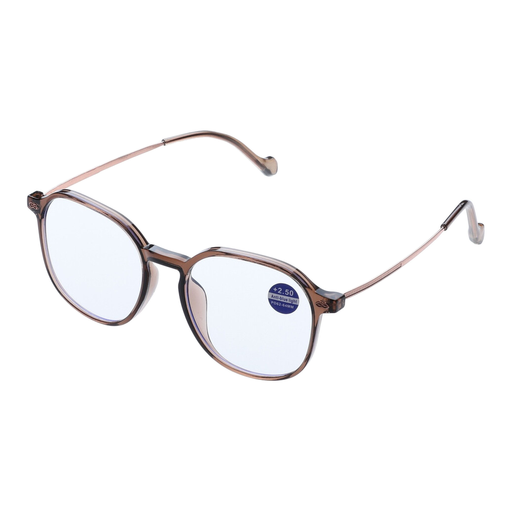
The Profile: Perfect for those who spend long hours reading or working on a screen. Its unisex style and understated colour fit any setting, from the office to home.
Its full-rim frame ensures excellent durability, a far cry from low-end models that break at the first impact.
A simple, sturdy design built for intensive use and a perfect fit on the nose.
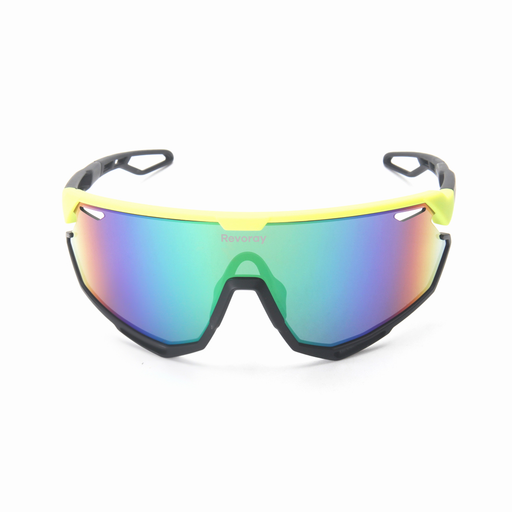
The Profile: Designed for cyclists and athletes who demand protection, lightness, and a secure fit. Please note, these are technical sunglasses, not reading glasses.
Thanks to its TR90 frame (barely 30g) and non-slip nose pads, say goodbye to discomfort or glasses that slip during exertion.
Its single-piece, impact-resistant polycarbonate lens with UV400 protection ensures maximum safety and a perfectly clear view.
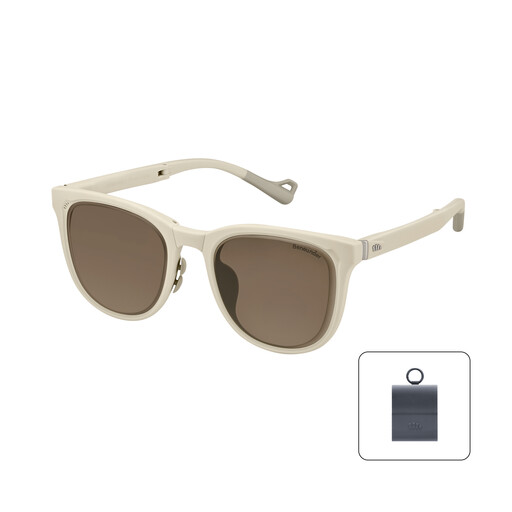
The Profile: For those who want UV400 sunglasses with a timeless look, without sacrificing technology. Their key advantage? They fold to slip into any pocket.
Its ultra-lightweight TR90 frame and three-level adjustable temples guarantee optimal comfort, even after several hours.
The ultra-compact folding system and multi-coated nylon lenses (anti-reflective, oleophobic, anti-scratch).
Discover our full selection of products that meet our quality criteria and current safety standards.
The ideal power is unique to each person. However, the following chart can give you a general idea. Please note, this is no substitute for the advice of an eye care professional?:
Remember that these non-prescription glasses are intended for near vision only. If you have any doubts, experience headaches, or if your distance vision deteriorates, there's only one thing to do: consult an ophthalmologist.
Absolutely not. They are supplementary visual aids, designed for near vision (reading at 30-40 cm). Keeping them on to look into the distance will make your vision blurry and cause fatigue. It is strictly forbidden and extremely dangerous to drive while wearing them.
A few simple steps are all it takes to extend the life of your glasses?: