
Livraison le jour même ou le lendemain

Qualité garantie

Débloquez vos offres de bienvenue: Livraison GRATUITE | Jusqu'à -80 % | 30 jours d'essai gratuits à JoyPlus
Téléchargez l'application
The letters are blurring, the restaurant menu has become a puzzle, and deciphering the fine print on packaging is a monumental task. If this scenario sounds familiar, a pair of reading glasses is likely the solution. But be careful: faced with a huge selection, it's easy to make a mistake and end up with a model that's uncomfortable or, worse, completely ineffective.
As a section editor at Joybuy, my mission is to help you see things more clearly. Let's forget the marketing jargon and get straight to the point: finding the perfect pair of reading glasses for your daily life, whether at the office or at home.
Before you start shopping, here are the most common mistakes that lead to immediate buyer's remorse.
For a successful purchase, three key points deserve your full attention. They are the secret to restored visual comfort and a pair of glasses that lasts.
The diopter is the unit that measures the magnification power of the lenses. It is indicated by a "+" sign followed by a number (e.g., +1.50, +2.00). Choosing the right strength is crucial to avoid straining your eyes.
Although an ophthalmologist's advice is always the gold standard, here is a general age-based guide to help you choose your reading glasses with the right diopter:
This chart is just a suggestion. The best approach is to test different diopters in a store to find the one that offers the clearest and most comfortable reading at a distance of 30 to 40 cm.
The type of frame directly impacts the sturdiness and comfort of your glasses.
The materials determine the weight, flexibility, and longevity of your glasses. Frames made of high-quality plastic (like polycarbonate or TR90) combine impact resistance with lightness. Those made of metal are often thinner and easier to adjust, but be sure to check the sturdiness of the hinges.
Here are a few models that meet specific needs, taking into account our criteria for durability and functionality.
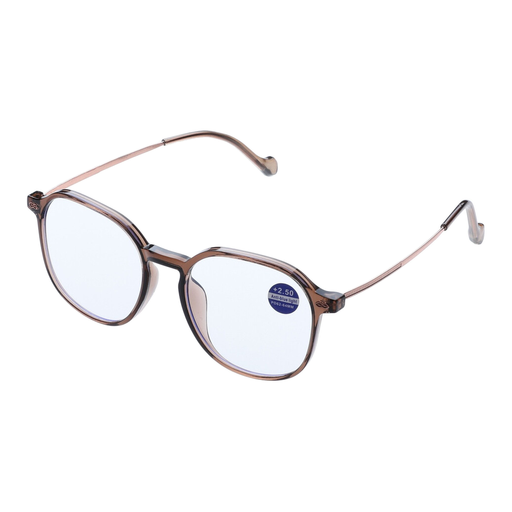
WHY THIS MODEL? Ideal for the first signs of presbyopia: reading a menu, a price tag in a store, or a text message. The +1.50 diopter is an excellent starting point.
The full-frame design offers much better durability than flimsy entry-level models, ensuring good lens protection and a longer lifespan.
A classic, unisex style that goes with everything. Its simple yet durable construction is designed for hassle-free daily use.
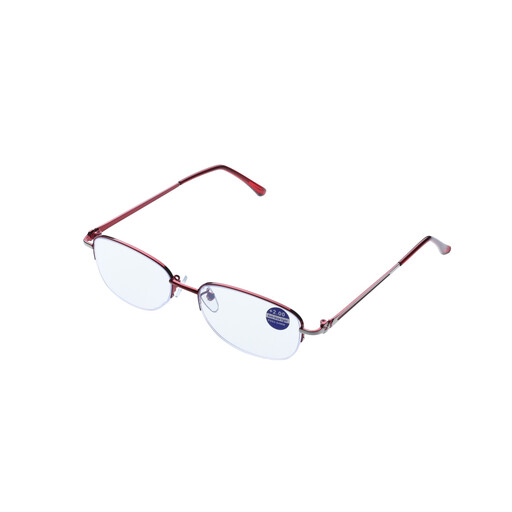
WHY THIS MODEL? Perfect for long hours of reading documents or on-screen work. The half-frame design allows you to look up at a colleague or into the distance without ever taking off your glasses.
This model avoids the trap of the uncomfortable "one-size-fits-all" frame. Its lightness and functional design are intended for extended wear without pressure on the nose or temples.
An ultra-practical design for multitasking at the office. Its simple style and durability make it a reliable ally for daily professional use.
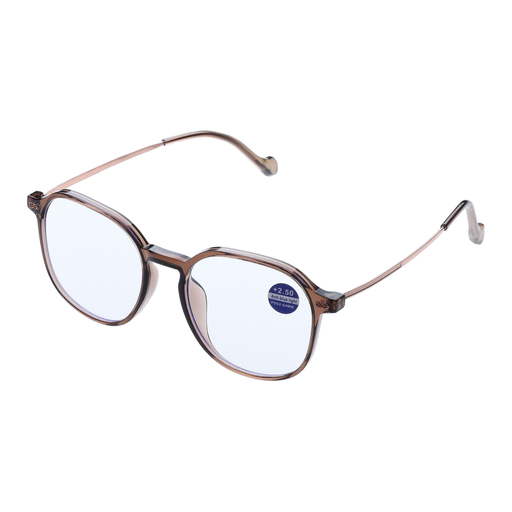
WHY THIS MODEL? Essential for those who need strong magnification (+4.00) to decipher the smallest print (medication labels, contracts) or for detailed hobbies like model making or sewing.
With a high diopter, lens quality is paramount to avoid distortion. This model offers impeccable clarity, and its full-frame design ensures the necessarily thicker lenses are held securely.
Strong magnification for tasks requiring high precision. The sturdy frame guarantees excellent stability, even with powerful lenses.
A good pair of glasses is essential, but a comfortable workspace is just as important. To complete your reading nook or home office, the right furniture can make all the difference in improving your posture and overall well-being.
Discover our selection of ergonomic and functional desks, designed to support your reading and work sessions.
The ideal diopter depends on your vision. A quick test at a pharmacy or store can give you an initial idea, but only an ophthalmologist can provide a precise diagnosis. Our chart above is a good starting point.
Yes, absolutely. Reading glasses are perfect for reading on a computer, tablet, or smartphone, as the distance is similar to that of a book. For intensive use, lenses with a blue light filter can provide additional comfort.
The lifespan depends on the quality of the materials and how you care for them. A model with a solid frame and robust hinges, always stored in its case, can last for several years. That's the secret to a truly cost-effective purchase in the long run.