
Livraison le jour même ou le lendemain

Qualité garantie

Débloquez vos offres de bienvenue: Livraison GRATUITE | Jusqu'à -80 % | 30 jours d'essai gratuits à JoyPlus
Téléchargez l'application
Drifting, the art of controlled sliding that prioritises style over pure speed, has taken the world of model cars by storm. But choosing your first, or next, 1/24 scale RC drift car can sometimes be a real headache. Faced with a maze of models and spec sheets—from drivetrain types and gyros to different tyre compounds—it's easy to feel lost.
Don't worry, this guide is here to light the way. We'll break down the essential features and present a selection of models for every profile, from the curious beginner to the seasoned driver. Our goal: to give you all the keys to making the right choice.
Before diving into our top picks, let's review the key technical points that make all the difference in a great RC drift car.
For drifting, a four-wheel drive (4WD) drivetrain is almost essential, especially for beginners. Unlike a simple rear-wheel drive setup, a 4WD RC drift car distributes power to all four wheels. The result is far better control over slides, allowing you to initiate, hold, and exit corners with much greater stability. This configuration is also more forgiving of small driving mistakes.
The gyroscope is a small electronic module that detects the start of an uncontrolled slide (the dreaded spin-out) and automatically corrects the car's trajectory by counter-steering. For a beginner's RC drift car, it's your best friend. It stabilises the vehicle during a drift, making the learning process much more intuitive and less frustrating. More advanced models feature an adjustable gyro, allowing experienced drivers to fine-tune the level of assistance to match their style.
Most drift cars come with two sets of tyres:
Proportional throttle and steering control is another crucial factor. It's essential for precisely modulating your speed and steering angle—the key to successful drift modeling.
Enough theory, let's get practical! Here are the models that caught our eye, suitable for all budgets and skill levels.
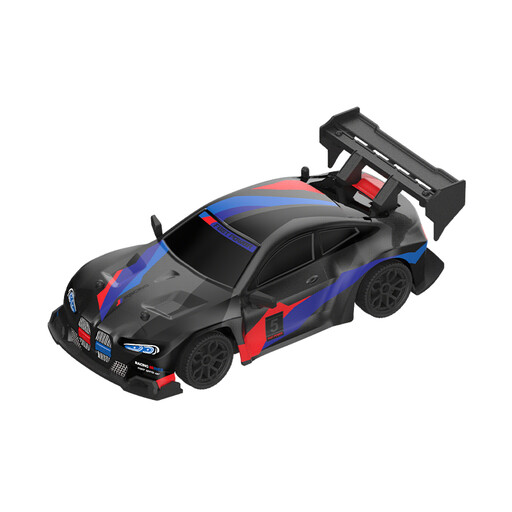
Why it stands out: This model combines a design inspired by an automotive icon with all the basic equipment needed to get started in RC drifting. Its simplicity and great looks make it an excellent starting point, and a perfect gift idea for a teen looking to discover the hobby.
Key Features:
Who is it for? Ideal for teens and absolute beginners who want a stylish, high-performance RC car to execute their first drifts without getting bogged down by complicated settings.
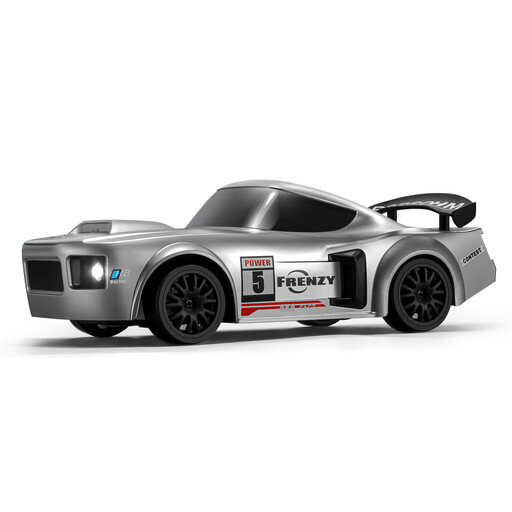
Why it stands out: The inclusion of an adjustable gyro takes this model to another level. It offers a driving assist that can be fine-tuned (or disabled) to grow with the driver's skill. Its retro "wide body" look will appeal to fans of JDM and tuner cars.
Key Features:
Who is it for? For drivers with some experience or motivated beginners looking for a model that can evolve with them. The gyro makes it an excellent RC car for learning how to chain together longer and more technical drifts.
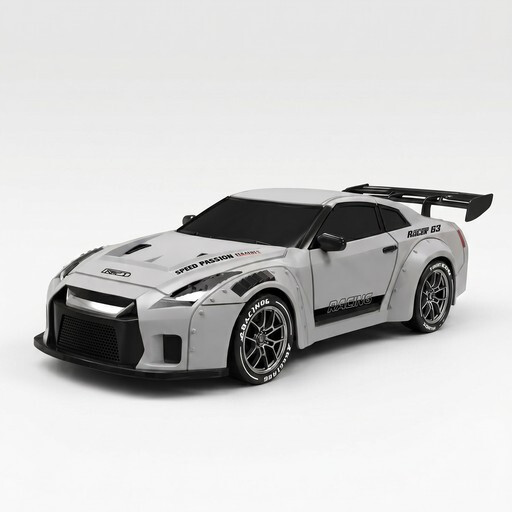
Why it stands out: Here, we're moving upmarket. This model is built for performance, thanks in large part to its professional-grade steering servo. This component ensures a much faster and more precise steering response, a decisive advantage for sharp angle changes and pinpoint corrections mid-drift.
Key Features:
Who is it for? For drift modeling enthusiasts and intermediate to advanced drivers who want a precise, responsive machine to take their skills to the next level.
Our selection focuses on new 1/24 scale models, but the world of RC cars is vast. If you're interested in other scales or configurations, or if you're on a tighter budget, don't hesitate to explore the second-hand market, which is often full of hidden gems.
? Discover our selection of used RC cars and trucks
What's the difference between an RC drift car and a standard RC racing car? It all comes down to the tyres and chassis setup. A drift car uses hard plastic tyres to slide, whereas a racing car seeks maximum grip with soft rubber tyres. Drift cars also have specific suspension and steering settings to encourage and control the slide.
Is a gyroscope essential for an RC drift beginner? Not essential, no. But highly recommended, yes! A gyro greatly simplifies the learning process by stabilising the car to prevent spin-outs. This allows the beginner to focus on throttle control and driving lines, making the experience more rewarding and progress much faster.
Can you use a 1/24 scale RC drift car outdoors? Yes, but only if you choose your surface carefully. The compact 1/24 scale is most at home on smooth surfaces like tile, wood flooring, polished concrete, or very fine asphalt. Avoid gravel, grass, or uneven ground at all costs, as they can damage the chassis and jam the wheels. A clean car park or a patio are perfect playgrounds.