
Livraison le jour même ou le lendemain

Qualité garantie

Débloquez vos offres de bienvenue: Livraison GRATUITE | Jusqu'à -80 % | 30 jours d'essai gratuits à JoyPlus
Téléchargez l'application
Drifting, the art of the controlled slide, is gaining more and more fans in the world of RC modelling. An RC drift car promises thrilling experiences, as long as you choose the right model. The problem? The market is flooded with cars that make tempting promises but often hide deal-breaking flaws. To save you from disappointment (and wasted money), here are the pitfalls to avoid and the essential criteria to check before you buy.
Killer looks or a rock-bottom price aren't everything. In fact, they're often a recipe for disappointment. Here are the key things to watch out for.
To ensure you choose a model that delivers a genuine driving experience, focus on these three key points.
For drifting, all-wheel drive (4WD RC car) isn't an option—it's the standard. Unlike simple rear-wheel drive (2WD), four-wheel drive provides better power distribution and formidable stability during a slide. This setup makes it much easier to control the drift and correct your line, a decisive advantage when getting started with a beginner RC car.
Precision is the key to drifting. Make sure the model is equipped with proportional control. In practical terms, this means the speed and steering angle should respond precisely to the pressure you apply to the remote's trigger and wheel. The inclusion of an electronic gyroscope is an undeniable plus: it stabilises the vehicle by automatically applying counter-steer to prevent spin-outs. Bonus: on some models, its sensitivity is adjustable to adapt to your skill level as you improve.
Scale is simply the car's size. A 1/24 scale RC car has a compact footprint, perfect for practicing indoors on tile or hardwood floors. A crucial point for drifting: the tires must be hard and smooth. A good model often comes with two sets of wheels: smooth "drift" tires and rubber "grip" tires for traction-based racing. This versatility is ideal for mixing things up without having to buy a second RC race car.
To help you make your choice, here are three models that check all the boxes, each suited to a different type of driver.
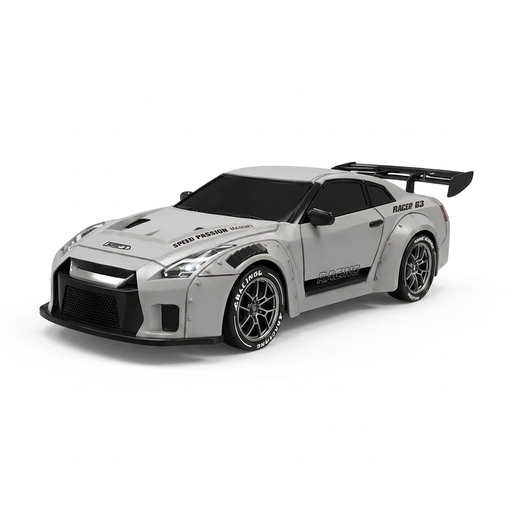
Why this model? Perfect for a first-time purchase, for teens and adults alike. This model ensures a gradual learning curve with its two speed modes and adjustable gyro. It's ideal for getting started in drifting without being overwhelmed by the power.
It avoids the "all-or-nothing" trap with its proportional control and driver-assist gyro. Its shock-resistant ABS body forgives early mistakes.
It comes with two sets of tires (drift and grip) and is equipped with LED headlights, offering a complete and versatile experience right out of the box.
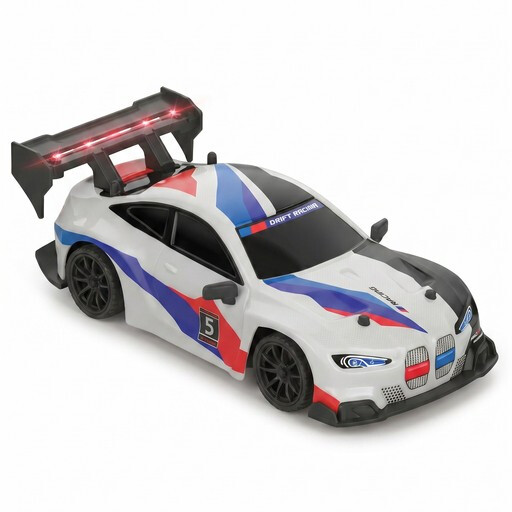
Why this model? For those for whom style matters as much as performance. This sleekly designed replica includes everything you need (4WD, drift tires) to have fun indoors in style.
This is more than just a pretty model. It's equipped with a true 4WD system and interchangeable tires, avoiding the "shelf queen" trap of a car that can't actually perform.
Its lithium battery offers a decent runtime (20-40 min) and recharges via USB. It's far more convenient than models that use disposable batteries or a slow, dedicated charger.
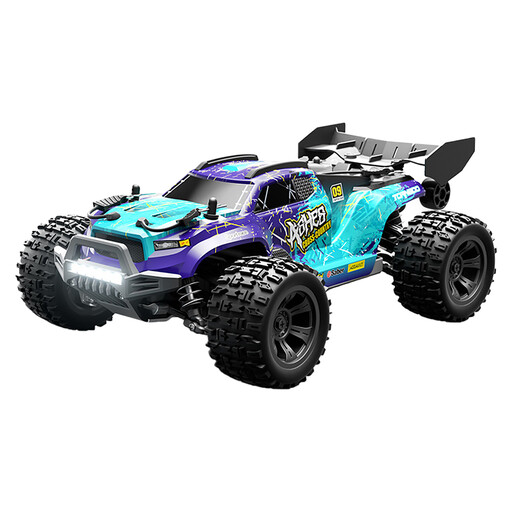
Why this model? For those who want to take it to the next level. With a high top speed, reinforced chassis, and larger scale (1:18), this model is built for intense sessions, both indoors and out.
It solves the fragility problem with its reinforced alloy chassis and the battery life issue with two included batteries, ensuring over 50 minutes of combined runtime.
Its 3 speed modes (up to 40+ km/h) let you tame the power to match the terrain and your skill level. Being splash-resistant (IPX4) opens up new possibilities.
Explore our full selection of models that meet our quality criteria and current safety standards.
It all comes down to the tires. An RC drift car uses hard, smooth plastic tires to minimise grip and induce sliding. Conversely, a standard race car seeks maximum grip with soft rubber tires. Drift models are also almost always 4-wheel drive (4WD) and often benefit from specific suspension and steering adjustments to fine-tune control during a slide.
Battery life depends heavily on the model and your driving style. Expect 10-15 minutes for entry-level cars, but closer to 20-40 minutes per battery for quality, hobby-grade models like the ones in our selection. Most hobby-grade cars are equipped with removable lithium batteries. The trick is to have several on hand to extend your driving sessions.
A 1/24 scale RC car is really designed for indoor use on smooth surfaces (tile, hardwood, polished concrete). Its small size and low ground clearance don't handle outdoor imperfections like gravel, grass, or rough asphalt well. For outdoor play, it's better to opt for larger scales, like 1/18 or 1/10, which are much more at home on varied surfaces.