
Livraison le jour même ou le lendemain

Qualité garantie

Débloquez vos offres de bienvenue: Livraison GRATUITE | Jusqu'à -80 % | 30 jours d'essai gratuits à JoyPlus
Téléchargez l'application
Radio-controlled (RC) drifting? It's a true art form—a blend of precision driving, style, and mastery. There's something fascinating about watching a miniature speedster chain together controlled slides through turns. But let's be honest: between the different scales, drivetrains, and technical jargon, finding that perfect gem—your first or next RC drift car—can quickly become a real headache.
As a high-tech section editor and a model-making enthusiast, I'm here to guide you. In this guide, we'll break down the essentials and present our selection of the best models on the market today. The goal? To help you find the car that's right for you, whether you're a beginner, a seasoned driver, or looking for the perfect gift for a teen.
Before diving in headfirst, let's go over the key concepts that set a drift car apart from a standard RC model. Here are the three criteria to watch for to make the right choice.
The scale is simply the size of the car. A 1/24 scale RC drift car is 24 times smaller than a real car. This compact size is perfect for drifting in your living room or garage and allows you to set up small, technical tracks without rearranging the furniture.
The drivetrain is the other crucial point. For drifting, a four-wheel drive (4WD RC drift) chassis is most often recommended for beginners. It ensures better power distribution and reassuring stability during slides, which makes it much easier to get the hang of.
The onboard technology makes all the difference. An RC car with a gyro integrates a virtual electronic co-pilot. This gyroscope is a stabiliser that detects the slightest loss of traction at the rear and instantly corrects the trajectory to maintain the perfect slide angle. It's an invaluable aid for mastering counter-steering.
Proportional control, meanwhile, is what separates a toy from a precision model. It means the steering and acceleration respond precisely to the intensity of your inputs. Barely turn the wheel on the remote? The car's wheels barely turn. This is the key to a pro drift car and to fine-tuned, realistic driving, light-years ahead of "all-or-nothing" models.
A drift car is instantly recognisable by its tires. Forget the soft rubber of racing cars: here, we're talking about hard, smooth plastic. It's this intentional lack of grip that allows the car to slide with style. The good news is that many kits include a dual set of tires: "drift" tires for sliding and rubber tires for more traditional, "grip"-focused driving. Being able to switch between them makes the model incredibly versatile.
Enough theory, let's get to the action! Here are the models that caught our eye, for all budgets and skill levels.
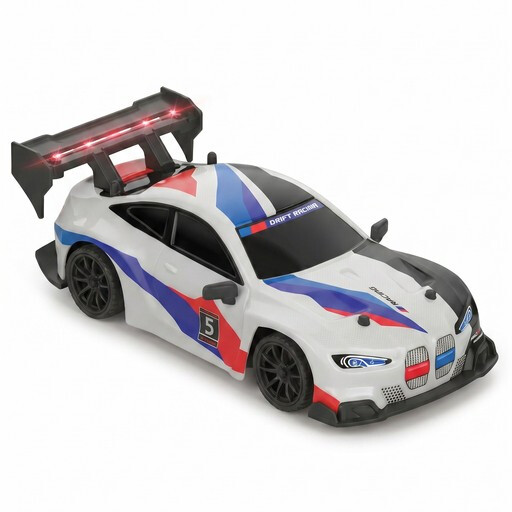
What sets it apart
This is the perfect entry ticket into the world of RC drifting. It combines a well-known sporty look with the essential features you need to get started. Its 2.4G proportional control ensures responsive driving up to 50 metres away, and the functional LED headlights add that nice touch of realism.
Key Features
Who is it for?
Ideal for teens (ages 8 and up) and adult beginners looking for a reliable and versatile RC drift car for indoor fun. It's the smart choice for a first purchase or a gift that's sure to be a hit.
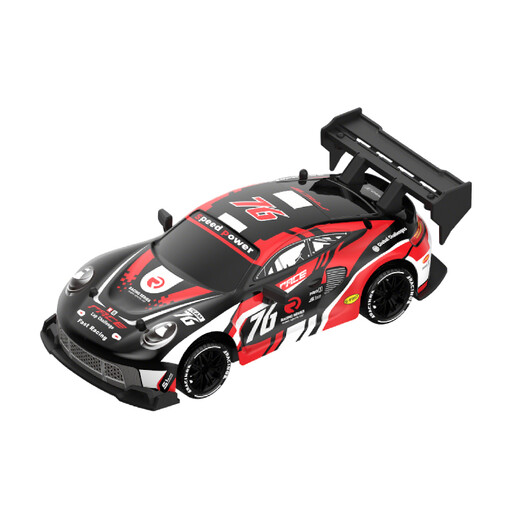
What sets it apart
Inspired by another automotive legend, this model goes all-in on motor performance. With its advertised 25,000 rpm, it promises zippy acceleration that requires a bit more finesse. A stimulating challenge for those who want to step up their game.
Key Features
Who is it for?
This model is aimed at drivers with some previous RC experience or motivated beginners looking for a bit more punch. It's an excellent gift for a teen who wants to take it to the next level.
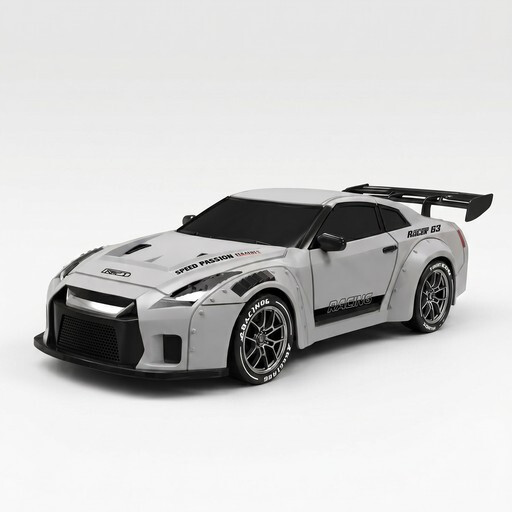
What sets it apart
This GTR RC drift car is clearly aimed at purists who love to tinker with settings. Its trump card? An adjustable gyroscope that lets you dial in the level of electronic assistance. This allows drivers to reduce the aid as they improve, all the way to 100% manual control. With its pro steering servo and 7.4V LiPo battery, we're getting seriously close to a pro drift car in a compact format.
Key Features
Who is it for?
For enthusiasts, both teens and adults, who are looking for a more technical and progressive drifting experience. This is the model of choice for those who love fine-tuning the settings in search of the perfect slide.
Drifting is great, but do you also appreciate the charm of vintage bodywork? If classic lines speak to you more than modern spoilers, other horizons await. For lovers of classic design and automotive history, take a look at our collection of scale models.
? Discover our selection of vintage racing cars to find models with timeless charm.
The main difference comes down to three things: tires, drivetrain, and electronics. An RC drift car uses hard plastic tires to slide, whereas a standard racing car has rubber tires for maximum grip. Drift models are often 4WD RC drift cars with specific suspension settings, and more advanced versions include a gyroscope to stabilise the slide.
Yes, there's a bit of a learning curve, but that's what makes the discipline so exciting! Starting with a model equipped with a gyroscope (an RC car with a gyro) makes it much easier to learn. The gyro helps maintain control during slides, allowing the beginner to focus on managing the throttle and steering. The 1/24 scale models are also easier to manage indoors.
Yes, but not just anywhere. The 1/24 scale models are primarily designed for smooth surfaces like tile, wood flooring, or the polished concrete of a garage. Outdoors, you absolutely need a clean, smooth surface (like a basketball court). Gravel, grass, or rough asphalt can damage the hard tires and the chassis.