
Livraison le jour même ou le lendemain

Qualité garantie

Débloquez vos offres de bienvenue: Livraison GRATUITE | Jusqu'à -80 % | 30 jours d'essai gratuits à JoyPlus
Téléchargez l'application
Juggling baking dishes, storage containers, and serving bowls... it's a real headache in the kitchen. Plastic wrap and aluminium foil pile up, and finding the right lid for the right container often feels like a monumental task. Faced with this constant juggling act, the ramekin with a lid emerges as the ideal all-in-one solution to simplify preparing, baking, and storing your individual portions.
Whether you're a meal prep pro, a baking enthusiast dreaming of the perfect crème br?lée, or simply looking for an individual oven dish that makes your life easier, you've come to the right place. We've broken down the essential criteria for you to make the right choice and selected the models that best combine performance and practicality.
Choosing the right ramekin is about more than just its looks. For a lasting investment and safe use, three criteria need close attention.
The material of your individual dish directly impacts baking and durability. The porcelain ramekin is often preferred for several reasons:
A good ramekin is a true Swiss Army knife in the kitchen. Always check its compatibility with your appliances:
The lid transforms a simple baking dish into an incredibly effective storage solution. Don't underestimate its features! Some models offer plastic lids with a vent to let steam escape in the microwave. The cleverest innovation remains the integrated rotating date dial: it allows you to note the preparation or freezing date. A real bonus for organising your fridge and managing your meal prep without a second thought.
We have vetted several models available on the market. Here is our selection, designed to meet different needs, from the most advanced baking to everyday serving.
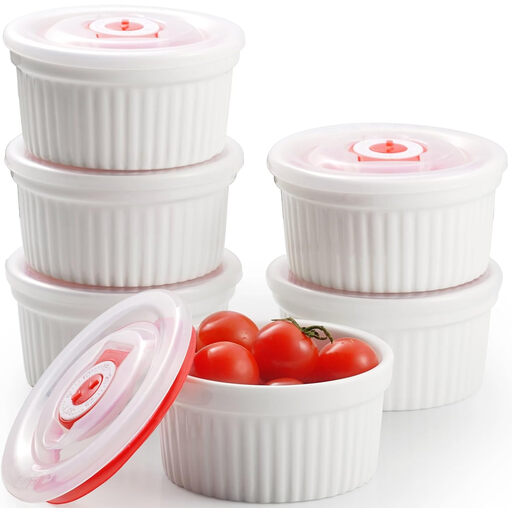
Why It's Our Top Pick
This set of 6 ramekins checks all the boxes. Made from high-quality porcelain, they combine a generous 350 ml (12 oz) capacity with truly well-designed lids. Each lid is equipped with a steam vent and a rotating date dial, making it a top-notch ally for meal prep and storage.
Pros
Who is it for? Ideal for cooks who practice meal prep and are looking for an all-in-one solution to bake, serve, store, and reheat. It's also an excellent choice for families or for those who enjoy entertaining with individual dishes.
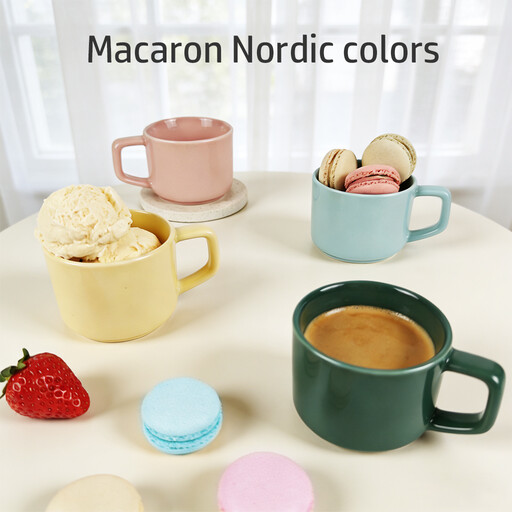
What We Liked
This set stands out for its soft aesthetic and pastel colours (yellow, blue, green, pink). With their small 120 ml capacity, these cups are perfectly suited for uses where presentation is as important as the content.
Pros
Who is it for? For those looking for pretty containers for individual desserts, coffees, or appetisers. Their size and colours also make them a hit with children for a yogurt or fruit purée.
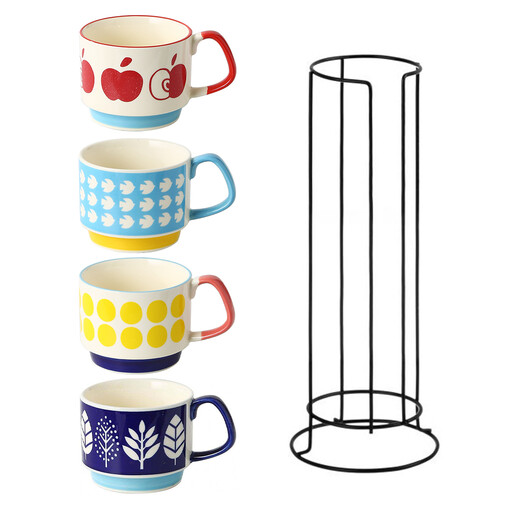
Its Strong Points
If you're primarily looking for everyday mugs rather than a baking dish, this set of four will bring a touch of cheer to your coffee breaks. Each mug features a unique and colourful pattern (apple, polka dots, leaf, stripes) on a white base.
Pros
Who is it for? For those who want to update their everyday mugs with an original and functional set. It's also an excellent gift idea for a housewarming party or for a student.
Once your dishes are carefully prepared in your new ramekins, don't neglect the presentation: it's the finishing touch that makes all the difference. Well-chosen table accessories can transform a simple dinner into a memorable occasion.
To complete your service, take a look at our selection of colourful placemats and bring a cheerful note to your table.
1. Can you put a ramekin with its lid in the oven? Absolutely not! It is imperative to never put a plastic lid in a conventional oven. The lids are designed for storage and, in some cases, for reheating at a moderate power in the microwave (respecting the maximum temperature indicated by the manufacturer, often around 120°C). The porcelain or ceramic ramekin itself is made for oven baking.
2. What's the difference between a porcelain and a ceramic ramekin? Porcelain is actually a type of ceramic. The main difference lies in its manufacturing process. Porcelain is fired at a much higher temperature, which makes it denser, less porous, and more resistant than standard ceramic. For an individual oven dish, porcelain is often a guarantee of durability and baking performance.
3. How do you use the date dial on a ramekin lid? The mechanism is usually very simple. It's a rotating dial integrated into the lid with numbers (from 1 to 31) and/or months. You just need to turn the dial to align the arrow or marker with the date you prepared or froze the dish. It's a simple and visual way to never have any doubt about the freshness of your preparations.