
Livraison le jour même ou le lendemain

Qualité garantie

Débloquez vos offres de bienvenue: Livraison GRATUITE | Jusqu'à -80 % | 30 jours d'essai gratuits à JoyPlus
Téléchargez l'application
A raised slow feeder bowl for your cat or dog can meet several needs: slowing down mealtimes, stopping the bowl from sliding around the room and helping your pet eat in a more comfortable position. However, not every design suits every animal or feeding habit.
Before you place an order, watch out for these three common mistakes:
To make the right choice, look beyond the design and compare the material, shape, dimensions and cleaning requirements.
If you’re looking for a stainless steel cat bowl, check the grade of steel specified by the manufacturer. The model described as being made from SUS304 stainless steel is designed to stand up to everyday use. Other options combine 201 stainless steel with food-grade silicone.
But material isn’t the only thing to consider. Check the following too:
A bowl that’s easy to take apart makes regular cleaning easier. For any product intended to come into contact with food, also check the manufacturer’s information about the materials used and any precautions for use.
An adjustable-height bowl lets you adapt the feeding position to your pet’s size and as they grow. Some stands offer several height settings, but don’t choose based on the number of settings alone. What matters is finding a height that’s right for your cat or dog.
For a cat, a 15° tilted cat bowl can bring food towards the front of the dish and change your cat’s posture while they eat. This design may also appeal if you’re looking for a whisker-friendly cat bowl, with a more open feeding area. Keep an eye on how your pet responds, though: every cat has its own preferences.
For a small dog, stability and capacity are often the priorities. A raised dog bowl should be wide enough to stop your dog pushing the stand around with their nose.
A slow feeder bowl is no substitute for keeping an eye on mealtimes. Its ridges or dividers can slow access to kibble, but how well it works depends on the shape of the food, the amount served and your pet’s behaviour.
A silicone base or a sufficiently wide stand helps reduce slipping. When you’re travelling, a foldable travel bowl is easy to pack away, but it should be placed on a flat surface and checked before each use.
For everyday use, look for:
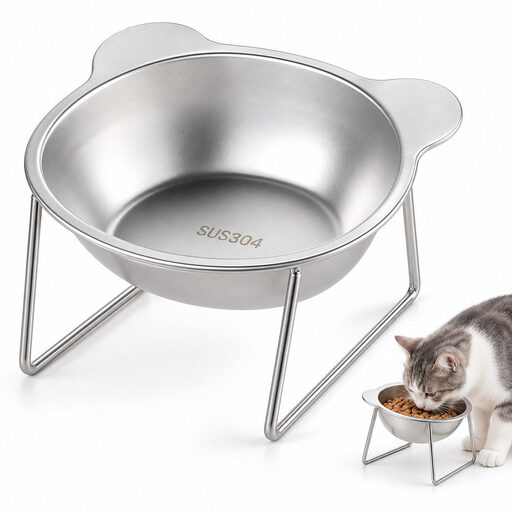
Why it suits this type of owner: this bowl is for cat owners who want to try a raised, tilted design without extra accessories.
Its stated 15° tilt and cat-specific design help you avoid choosing a universal stand that’s too high or bulky.
Advertised as being made from SUS304 stainless steel, with a tilted position suited to a permanent setup.
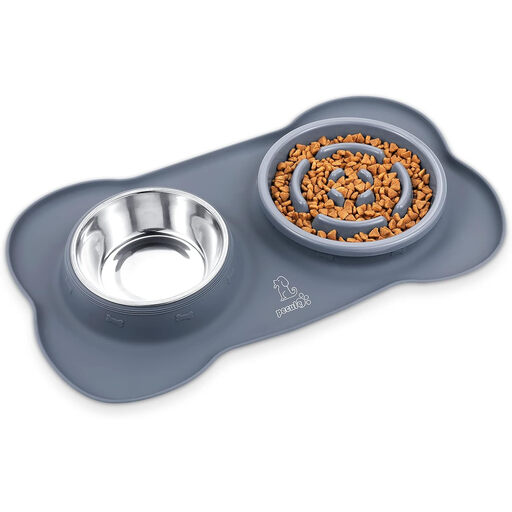
Why it suits this type of owner: this 3-in-1 set combines a slow feeder, water bowl and splash mat. It’s designed for households looking to keep their pet’s feeding area better organised.
The non-slip silicone mat helps reduce movement and splashes, while the separate bowls keep food and water apart.
Both containers are stated to be dishwasher-safe; the mat is foldable, and the slow feeder bowl has a capacity of 400 ml.
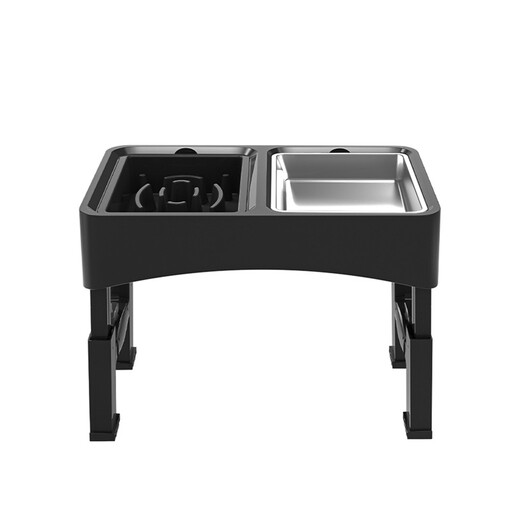
Why it suits this type of owner: this stand suits households with a cat or dog of varying size, several pets or a regular need to put the feeder away.
The four stated height settings, from 10 to 31 cm, mean you don’t have to settle for one height for every pet. The foldable design also makes it easier to store.
Combines a slow feeder bowl and a stainless steel bowl, with height settings of 10, 23, 27 or 31 cm.
We’ve put together a comprehensive list, updated in real time, of products that meet these strict selection criteria and European safety requirements.
No. The shape of the ridges, the capacity and the height should suit your pet’s size and eating habits. Start with a moderate portion and see how they get on. If they seem to struggle to eat, switch back to a simpler bowl. If the problem persists, ask your vet for advice.
Place it on a flat, stable surface that’s easy to clean. If the stand is adjustable, start at the lowest setting and observe your dog’s posture and comfort. The bowl shouldn’t tip over or make your dog stretch their neck too far.
It depends on how often it’s used, how it’s cleaned and the quality of the materials. Check the silicone, stand and bowl edges regularly. Replace the product if you notice a crack, deformation or a detachable part. Also follow the manufacturer’s supervision instructions.