
Same-day & Next-day Delivery

Quality Guaranteed

Unlock Your Welcome Offers: FREE Delivery | Up to 80% OFF | Free 30-day JoyPlus trial
Download the APP
Growing cherry tomatoes, salad leaves or herbs on a balcony, patio or in the garden is much easier with a raised galvanised steel planter on legs. This design means you don’t have to bend down as often and keeps your plants off the ground, while giving them a clearly defined growing space.
However, some purchases can disappoint after just a few weeks. Poorly judged dimensions, inadequate drainage or vague descriptions of the material can quickly make a raised planter bulky or impractical. Here are the points to check before you order.
A raised garden bed on legs should be high enough to reduce bending, but height alone doesn’t guarantee comfortable use. Check the width and depth too, as well as the space you have around the planter.
Measuring 100 × 30 × 80 cm, this model takes up relatively little space. It could therefore suit a patio or balcony, as long as you leave enough room to get around it for watering and maintenance. On a balcony, measure the available space too, and check your building’s rules on weight limits and outdoor installations.
A coat of coloured paint tells you nothing about how well the metal is protected. Galvanising means coating the metal with a layer of zinc. This treatment is generally chosen to improve resistance to outdoor moisture, but the quality of the maintenance, joints and any scratch protection still matters.
Before you order, check the material listed on the product page, the finish on the edges, which fixings are included and the care instructions. A coloured coating can change the planter’s appearance, but it’s no substitute for a clear technical description of the material.
A raised planter needs to let excess water drain away. Without effective drainage, roots may end up sitting in waterlogged compost. Check where the drainage holes are and whether you can protect your patio from run-off.
The total weight includes the planter, wet compost, plants and water. On a balcony, this load must be within the limits recommended for your building. It’s best to check that the planter is stable and the surface can support it before filling it.
When choosing a raised metal planter, look for a product description that clearly specifies galvanised steel. Anthracite, green and red finishes can help the planter suit different outdoor styles, but colour should never be your main consideration.
Choose a structure with clearly specified dimensions, assembly system and accessories. The edges should be safe to handle, and the planter should sit securely on its legs.
The 100 × 30 × 80 cm size is a good choice when space is limited. With a depth of 30 cm, it can accommodate herbs, salad leaves, some flowers and vegetables with relatively shallow roots. If you’re growing larger vegetables or deep-rooted plants, check their requirements before choosing.
The 80 cm height makes it easier to tend your plants while standing, but it also makes the planter more exposed to the wind. If your patio is exposed, make sure it’s installed securely, away from walkways and, if necessary, in a suitably sheltered spot.
A raised planter on legs should be installed on a flat surface. Follow the assembly instructions, check the fixings regularly and remove any build-up of soil or water from the metal parts. At the end of the season, remove annual plants and clean the planter before using it again.
To protect your patio, you can place a protective layer under the legs, as long as this doesn’t affect the planter’s stability. In a windy area, avoid moving the planter once it’s full and check that it doesn’t obstruct water run-off.
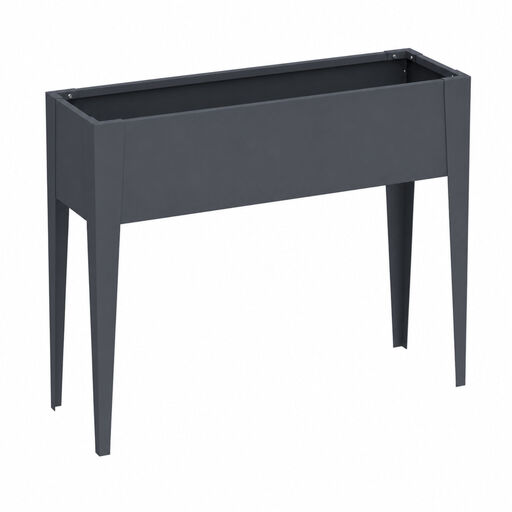
Why it suits this type of gardener : Its compact size is ideal if you’re starting out with herbs, salad leaves or a few flowers, without taking up too much space.
The material and dimensions are clearly stated, so you’re not choosing a planter based on colour or a photograph alone.
Galvanised steel, raised legs and a 100 × 30 × 80 cm size.
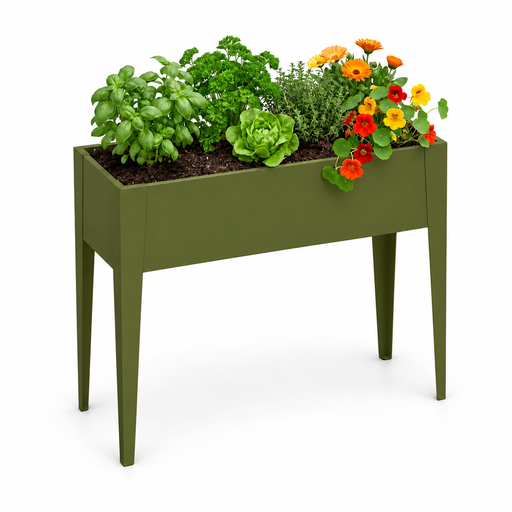
Why it suits this type of gardener : The green finish blends easily into a leafy outdoor space, helping you create a stylish look without compromising on technical details.
The colour doesn’t take the place of a material description: the product page specifies galvanised steel and gives the planter’s precise dimensions.
Green finish, raised-leg design and a galvanised metal planter.
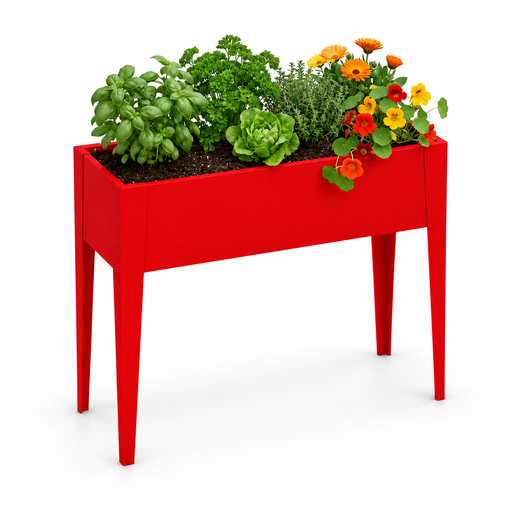
Why it suits this type of gardener : The red finish makes it easy to spot an area set aside for herbs, seedlings or a collection of flowers on your patio.
Its precise dimensions help you work out how much compost you’ll need, where to place it and how much it will weigh before installation, rather than relying on a visual estimate.
Galvanised steel, an 80 cm height and a 30 cm width to suit tight spaces.
Use a growing medium suited to the plants you’ve chosen, with good drainage and added nutrients if needed. Avoid filling the planter with garden soil alone, as it’s often too heavy, especially on a balcony. Bear in mind how much the compost will weigh when wet, and check your building’s load limits.
It’s designed for outdoor use, as stated on the product page. To help prevent wear, check the joints regularly, remove plant debris and make sure water doesn’t collect in the planter. A stable position and regular care will help keep it in good condition.
Depending on the usable depth and light levels, this size is suitable for herbs, salad leaves, radishes, compact flowers and young plants. For tomatoes, courgettes or larger plants, check how much root space they need, whether they’ll require a support and whether the planter will remain stable before planting.