Joybuy Insights

Rainbow PLA Filament: Buying Guide and Top Picks

While 3D printing can unleash creativity, achieving parts with smooth, harmonious colour transitions isn't always straightforward. This is where rainbow PLA filament comes in: it transforms every object into a unique piece, with hues that subtly blend throughout the print. Matte, satin, or "silk" finish? Short or long colour cycle? Faced with an overwhelming number of options, making the right choice can quickly become a headache.

This guide is here to help you make sense of it all. We'll break down the key criteria for choosing the perfect gradient 3D filament and present our top picks for creations with a guaranteed visual impact.

How to Choose the Right Gradient 3D Filament

Before you fill your cart, there are three criteria to examine closely to ensure the result meets your expectations.

1. Colour Cycle Length

The secret to a rainbow filament is its gradual colour transition. The length of filament required to complete a full chromatic cycle (for example, from red to violet through all the intermediate hues) is the number one criterion. This is what will dictate the look of your gradient.

  • Short Cycle (changes every 5-10 metres): Ideal for small objects like figurines, keychains, or toys. It ensures you'll see several colour changes, even on a print that uses very little material.
  • Long Cycle (changes every 20-30 metres): Best for larger parts like vases, stands, or decorative objects. The gradient will be much smoother and more stretched out, creating a subtle ombré effect over the entire height of the object.

2. Standard vs. Silk Finish: What's the Difference?

The final look of your print will change completely depending on the filament's finish.

  • Standard Gradient PLA: This offers a matte or slightly satin finish, very similar to a classic PLA. The colours are bold, but the surface is understated and absorbs light. It's the versatile choice, perfect for functional parts or colourful prototypes.
  • "Silk" Gradient PLA: Enriched with additives, it boasts an ultra-glossy finish that catches the light. This is the star filament for decorative objects: it enhances the model's curves and details for a premium, almost metallic look.

3. Compatibility and Print Settings

Check that the filament is compatible with your 3D printer. The standard diameter is 1.75 mm, but a quick look at your machine's spec sheet never hurts. Also, be sure to consult the manufacturer's recommended printing temperatures (usually between 190 and 220°C for PLA) to ensure perfect adhesion and flawless layers.

Top Rainbow PLA Filament Picks

Let's get practical with a few standouts from the CAILAB filament range that have caught our eye for their quality and finish.
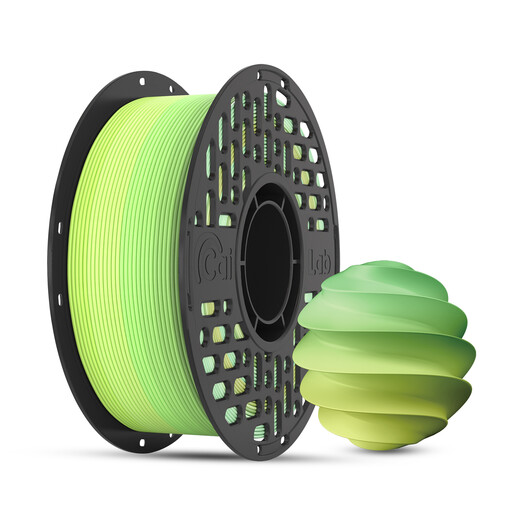
CAILAB 3D Printer Filament PLA Rainbow Gradient - Rainbow #9

CAILAB 3D Printer Filament PLA Rainbow Gradient - Rainbow #9

View Product: CAILAB PLA Rainbow Gradient - Rainbow #9

  • What makes it stand out: A true classic! This filament offers a transition of bright, bold colours, typical of a rainbow. Its colour cycle is well-balanced, making it highly versatile whether you're printing small or large.
  • Highlights:
    • Consistent colour transitions for a controlled gradient.
    • Very good bed adhesion and smooth extrusion.
    • Slightly satin finish with just the right amount of shine.
  • Who is it for?: Makers and hobbyists who want a reliable, all-rounder rainbow filament for projects ranging from simple toys to useful, colourful objects.

CAILAB 3D Printer Filament PLA Rainbow Gradient - Silk Rainbow #11

CAILAB 3D Printer Filament PLA Rainbow Gradient - Silk Rainbow #11

View Product: CAILAB PLA Silk Rainbow Gradient - Silk Rainbow #11
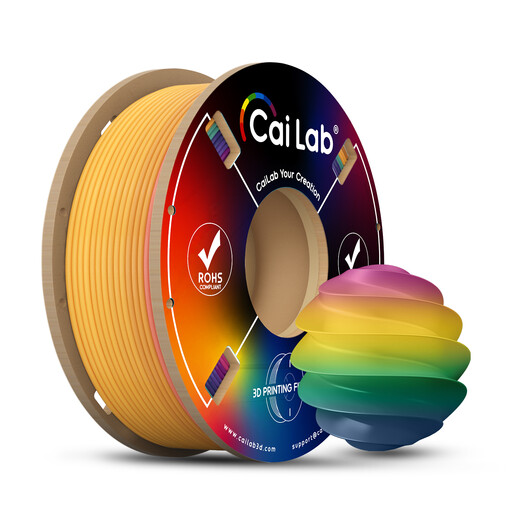
  • What makes it stand out: Here, the "silk" finish steals the show. This silk rainbow PLA filament gives an unparalleled shine to your prints. The ultra-glossy surface plays with light to sculpt shapes and create a very high-quality look.
  • Highlights:
    • Ultra-glossy finish for a guaranteed "wow" factor.
    • Visibly hides layer lines thanks to the reflections.
    • Vibrant colours, enhanced by the silk effect.
  • Who is it for?: Ideal for those printing decorative pieces (vases, statuettes, trophies) and for whom aesthetics and the "wow" factor are the top priority.

CAILAB 3D Printer Filament PLA Rainbow Gradient - Rainbow #3

CAILAB 3D Printer Filament PLA Rainbow Gradient - Rainbow #3

View Product: CAILAB PLA Rainbow Gradient - Rainbow #3

  • What makes it stand out: This version goes off the beaten path with a more original colour palette. The transitions explore less conventional hues or a different order, helping your creations stand out from classic rainbow gradients.
  • Highlights:
    • A unique colour palette for one-of-a-kind creations.
    • The renowned printing reliability of PLA.
    • Excellent endurance for long prints, without risk of clogging.
  • Who is it for?: For creators who are already experienced in colour 3D printing and are looking to explore new colour harmonies for their artistic or custom projects.

Looking for Other Shades?

Our selection is just a taste of the possibilities offered by gradient filaments. Your project is unique, and so are your colour preferences. To explore a wider variety of finishes and palettes, feel free to take a look at the complete range.

? Discover our full range of Rainbow Gradient PLA Filaments

Frequently Asked Questions (FAQ)

What's the difference between a rainbow PLA filament and a multicolour filament?

The difference is significant! A rainbow PLA filament (or gradient) provides a very slow, gradual colour transition along the spool, which creates a fading effect on the printed object. In contrast, a "multicolour" filament often features sharp, rapid colour changes or a mix of different coloured pellets, resulting in a speckled or mottled look, but not a gradient.

How do I know how much filament to use to see all the colours?

It all depends on two things: the colour cycle length of your spool and the weight of your object. For example, with a filament that changes colour every 15 metres (about 50 g), a 100 g object will show approximately two colour cycles. Pro tip: for small parts, always opt for a short-cycle filament. It's the only way to be sure you'll see multiple colours.

Is silk rainbow PLA filament harder to print with?

Not really. Silk rainbow PLA filament prints with settings very similar to standard PLA. A little trick to maximise the shine: increase the extrusion temperature by 5 to 10°C compared to your usual settings and slightly reduce the print speed. And as with any new filament, the best practice is to run a quick temperature tower to find the perfect setting for your printer.