
Livraison le jour même ou le lendemain

Qualité garantie

Débloquez vos offres de bienvenue: Livraison GRATUITE | Jusqu'à -80 % | 30 jours d'essai gratuits à JoyPlus
Téléchargez l'application
3D printing unleashes creativity, but how do you make an object truly stand out? Rainbow PLA filament is the perfect solution for transforming an ordinary model into a unique and captivating piece, all without tedious post-processing. Whether you're an Etsy creator, a passionate hobbyist, or running a small business, choosing the right filament is more than just a detail: it's the key to a successful print.
This guide reveals the essential criteria for choosing the right gradient PLA filament and presents our selection of the best products to bring your colourful 3D printing projects to life.
Before you check out, several points deserve your attention to ensure the final result lives up to your expectations.
The defining feature of a rainbow filament is, of course, its colour transition. Some change hue every 5 to 10 metres, while others offer much slower gradients.
Colour isn't everything! The filament's finish plays an equally crucial role. Silk PLA filament is the undisputed star of rainbow filaments. Its specific composition gives it a sheen and satin-like appearance that catches the light, subtly hides layer lines, and gives the object a smoother, more premium look. For decorative pieces or gifts, this finish can truly make all the difference.
This is a basic technical point, but a quick reminder is always helpful. The vast majority of consumer 3D printers use 1.75 mm multicolour filament. Always remember to check your machine's specifications before ordering a spool of rainbow PLA. The wrong diameter is a surefire way to cause nozzle clogging and print failure. Likewise, make sure the manufacturer's recommended extrusion temperature range is compatible with your printer.
Here are a few standout products that distinguish themselves with specific features to suit any project.
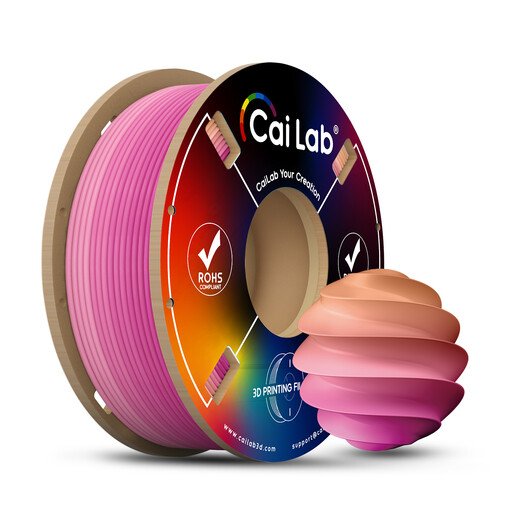
What makes it stand out This filament is notable for its fairly rapid colour transition. It's designed to display a beautiful palette of hues even on modestly sized objects, making it an excellent all-rounder.
Key Features
Who is it for? Versatile makers who print everything from small figurines to functional parts and want a clearly visible and dynamic rainbow effect on every creation.
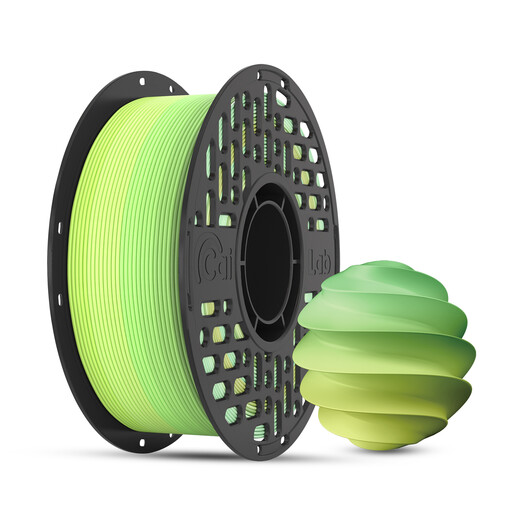
What makes it stand out In contrast to the previous one, Rainbow #9 offers a much slower and more gradual colour gradient. The transitions are very smooth, creating a stunning ombré effect on large surfaces.
Key Features
Who is it for? Specialists in large-scale projects who are looking for a gradual and elegant colour change to enhance the shape of their finest pieces.

What makes it stand out This filament combines a colour gradient with a very pronounced "silk" finish. The result? An object with a glossy, almost metallic appearance that plays with light to accentuate its curves and hide minor printing imperfections.
Key Features
Who is it for? The top choice for creators and sellers (on Etsy, for example) who want to produce objects with high aesthetic potential. Ideal for decor, jewellery, or gifts that must have a flawless and professional finish.
If our selection hasn't completely won you over or if you're simply looking for new inspiration, other options await. For ever more colourful and varied 3D prints, feel free to explore our dedicated category.
Discover our full selection in the Rainbow Filaments category to find inspiration for your next project.
In common parlance, the two terms are often used interchangeably. To be precise, "gradient PLA" refers to the technical process of a gradual transition from one colour to another. "Rainbow PLA," on the other hand, specifies that the colour palette follows that of a rainbow (red, orange, yellow, green, blue...). Therefore, you can find gradient filaments that are not rainbow (for example, a gradient of blues).
Like any PLA 3D printer filament, it is sensitive to moisture. Filament that has absorbed moisture becomes brittle and causes printing failures (bubbles, poor layer adhesion...). The best practice is to store it in an airtight bag with a sachet of silica gel (desiccant), in a cool, dry place away from direct sunlight.
Generally, Silk PLA filament prints at temperatures very similar to standard PLA (between 190°C and 220°C). However, to maximise its glossy effect, it is often recommended to print a little hotter, while staying within the manufacturer's recommended range. The best approach is to start with your usual PLA settings and run a temperature tower to find the optimal parameter for your specific machine and spool.