
Livraison le jour même ou le lendemain

Qualité garantie

Débloquez vos offres de bienvenue: Livraison GRATUITE | Jusqu'à -80 % | 30 jours d'essai gratuits à JoyPlus
Téléchargez l'application
3D printing is an infinite creative playground, and rainbow PLA filament is the secret ingredient for transforming a mundane object into a masterpiece. But be warned, not all multicolor filaments are created equal. A poorly paced gradient, dull colors, or a subpar material can quickly spoil the experience.
To save you from disappointment, this guide covers the essential criteria to check before buying and presents our selection of the best filaments for 3D prints with vibrant, harmonious colors.
Before you commit to the first spool you see, a few key points deserve your attention to ensure the result lives up to your expectations.
This is the main appeal of a gradient PLA?: the transition between colors. The pace of this change is crucial and depends on the size of your projects.
Remember to check the color change frequency (often indicated in meters by the manufacturer) to align it with the size of your prints.
The final look of your rainbow 3D print will also depend dramatically on the filament's finish.
Nearly all consumer 3D printers (Creality, Prusa, Anycubic, etc.) use 1.75?mm diameter filament. It's the market standard, but a quick check of your machine's specifications is always a good idea. Since PLA is one of the easiest materials to print, it is compatible with almost all FDM/FFF printers on the market and generally does not require a closed enclosure.
Enough theory, let's get practical?! To help you make your choice, here is a selection of filaments from CaiLab, a brand known for its consistent colors and excellent ease of use.
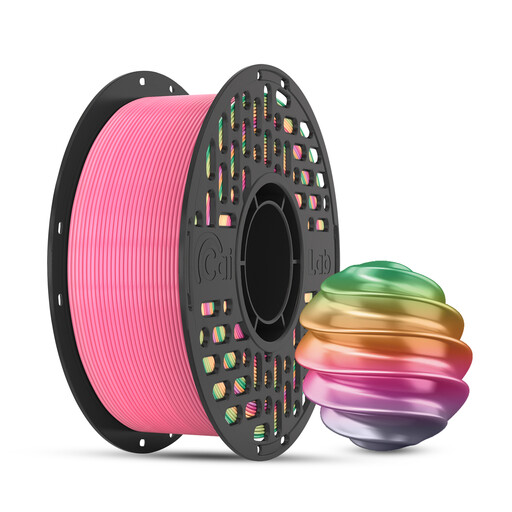
What sets it apart This filament stands out with its "Silk Candy" color palette, which features sweet, pastel-like hues with a very pronounced silky finish. The gradient is designed to offer smooth yet clearly visible transitions, even on medium-sized objects.
Highlights
Who is it for?? Ideal for creators who want to produce decorative objects, gifts, or toys with a fun look and a brilliant finish. Perfect for models designed to be eye-catching.
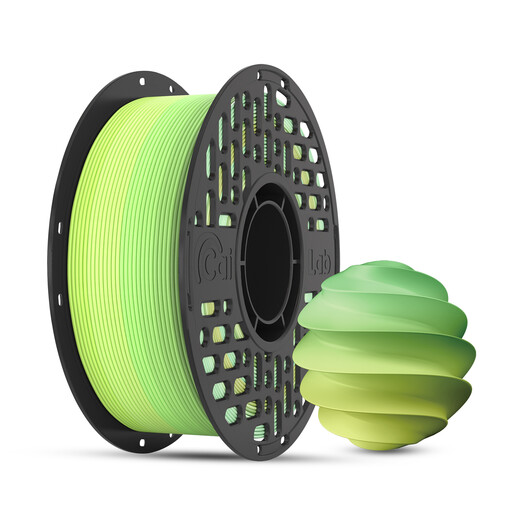
What sets it apart Here, we have the rainbow PLA filament in its most classic and timeless version. It transitions through the traditional color spectrum (red, orange, yellow, green, blue, violet) with a standard but effective glossy finish.
Highlights
Who is it for?? A reliable choice for beginners and experienced users alike who are looking for a predictable and dependable rainbow effect for all kinds of creations.

What sets it apart This filament combines the best of both worlds?: a rainbow gradient and a spectacular silky finish. The "Rainbow #11" palette offers a unique chromatic sequence, enhanced by a near-metallic sheen that sculpts the shapes of the printed object.
Highlights
Who is it for?? Perfect for designers, artists, or makers printing objects where aesthetics are the number one criterion, such as vases, statuettes, or exhibition pieces.
If these options aren't a perfect match for your project, or if you're simply curious to discover other finishes, our catalog is full of gems.
Explore our full collection to find the filament that will bring your next creation to life.
Discover our Rainbow Accessories Collection
For a clearly visible gradient, choose larger objects. The larger the object, the smoother and more gradual the transition will be. For small parts, opt for a filament with a fast color change. Another tip?: print several small objects at the same time. This will use more filament at once, and the gradient will be distributed across the entire batch.
No, it generally prints with the same settings as a standard PLA. The nozzle (190-220?°C) and bed (50-60?°C, or even cold on a bed with good adhesion) temperatures are identical. However, it's always a good idea to read the manufacturer's recommendations and run a temperature tower to fine-tune your settings.
Like all PLA, it is sensitive to moisture. Filament that has absorbed moisture becomes brittle and can cause extrusion problems (bubbles, clogs). Store your spool in a dry place, away from direct sunlight. Ideally, keep it in an airtight bag with a silica gel packet (desiccant) between uses.