Couples and smaller households
If you usually make raclette for one or two people, the appliance’s capacity, how much table space it takes up and how much cheese to buy are especially important.


For raclette for two, choose an appliance designed for two people and a cheese pack that suits the meal. For a get-together, start with the number of guests who want to use a raclette pan at the same time. Serving suggestions on the packaging are only a guide, so adjust them to suit the sides and any leftovers you want. Also check the cheese storage instructions and, if someone who is pregnant is joining you, the type of milk used.
If you usually make raclette for one or two people, the appliance’s capacity, how much table space it takes up and how much cheese to buy are especially important.
If you’re hosting four to six guests, compare the stated capacity with the number of pans included so everyone can prepare their portion at the table.
If you’re planning for leftovers or hosting someone who is pregnant, check the type of milk, the instructions for after opening and any precautions that apply to the cheese you choose.
To choose your cheese and appliance, first work out how many people you’re catering for and how many meals you’re planning. Then compare the pack sizes and features that matter for your table.
| What to consider | What to check | Who is this important for? |
|---|---|---|
| Amount of cheese | Net weight, suggested servings and how long it keeps after opening. Entremont lists 350 g for 2 to 3 people and 700 g for 4 to 5 people for its Raclette Autrement Bonne. | For a meal with a few people, I want to buy the right amount without ending up with leftovers I won’t eat. Around 37% of consumers would make portion size their top priority. |
| Appliance capacity | Stated number of people and pans included; also check how much table space you have. | When I’m hosting a few friends, I want everyone to be able to prepare their portion without waiting for their turn. Around 27% of consumers would put capacity first. |
| Flavour and serving | Type of cheese, ingredients and whether it comes sliced; a description such as “full-flavoured” is no substitute for checking the label. | I’d like to choose a cheese that suits my guests’ tastes while keeping serving simple at the table. Around 18% of consumers would put this combination first. |
| Storage and precautions | Type of milk, stated storage temperature, use-by date and instructions for storing the product after opening. | If I’m keeping cheese for another meal or hosting someone who is pregnant, I need to be able to follow the instructions for that specific product. Around 18% of consumers would make these precautions a priority. |
The stated capacity doesn’t tell you everything about the controls. Lidl’s product listings include a four-person Silvercrest model with an adjustable thermostat, while the listing for E.Leclerc’s six-person Eco+ model says it has neither an adjustable thermostat nor automatic shut-off.
Compare the pans included, the cooking controls and the space you’ll need to set up and store the appliance.
Storage instructions after opening vary from one cheese to another. The 800 g Auchan plain raclette cheese mentioned in its product listing should be kept between +2 °C and +6 °C and eaten within three days of opening.
Choose a pack size to suit the meals you have planned, and keep the packaging so you can check the product’s storage instructions.
A pack that’s too large can leave you with cheese you can’t use before its after-opening storage period ends.
The type of milk is worth checking, but it doesn’t replace identifying the type of cheese and following its storage instructions. Manger Bouger advises avoiding raw milk and raw-milk cheeses during pregnancy, among other recommendations.
If someone who is pregnant is joining you, check the specific product against Manger Bouger’s recommendations.
Storage temperature and the use-by date still matter after serving. The DGCCRF recommends putting leftovers in sealed packaging and eating them promptly.
Return any products that need chilling to the fridge promptly and follow the instructions on their packaging.
The brand offers a range of raclette cheeses in several pack sizes.
The product listing reviewed is for a 400 g pack of classic sliced raclette cheese.
The products reviewed include plain and “full-flavoured” sliced raclette cheeses in 400 g and 800 g packs.
The raclette appliance listed by E.Leclerc is designed for a table of six.
The appliances listed by Lidl include a duo model and a raclette grill for four people.
The brand includes “brasserie-style raclette flavour” slices designed for burgers.
These raclette appliances are presented as suitable for meals with up to eight people. When comparing their cooking features, think about which ones you’ll actually use at the table.
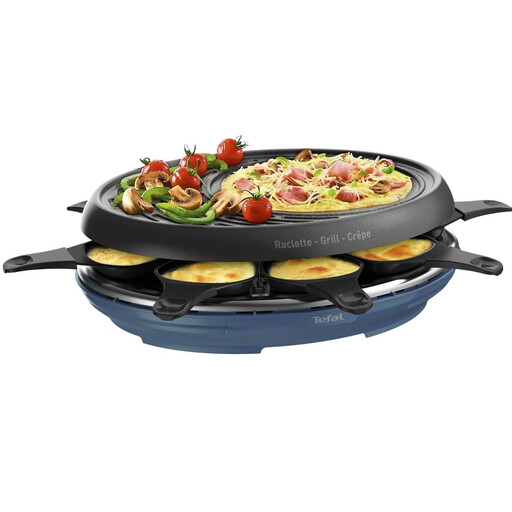 Image unavailable
For a group who want to enjoy raclette with eight mini pans and have the option of making crêpes too. If temperature control matters to you, check whether the model you choose has a thermostat.
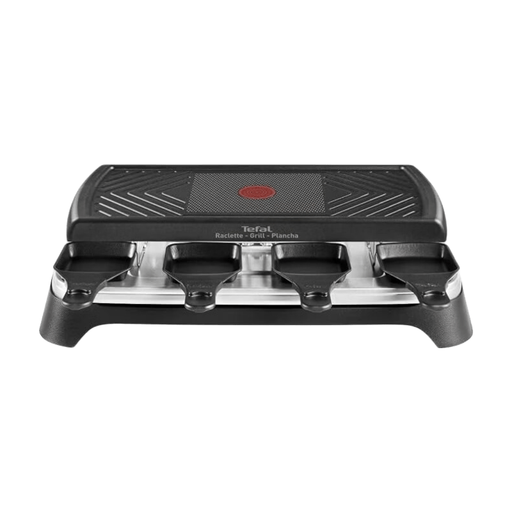 Image unavailable
For an evening when you’d like to enjoy raclette and pierrade together. It has a stated power rating of 1 350 W. Check the appliance’s dimensions if table or storage space is limited.
Choose according to how many guests want to use a pan at the same time, then check how many pans are included. The models listed by Lidl and E.Leclerc are designed for two, four or six people; remember to allow enough room for the appliance too.
Use the suggested servings on the cheese you choose as a starting point, then adjust for the sides and any leftovers you’d like. As a guide for its Raclette Autrement Bonne, Entremont suggests 350 g for 2 to 3 people and 700 g for 4 to 5 people.
Follow the storage temperature and time limit on the packaging. The product listing for Auchan’s 800 g plain raclette cheese says to store it between +2 °C and +6 °C and eat it within three days of opening. The DGCCRF advises keeping leftovers in sealed packaging and eating them promptly.
Check the type of milk and the exact type of cheese rather than relying on the brand name alone. Manger Bouger advises avoiding raw milk and raw-milk cheeses during pregnancy; check its guidance for the product you’ve chosen.