Hosts looking for a savoury base
You want a crunchy cracker to go with cheese or charcuterie, and check the fibre and salt content before choosing. The Wasa rye options described by Auchan are worth considering.


For a crunchy base to top during a raclette meal, choose a crispbread or savoury cracker rather than a sweet Digestive biscuit. If fibre is important to you, compare the nutritional values per 100 g and check the salt content too. Neither the word “Digestive” nor the mention of “cereals” proves that a product aids digestion.
You want a crunchy cracker to go with cheese or charcuterie, and check the fibre and salt content before choosing. The Wasa rye options described by Auchan are worth considering.
You prefer the traditional format of a wheat crispbread. However, the ingredients in the Heudebert option featured by Carrefour are a reminder that the word “cereals” alone doesn’t tell you how much fibre it contains.
You enjoy this type of biscuit, but want to know whether it can go with raclette. The McVitie’s Digestive featured by Carrefour is a sweet biscuit, distinct from a savoury cracker.
First decide whether you want a savoury base to top, or a biscuit whose sweetness is part of the pairing you have in mind. Then compare the nutritional information and ingredients of products suited to that purpose.
| Criterion | What to check | Who is it for? |
|---|---|---|
| Savoury base | Check the product description and ingredients to tell apart a cracker or crispbread for topping from a sweet biscuit. | I want to serve cheese and charcuterie on a crunchy base, without the biscuit adding a sweet flavour. Around 42% of consumers put this need for a savoury accompaniment first. |
| Fibre and ingredients | Compare fibre, salt, sugars and fat per 100 g, then check the ingredients list. | If fibre guides my choice, I want to be able to see how much it contains rather than rely on the product name. This is the priority for around 33% of consumers. |
| Format and flavour | Choose between wheat crispbread and a sweet biscuit according to how you plan to serve it; check the ingredients and allergens too. | I might prefer a familiar crispbread, or deliberately want a sweet biscuit alongside the meal. For around 25% of consumers, this preference for a particular format and flavour comes before other criteria. |
For a comparison between specific products, Auchan lists 26 g of fibre and 1.2 g of salt per 100 g for Wasa Fibres. The ingredients list for the Heudebert crispbread featured by Carrefour starts with wheat flour and also includes sugar. These details don’t replace checking the label on the exact variant you buy, especially if any of your guests need to avoid particular allergens.
The name doesn’t prove that the biscuit has a digestive benefit. The McVitie’s Digestive described by Carrefour contains sugar and sugar syrup, among other ingredients, so it isn’t intended to be used like a savoury cracker topped with cheese.
For a raclette base, choose crispbread or a savoury cracker. Save the Digestive biscuit for a sweet-and-savoury pairing if that’s the flavour you’re after.
The proportion of flour and the amount of fibre are two different things. The description “Heudebert 96% cereals” isn’t enough on its own to judge the product’s fibre content.
Compare the nutritional values per 100 g, especially fibre and salt, and then read the ingredients list.
Ingredients vary from product to product: the crispbreads reviewed may contain gluten-containing cereals or sesame, and some carry warnings about traces of other allergens. The Directorate-General for Competition Policy, Consumer Affairs and Fraud Control states that allergenic ingredients in prepacked foods must be highlighted in the ingredients list.
Check the label on each packet before serving and keep it accessible to any guests who need the information.
A 290 g Heudebert product featured by Carrefour and a 300 g product featured by Joybuy have similar descriptions, but their pack sizes and stated proportions of flour differ.
When comparing two offers, check the specific variant, pack size, ingredients and nutritional values rather than relying on the brand name alone.
These examples help you tell different types of product apart. The details given apply to the specific products mentioned, not every recipe from each brand.
Crunchy rye crispbreads to consider if you’re looking for a savoury base to top and want to check the fibre content before choosing.
Traditional wheat crispbread is another crunchy base option if you prefer this format.
Digestive biscuits satisfy a craving for something sweet; they aren’t automatically a savoury cracker for raclette.
These three products are worth considering if you’re looking for crunchy rye or wheat crispbread, or wheat crispbread, as a savoury base for raclette. Start by choosing the format that suits you, then check the ingredients of the specific product you buy.
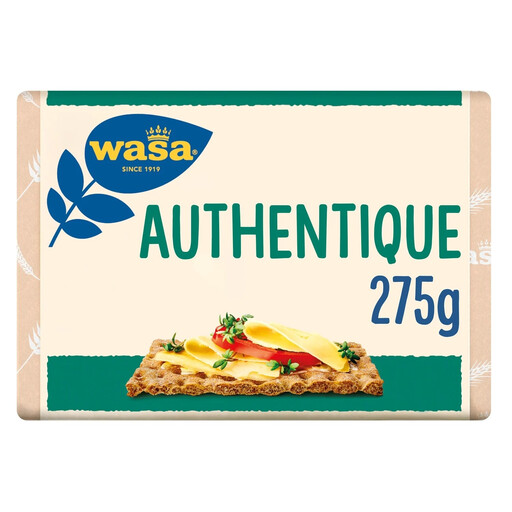 Image unavailable
Rye crispbread to consider if you want a savoury base to top with cheese or charcuterie. If fibre content or allergens affect your choice, check the information on this pack before serving.
 Image unavailable
Worth considering if you prefer a crunchy wheat base to top with cheese or charcuterie. Read the ingredients list and nutritional values for this variant to compare it with rye crispbreads, and check for gluten-containing cereals too.
 Image unavailable
This wheat crispbread is for anyone looking for the traditional format to serve with savoury toppings. Its recipe includes sugar, palm oil and emulsifiers. If fibre is your priority, compare the amount listed on the pack. Don’t confuse it with the 290 g Heudebert product featured above.
No, the name is a trade name and doesn’t prove that the biscuit aids digestion. To decide whether the McVitie’s biscuit featured by Carrefour suits your meal, think of it as a sweet biscuit and check its ingredients and nutritional information rather than relying on its name alone.
Check for gluten-containing cereals and any allergens specific to each product, as well as possible trace warnings. Wasa Fibres contains rye, wheat, oats and sesame, among other ingredients; other variants may carry different warnings. The Directorate-General for Competition Policy, Consumer Affairs and Fraud Control states that allergenic ingredients must be highlighted in the ingredients list on prepacked foods.
Reseal the packaging and follow the storage instructions for the product you’ve bought. For the Wasa Authentique crispbreads featured by Auchan, the advice is to store them in a dry place away from light. Add moist toppings just before serving rather than preparing the crispbreads well in advance.