
Livraison le jour même ou le lendemain

Qualité garantie

Débloquez vos offres de bienvenue: Livraison GRATUITE | Jusqu'à -80 % | 30 jours d'essai gratuits à JoyPlus
Téléchargez l'application
A quilted bedspread can protect your bedding, add a little warmth or simply refresh your bedroom décor. But a well-written product listing is not enough to guarantee the right choice. Some models turn out to be too short, too warm or a hassle to care for every day.
If you tend to sweat at night or are looking for a summer bedspread, a few simple criteria can help you avoid disappointing purchases.
A quilted bedspread does not necessarily offer the same level of warmth as a comforter or filled duvet. It all depends on its filling, weight and construction. A lightweight boutis is generally suitable for a temperate bedroom or as an extra layer, but it will not always replace a warm duvet in the depths of winter.
Choosing a size close to that of the mattress does not guarantee an attractive drape. You need to consider the width of the bed, the thickness of the mattress and how much fabric you want to hang over the sides.
As a guide:
Remember to check the size of any included pillowcases, too. A set may include a bedspread and 65 × 65 cm or 80 × 80 cm pillowcases, and these sizes are not suitable for the same pillows.
A cooling blanket may simply have a pleasant, cool-to-the-touch side, without lowering the room temperature. Similarly, breathability depends on the material, weave, thickness and air circulation around the sleeper.
It is therefore better to look at the practical details: composition, weight or fabric weight where stated, type of quilting and care instructions.
Polyester microfibre is popular for its light weight, relatively quick drying time and good resistance to repeated washing. A microfibre bedspread can be perfectly suitable for decorative use, in spring or summer, provided it remains sufficiently thin.
Cotton, particularly when used on a velvet side or reverse, offers a different feel. The Vivaraise Fara model, for example, combines a ribbed cotton velvet front with a breathable cotton reverse and polyester filling. This design is aimed more at cosy comfort and decorative appeal than at providing an especially lightweight cover.
Diamond or square patterns are not just decorative. They divide the fabric into sections and help prevent the filling from moving around. Piped or reinforced edges provide a neater finish and also reduce the risk of fraying around the edges.
However, check that the stitching is even, whether corner ties are included and how well the product stays in place on the bed. A bedspread that slips at the slightest movement soon loses its appeal.
For bedding that is used regularly, prioritise care instructions that are simple and clearly explained. Several of the models featured here recommend a delicate wash at 30 °C maximum, with no bleach or ironing. Low-temperature tumble drying or air drying should also suit the space available in your home.
The textile must be completely dry before being stored. For a lightweight blanket intended for travel, the sofa or a second home, its compact size and machine-washable design may be more useful than a very bulky filling.
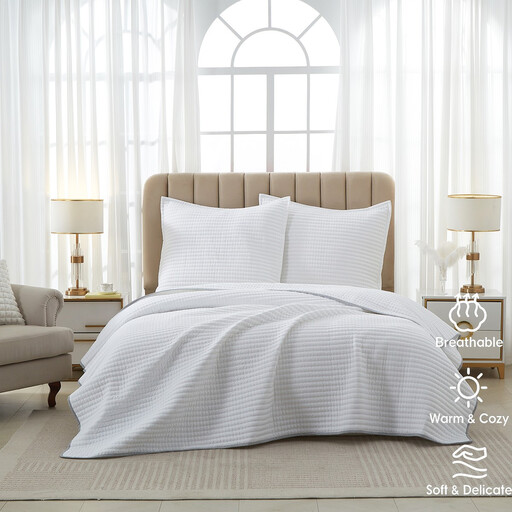
Why this choice suits this profile : This 140 × 200 cm set includes a 65 × 65 cm pillowcase. Its pre-washed 100% polyester microfibre and moderate weight make it a versatile choice for a first purchase.
The composition, dimensions and washing instructions are clearly stated. The diamond quilting and reinforced edges help prevent overly fragile finishes.
Use as a bedspread, lightweight blanket or bed throw; wash at 30 °C maximum and dry at a low temperature or in the open air.
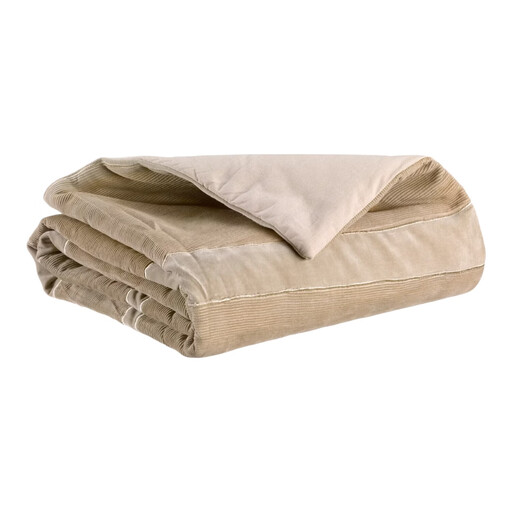
Why this choice suits this profile : Its ribbed velvet front, cotton reverse and linen shade will appeal to people who are especially particular about style and textures.
The listing distinguishes between the materials used for the front, reverse and filling. At 85 cm wide, this model is better suited to use as a decorative throw or an extra blanket.
Ribbed velvet, cotton reverse and polyester filling; a size suited to the foot of the bed, an armchair or decorative layering.

Why this choice suits this profile : This model is aimed at people looking for a filling described as feather and down, with a weight of 200 g/m² intended for summer.
The stated composition is detailed: 90% feathers and 10% down. Any certifications mentioned should be checked on the label and product listing before purchase.
200 × 200 cm size, stated summer weight of 200 g/m² and a tightly woven cotton cover, according to the product description.
We have put together a complete, real-time updated list of products that meet these strict selection criteria and European safety requirements.
Measure the width and length of the mattress, then add the desired drop on each side. For good coverage, choose a width noticeably greater than that of the bed. Also check whether the stated dimensions refer to the bedspread alone or to the set including pillowcases.
Yes, provided you choose a lightweight, thin and sufficiently breathable model. Fine microfibre, a cotton reverse or a reversible design can work well as a summer bedspread. If you struggle with heat, do not rely solely on the “cooling” claim: check the detailed specifications.
Follow the stated washing temperature, avoid bleach and harsh products, and allow the textile to dry completely. Do not overload the washing machine and store the bedspread in a dry place. A breathable storage bag can help limit dust build-up between seasons.