When choosing a new washing machine near a living area or sleeping space, first compare the stated noise level during the spin cycle, then check that the machine and its door will fit in the available space. Next, choose a capacity to suit your laundry needs and check the energy consumption and spin efficiency. Even a favourable noise rating cannot guarantee that your machine won’t vibrate on your floor.
Who is this advice for?
Studio flat residents bothered by the spin cycle
If your washing machine is near the sofa, desk or bed, focus on its stated noise level during the spin cycle. The energy label helps you compare models, while an independent test can provide more information when noise is a deciding factor. Les Numériques points out that the spin cycle is particularly noisy.
People with limited space
In a kitchenette, shower room or alcove, measure the space the machine will occupy, as well as the room needed to open the door or lid and access the laundry. UFC-Que Choisir notes that the available space often determines whether a front-loader or top-loader is the better choice.
Small households looking for the right capacity
If you don’t have much laundry to wash, a large capacity may not be necessary. ADEME says that a 7 kg washing machine is sufficient most of the time. Compare this guidance with the amount of laundry you usually wash, then check energy consumption and spin efficiency too.
What should you check?
First, measure the space and clearance you’ll need. This may rule out a front-loader or top-loader before you even compare energy labels. For models that genuinely fit in the room, consider the spin cycle and your household’s needs.
| Criteria |
What to check |
Who is this for? |
| Noise and vibrations |
dB(A) rating and noise class during the spin cycle; independent test results if noise is a deciding factor. |
When the machine spins near my bed or desk, I want to be able to use the room without too much noise. Around 36% of consumers put a quiet spin cycle first. |
| Size and access |
Dimensions of the model, clearance for the door to open or space above a top-loader. |
In a small shower room, I need to be able to open and load the machine once it’s installed. Easy access is the top priority for around 29% of consumers. |
| Capacity |
Capacity in kg compared with the usual size of your laundry loads; space taken up by the model. |
If I wash small loads, I want a suitable capacity without taking up unnecessary space or needing to run extra cycles. Around 21% of consumers put this balance first. |
| Energy consumption and spin efficiency |
kWh per 100 cycles, litres per cycle and spin efficiency class on the label. |
When I dry laundry indoors, I want to consider both the water and electricity used, as well as how much moisture remains after spinning. For around 14% of consumers, this balance comes before other criteria. |
Mistakes to avoid
-
Relying on the noise class alone
The noise class helps you narrow down your options, but it doesn’t tell you everything about how loud the machine will seem in your room or how much it will vibrate against the floor. Les Numériques distinguishes between stated ratings and measurements taken during its tests.
Also compare the stated dB(A) level during the spin cycle and, if quiet operation is essential, look for an independent test of the model you’re considering.
-
Expecting an accessory to fix poor installation
A machine that isn’t stable, touches a piece of furniture or has an unbalanced load may vibrate more. Electrolux Support France highlights how overloading or unevenly distributing laundry can affect the spin cycle.
When installing the machine, follow the instructions to remove the transit bolts and level the appliance. Make sure there’s enough space around it too.
-
Choosing the largest capacity without considering your usual laundry loads
A large drum may not suit a small household and could make installation in a narrow room more difficult. On the other hand, a capacity that’s too small could mean running more cycles.
Start with the amount of laundry you actually wash. ADEME says that 7 kg is sufficient most of the time; then check the dimensions of the model you’ve chosen.
-
Assuming a faster spin means drier laundry
Revolutions per minute alone don’t tell you how well a machine spins laundry. This is particularly important if you need to dry your clothes indoors.
Check the spin efficiency class on the label and look at test results for the model if drying performance is important to you.
Brands and models to consider
Whirlpool
The Supreme Silence front-loaders may appeal if you want to compare models with stated spin-cycle noise levels.
- Whirlpool France states that the W7X 89R SILENCE FR has a spin-cycle noise level of 65 dB, and describes its ZEN motor as a way to reduce vibrations.
- These figures apply to the models mentioned and can’t predict how much the machine will vibrate in your home. Check the depth and capacity too.
Miele
Several front-loaders have UK product information that lets you compare their stated noise levels during the spin cycle.
- Miele France lists the WCH870 WCS as noise class A at 67 dB; the WWI880 WCS and WCG360 WCS are listed at 68 dB, also in class A.
- These figures don’t describe the entire range. Check the dimensions and capacity of each model before choosing one for a studio flat.
Bosch
Some Bosch models are worth considering if appliance stability is one of your priorities.
- Bosch Électroménager France describes the AntiVibration design on the WAJ28057FF front-loader as a feature intended to reduce vibrations.
- The manufacturer’s description doesn’t replace checking the stated spin-cycle noise level of your chosen model or making sure it’s level when installed.
LG
A model with a reduced depth may be worth considering when every centimetre counts.
- LG France lists the F82AV35MBS with an 8.5 kg capacity, dimensions of 600 × 850 × 490 mm and a Direct Drive motor.
- These dimensions apply to this model only. Also check its spin-cycle noise level and the clearance needed to open the door.
A front-loading washing machine on Joybuy
This selection features a 10 kg front-loader to consider if its capacity suits your laundry needs and its depth works for your available space. If your room requires a top-loader, compare the dimensions and energy labels of the models you’re interested in instead.
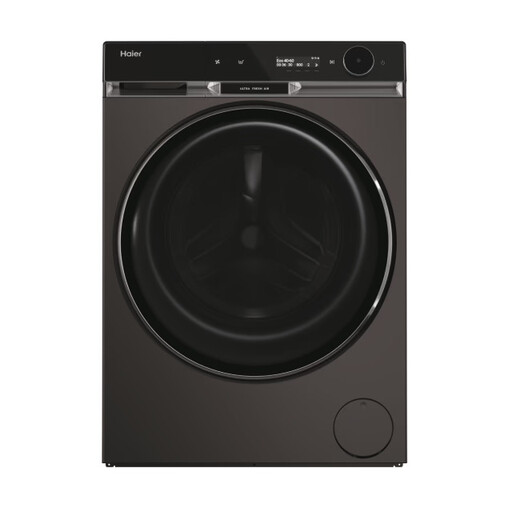 Image unavailable
Haier X Series 11 HW100-BD14397PGU1, 10 kg
This front-loader is suitable for households whose laundry needs call for a 10 kg capacity and who want to compare stated spin-cycle noise levels. The figures for this model are 68 dB(A) and noise class A, but they don’t guarantee how much the machine will vibrate on your floor.
The model name indicates a spin speed of 1 400 tr/min. Its stated depth of 611 mm, plus the space needed to open the door, should be checked before installing it in a studio flat; 10 kg may be more than a small household needs.
View on Joybuy
Frequently asked questions
Which figure should I check to compare two quiet washing machines?
Compare the dB(A) level during the spin cycle and the noise class of both models. As Les Numériques says the spin cycle is particularly noisy, also look for an independent test if the machine will be near a sleeping area. The energy label alone doesn’t tell you how noisy it will be in your room.
Does a rating of 65 or 68 dB guarantee a quiet studio flat?
No. These stated figures help you compare models, but your floor, how level the machine is, whether it touches furniture and how the laundry is distributed can all affect the vibrations and noise you experience at home.
Is a top-loader or front-loader better for a small flat?
Choose the type that gives you enough room to open the door or lid and reach the drum. UFC-Que Choisir highlights the importance of available space when making this choice and says that top-loaders generally have a capacity of no more than 8 kg. Then compare the spin-cycle noise levels of the models that fit in your room.
What should I check to reduce vibrations when installing the machine?
Follow the instructions to remove the transit bolts, level the machine and make sure it doesn’t touch furniture or walls. Take care not to overload the drum either: Electrolux Support France says an unbalanced load can cause noise during the spin cycle.


