When choosing a washing machine for a flat, compare the stated noise level during the spin cycle, the airborne acoustical noise emission class and the capacity that suits your household, rather than focusing on spin speed alone. According to ADEME, 7 kg is enough for most households, although your laundry load may call for a different capacity. A front-loader may fit under a worktop, while a top-loader can suit a narrow space. In either case, a stable floor and careful levelling help reduce vibration.
Who is this guide for?
People living close to noise-sensitive neighbours
If you sometimes put a wash on at unusual times, compare the stated noise level during the spin cycle and plan for a stable installation. The energy label shows the airborne acoustical noise emissions, but it cannot tell you on its own how much vibration you’ll feel in your home.
Households looking to balance capacity and quiet
Choose a capacity that suits your usual laundry load and how often you run a cycle. ADEME says a 7 kg drum is enough for most households, but that doesn’t make it the right choice for everyone.
People with limited space for their appliance
Measure the space, access route and clearance needed to open the door or lid. A front-loader can fit under a worktop, while a top-loader needs clearance above it, as Whirlpool explains in its guide to different formats.
Which criteria should you compare?
For a flat, start with the space you actually have, then compare compatible models by their energy label and how much laundry you need to wash.
| Criterion |
What to check |
Who is it for? |
| Noise and vibration |
Compare the spin-cycle noise level in dB and the airborne acoustical noise emission class on the exact model’s label. Also check that the floor can support a stable, level installation. |
If the spin cycle could disturb my neighbours, I want to keep noise and shaking to a minimum when I do the washing; around 50% of consumers put a quiet wash at the top of their list. |
| Capacity |
Match the capacity in kg to your usual laundry load and any bulky items. ADEME gives 7 kg as a guide that is enough for most households. |
If I regularly have a lot of laundry to wash, I want a drum that can handle it without needing extra cycles; capacity comes first for around 30% of consumers. |
| Size and installation |
Measure the width, depth and clearance needed to open the door or lid. Check the access route and the water, drainage and electrical connections too. |
If space is tight, the first thing I need is an appliance I can install and open properly; around 20% of consumers prioritise this constraint. |
Mistakes to avoid
-
Choosing based only on the maximum spin speed
A speed in rpm doesn’t tell you on its own how noisy or stable the appliance will be. The energy label also shows the noise level, airborne acoustical noise emission class and spin-drying efficiency class.
Compare these details for models that will fit in your home, then consider the installation conditions too.
-
Blaming every vibration on the appliance
Bosch and Electrolux point out that transit bolts, levelling the appliance and how the laundry is distributed in the drum can all affect shaking during the spin cycle.
Follow the instructions to remove the transit bolts, adjust the feet and load the drum correctly. Check these points before considering anti-vibration accessories.
-
Measuring only the width of the space
A front-loader needs space in front for the door, while a top-loader needs clearance above the lid. An appliance might fit in the space but still be difficult to deliver or connect as planned.
Before ordering, note all three dimensions, the delivery route, the clearance needed to open the appliance and the position of the connections.
-
Taking ‘quiet’ to mean a comparable measurement
A marketing claim is no substitute for the label information for the specific model and variant you’re considering.
Check the spin-cycle noise level and airborne acoustical noise emission class, then read the installation instructions.
Brands to consider for this choice
Product ranges and manufacturer guidance can help you start comparing, but you’ll still need to check the noise levels and dimensions of each specific model.
Bosch
Worth considering if you’re looking for a front-loader and want to find parts using the model reference.
- Bosch says parts for its washing machines are generally available for 15 years; check availability for the model you’re considering.
- Its advice on removing transit bolts and adjusting the feet doesn’t prove that a Bosch model is quieter than another washing machine.
Electrolux
Worth considering if you want to find the instructions for a front-loader or top-loader using its product number.
- Electrolux lets you search for instructions using the product number and explains several things to check if your appliance vibrates.
- This installation advice isn’t an independent comparison of the noise levels of its models.
Whirlpool
Worth considering if you want to compare the opening clearance needed for top-loaders and front-loaders.
- The Whirlpool range includes top-loaders with capacities of 6 to 7 kg, as well as front-loaders with other capacities, depending on the range.
- The stated noise specifications for one Whirlpool model won’t apply to the whole brand: compare the label for each appliance.
Washing machines to explore on Joybuy
These top-loading and front-loading models let you compare two formats for a flat. First, choose one that can be installed in your home, then check the noise label and capacity of the variant you’re considering.
 Image unavailable
Haier T Series 7 THASN276TM6-S, 7 kg top-loading washing machine
Worth considering if you need a top-loading machine with a 7 kg capacity.
Stated maximum spin speed: 1 200 rpm. Allow clearance above the lid and compare the noise information on the label for the variant you choose.
View on Joybuy
 Image unavailable
Candy ProWash 500 TCA464TM4-S, 6 kg top-loading washing machine
Worth considering if a top-loader suits your space and a 6 kg capacity meets your laundry needs.
Stated maximum spin speed: 1 400 rpm. This figure doesn’t tell you how noisy the spin cycle will be; check the label and allow room to open the lid.
View on Joybuy
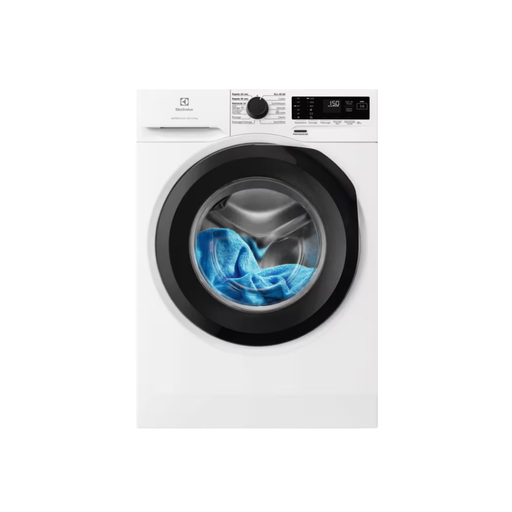 Image unavailable
Electrolux EWF1410N2, 10 kg front-loading washing machine
Worth considering if your laundry load calls for a 10 kg capacity and there’s enough room to open the door fully in front of the appliance.
Compare the airborne acoustical noise emission class on the label for the variant on sale, and check the appliance dimensions against your space.
View on Joybuy
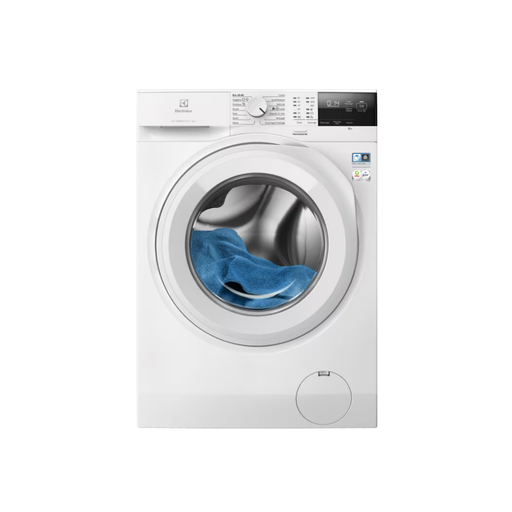 Image unavailable
Electrolux EW6FI4805AW, 8 kg front-loading washing machine
Worth considering if you want a front-loader and an 8 kg capacity suits your usual laundry loads.
Stated maximum spin speed: 1 400 rpm. Check the noise class, dimensions and door clearance for the variant you choose.
View on Joybuy
Frequently asked questions
What should I compare to find a washing machine that’s less disruptive during the spin cycle?
Compare the spin-cycle noise level in dB and the airborne acoustical noise emission class on each model’s energy label. Include capacity and spin-drying efficiency class in your comparison, as ADEME recommends, then check that the appliance can be installed securely and level.
Is a top-loading washing machine necessarily quieter than a front-loader?
No. The type of loading alone doesn’t tell you how noisy a machine will be. A top-loader can suit a narrow space, but it needs clearance above the lid; a front-loader needs room in front for the door. Compare the noise information for the specific models you’re considering.
What should I check before the first wash to reduce vibration?
Follow the instructions to remove the transit bolts, level the appliance and adjust its feet. Bosch and Electrolux also recommend making sure the appliance is stable and the laundry is evenly distributed in the drum.
Where can I check the rules for using a washing machine in my building?
If you live in a block of flats, check the co-ownership regulations and any building rules, as ANIL recommends. Check which rules apply to your home before planning washes at times that could disturb your neighbours.


