
Livraison le jour même ou le lendemain

Qualité garantie

Débloquez vos offres de bienvenue: Livraison GRATUITE | Jusqu'à -80 % | 30 jours d'essai gratuits à JoyPlus
Téléchargez l'application
When the temperature soars, finding a cool sanctuary at home becomes a priority, especially for getting a peaceful night's sleep. But the search for the ideal quiet portable air conditioner often turns into a headache, drowned in marketing promises that aren't always honest. As a product expert for Joybuy, my mission is to guide you. Together, let's break down the pitfalls to avoid and the essential criteria for making the right choice.
Before you decide, it's crucial to understand the common misconceptions and marketing promises that often lead to buyer's remorse.
To avoid these unpleasant surprises, forget the marketing hype and focus on objective data. Here are the three key points to check before any purchase.
Cooling power is expressed in BTU (British Thermal Unit). The higher this number, the larger the volume the air conditioner can handle. To keep it simple, here are some guidelines:
Properly sizing the power is the best way to guarantee optimal comfort without sending your electricity bill through the roof.
A supplemental air conditioner for a bedroom should know how to blend into the background. For restful sleep, the noise level should not exceed 50 to 53?dB during operation. Specifically look for this value, which often corresponds to "Night Mode" or the lowest speed. This information is sometimes hidden in the technical specifications, but it is non-negotiable. Good units with a dedicated sleep mode not only optimize noise but also the temperature curve for maximum comfort.
If you're going to invest, you might as well choose a versatile unit. A 3-in-1 (or even 4-in-1) air conditioner will be useful far beyond the few weeks of a heatwave:
This versatility transforms a seasonal expense into a cost-effective, year-round investment.
To help you see more clearly, here is a selection of models that check all the right boxes, each meeting a specific need.
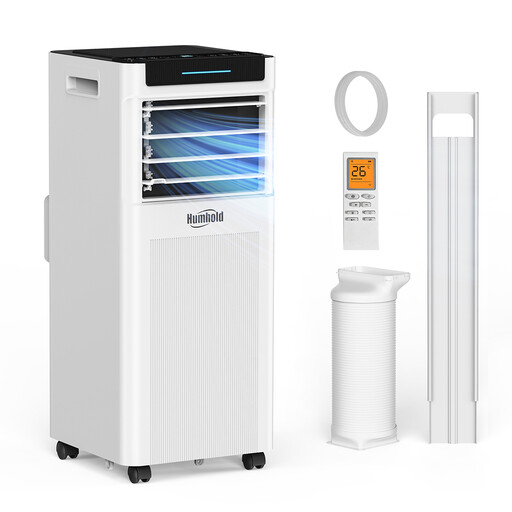
Who is it for? For light sleepers who can't stand any noise at night. Perfect for a bedroom or office up to 30 m?, where silence is golden for resting or concentrating.
It doesn't cheat on noise levels: its sleep mode is certified under 51 dB, a realistic and verifiable value for nighttime use.
Its 9000 BTU power is perfectly calibrated for a room up to 30 m?. Not too much, not too little. Plus: its 24-hour timer lets you schedule cooling just before you go to bed.
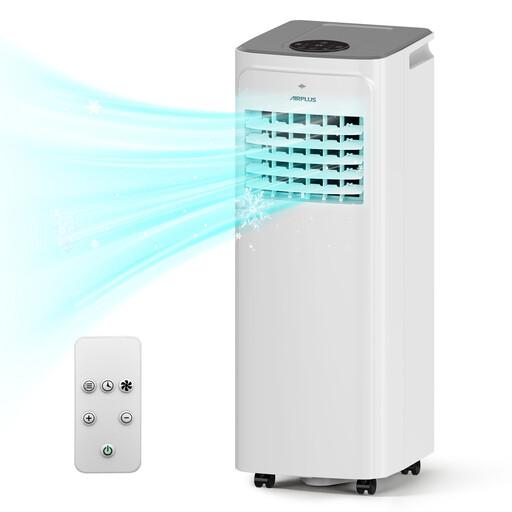
Who is it for? For those looking for the best performance-to-price ratio. This budget-friendly portable AC doesn't compromise on the essentials and offers a complete solution at an affordable price point.
It avoids the pitfall of 'entry-level' models that are often undersized. Its 9000 BTU ensures effective cooling for a room up to 30 m?, where less powerful units would struggle.
Its 4-in-1 versatility (AC, heat, dehumidifier, fan) makes it useful in any season, which means the investment quickly pays for itself. Its noise level drops to 45 dB on low speed, a nice bonus.
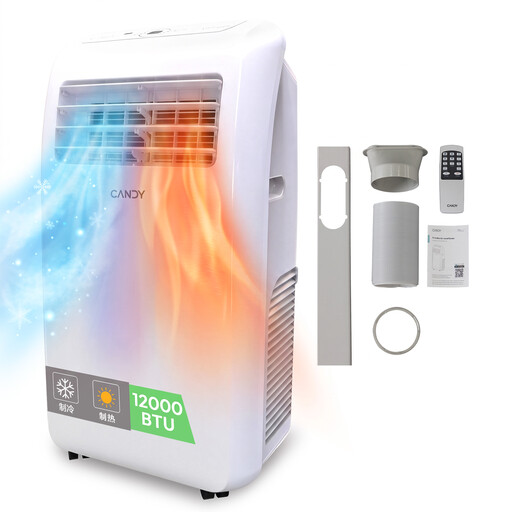
Who is it for? For those who want to cool a living area, a lounge, or a large bedroom (up to 35 m?). Its superior power guarantees a rapid and even temperature drop.
It perfectly solves the problem of being undersized. Trying to cool 35 m? with a 9000 BTU unit is a lost cause. Its 12000 BTU is precisely the power required for such a volume.
Its heating function makes it a valuable ally even in winter. Its powerful airflow (400 m?/h) ensures rapid and even distribution of air, whether cool or warm.
We have put together a complete selection of units that meet our performance criteria and current safety standards.
It all depends on its power (BTU) and its energy efficiency class. For example, a 9000 BTU model with a Class A rating consumes about 1 kWh (kilowatt-hour). To estimate the cost on your bill, simply multiply this consumption by your kWh price and the number of hours of use. Remember to use the timer and "eco" modes to keep your budget in check.
Yes, and it's non-negotiable. A portable air conditioner works by extracting heat from your room. This heat must be expelled outside through the exhaust hose. Without it, the unit would release the heat back into the room, completely canceling out its own effect. Fortunately, the window sealing kits, which are often included, make installation very simple.
With proper maintenance, a portable air conditioner can operate without issues for 5 to 10 years. Maintenance is simple: just clean the dust filters every two weeks during use and empty the condensate tray if the unit does not have automatic evaporation. Also, remember to store it upright in a dry place during the winter to preserve its components.