In a studio flat or open-plan kitchen, start by choosing a size that suits your available space and storage needs, then compare the stated noise levels on the energy labels of similar models. A table-top fridge may suit a small kitchen, while a fridge-freezer is a better choice if you need a separate freezer compartment. In every case, check the ventilation requirements and, for a built-in model, make sure it’s compatible with the cabinet space.
Who are these formats suited to?
Someone living alone in a studio flat
If your fridge shares a room with your bed or desk, its footprint and stated noise level matter just as much as its usable capacity. Que Choisir lists table-top fridges among the formats suited to studio flats; still, check that one will hold your usual food shop.
Household with an open-plan kitchen
You may hear the appliance from your living area. Compare the noise emissions shown on the energy label, but don’t let this single figure outweigh your capacity or freezer needs.
Someone replacing a built-in appliance
Before comparing capacity and noise, measure the cabinet space and identify the door-fixing system. The instructions for your chosen model also set out its ventilation requirements.
What should you check before choosing?
Start with where the fridge will go and what you need to store, then compare compatible appliances by their stated noise level.
| What to consider | What to check | My needs |
|---|
| Stated noise level |
Check the noise emissions in dB(A) on the energy label and compare appliances of a similar size. The European Commission says the label provides information about noise emissions. |
If the appliance will be near my bed or workspace, I want to compare its stated noise level before choosing. |
| Capacity and freezing |
Compare the usable capacity with how often you shop, and check whether you need a separate freezer compartment. A smaller model may not cover both needs. |
I want enough room for my food without taking up unnecessary space in my kitchenette. If I regularly store frozen food, I also need to check the freezer capacity. |
| Installation |
Measure the height, width and depth, then check the instructions for ventilation and door fitting. In its installation advice, Bosch recommends at least 200 cm² of clear space behind and beneath the fridge; the instructions for your chosen model take precedence. |
My cabinet space or chosen location must fit the appliance without obstructing the door or the airflow required for installation. |
| Operating temperature |
Once installed, check the temperature setting and make sure the door closes properly. A French survey published in 2010 in the Revue Générale du Froid et du Conditionnement d’Air and available on HAL measured whether people checked that the temperature was at or below +4 °C; this was not a purchasing criterion. |
I want to be able to monitor the temperature once the appliance is in use. In this survey of a convenience sample of 809 working adults, 37% of respondents said they made sure their fridge did not exceed +4 °C. |
What mistakes should you avoid?
-
Relying solely on the word “quiet”
A marketing claim doesn’t let you compare the stated noise levels of two appliances. In a studio flat, you may hear the fridge running from your sleeping area.
Check the dB(A) figure on the energy label and compare models of a similar size. A stated figure doesn’t mean the appliance will be silent when it’s running.
-
Measuring only the width of a cabinet space
A built-in model also needs to fit the height and depth, suit the door-fixing system and meet the ventilation requirements for its installation.
Measure all three dimensions and check the instructions before ordering. If the planned installation isn’t suitable, don’t force the appliance into the cabinet space.
-
Choosing a small appliance without checking its freezer capacity
A compact fridge or a single-door model may suit your fresh-food storage needs without offering the separate freezer compartment you require.
Think about what you need to store: fresh food, the occasional item in a small freezer compartment, or frozen food regularly. Then check the capacity of each compartment and the space needed for your chosen format.
Which branded models should you compare?
These models illustrate different capacities and installation setups; their features don’t represent every product from each brand.
Bosch
Worth considering if your kitchen needs an under-counter model and you only need to store fresh food.
- Bosch lists a capacity of 134 l and a noise level of 35 dB(A) for the KUR21VFE0, an integrated under-counter fridge.
- Bosch’s product information confirms that this model has no freezer compartment. Check its installation requirements in the instructions.
Liebherr
Two built-in models let you compare different cabinet heights and capacities.
- Liebherr lists a capacity of 182 l and a noise level of 32 dB for the IRd 4121 Plus, designed for a cabinet space measuring 121,6 to 123,6 × 56 to 57 × 55 cm.
- The DRe 3900 Pure is listed at 136 l and 35 dB, for a cabinet space measuring 87,4 to 88 × 56 to 57 × 55 cm. Also check that its decorative door panel system suits your kitchen.
Electrolux
The built-in ENP7MD19S fridge-freezer is worth considering if a separate freezer compartment is on your list of requirements.
- Electrolux gives a total net capacity of 269 l, split between 207 l of fridge space and 62 l of freezer space.
- Before choosing it for an open-plan kitchen, compare its stated noise level on the energy label and check that it’s suitable for your installation.
Fridge-freezers to explore on Joybuy
These fridge-freezers offer both fridge and freezer space for a studio flat or open-plan kitchen. Compare their size, installation requirements and stated noise levels before choosing.
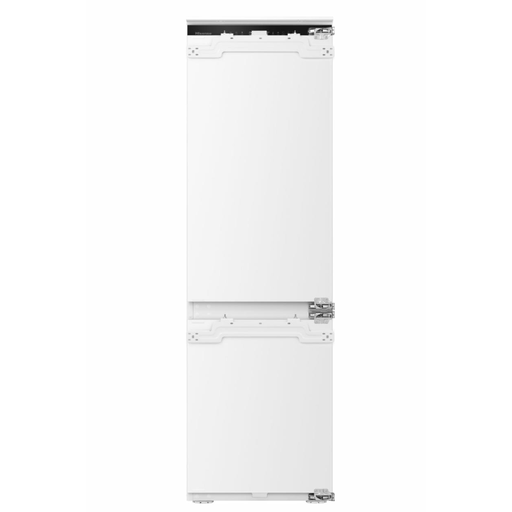 Image unavailable
Hisense RB3B250SAWC, 252 L built-in fridge-freezer
If you have a fitted kitchen and need a freezer too, check the cabinet dimensions, door fixing and ventilation before choosing this model. The product title mentions No Frost and an energy rating of C; compare its stated noise level separately on the energy label.
View on Joybuy
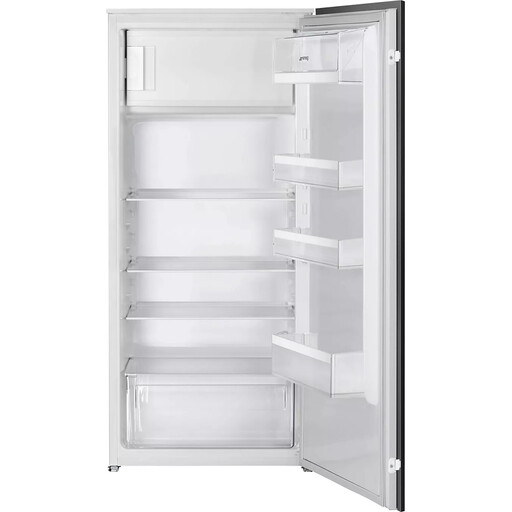 Image unavailable
SMEG S4C122E, 188 L built-in fridge-freezer
This single-door model with a top-mounted freezer may be suitable if its layout meets your storage needs. The product title lists an energy rating of E; check the cabinet space, door fitting and stated noise level before choosing.
View on Joybuy
 Image unavailable
AEG NSC6M18FES, 249 L built-in fridge-freezer
To fit a fridge-freezer in an open-plan kitchen, check the cabinet dimensions, ventilation and door fitting. The product title mentions TwinTech No Frost and an energy rating of E; use the energy label to compare its stated noise level.
View on Joybuy
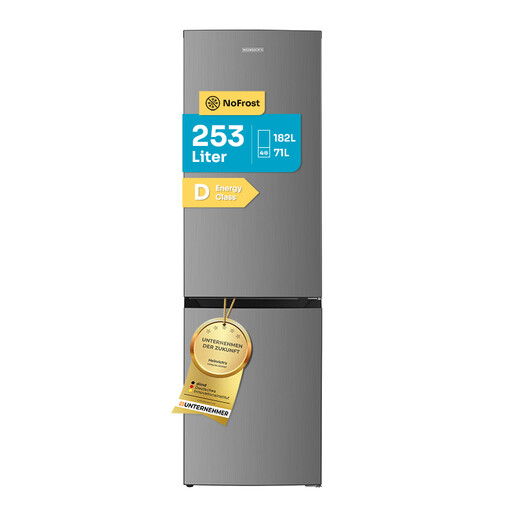 Image unavailable
Heinrichs, 253 L fridge-freezer, stainless steel
For separate fresh and frozen food storage, the product title lists 182 L of fridge space and 71 L of freezer space, with a stated noise level of 39 dB and No Frost. Check that the appliance and the required ventilation clearances will fit in your chosen location.
View on Joybuy
Frequently asked questions
How can I compare the noise levels of two fridges?
Compare their stated noise emissions in dB(A), ideally between appliances of a similar size. The European Commission says the energy label provides information about fridge noise; this figure doesn’t guarantee that you won’t hear the appliance running in your room.
Can you put a freestanding fridge in a cabinet space?
Only if the model’s instructions allow this type of installation and you can meet its ventilation clearance requirements. In its installation advice, Bosch recommends at least 200 cm² of clear space behind and beneath the fridge; this doesn’t replace the instructions for your chosen appliance.
Should you wait before plugging in a delivered fridge?
Follow the instructions for your model. Electrolux recommends waiting at least 4 hours before plugging in its fridges and fridge-freezers, to give the oil time to flow back towards the compressor. Don’t automatically apply this waiting time to another appliance.
Is the stated noise level enough to choose a fridge for an open-plan kitchen?
No. Your fridge also needs enough capacity for your food shop and, if required, a separate freezer compartment. Finally, check its dimensions and the ventilation requirements in the instructions, especially for a built-in installation.


