In a studio flat or open-plan kitchen, start by comparing the stated noise level and noise class on the energy label. Then check the usable capacity, dimensions and clearance needed to open the door. A low dB(A) figure can help you shortlist models, but it doesn’t tell you everything about how intrusive the sound will feel. If the fridge is near where you sleep, an independent assessment of its noise during operating cycles can provide an extra point of reference, as UFC-Que Choisir highlights.
Who is this guide for?
Light sleepers in studio flats
If you sleep or work near the fridge, start with its stated noise level. Also look for information about operating-cycle noise and vibration if the model has been tested: UFC-Que Choisir points out that the figure on the label doesn’t tell you everything about how the sound is perceived.
People with an open-plan kitchen
If your fridge shares a space with your living room, look for a balance between its stated noise level, a capacity that suits your usual shop and its stated annual energy consumption. The energy label helps you compare these figures, but you’ll still need to check that you have enough space.
People planning a small kitchen
For an alcove, under-counter installation or narrow walkway, measure the space and door clearance before choosing a format. For a built-in model, also check the door fixing system and the model’s ventilation requirements.
What should you look for?
First rule out appliances that won’t fit or hold enough food, then compare suitable models using their stated noise levels and energy labels. A compact model is a space-saving option; a fridge-freezer gives you two compartments; and a built-in model also needs a suitable housing unit and door fitting. These features can overlap in the same appliance.
| What matters |
What to check |
Who is this for? |
| Perceived noise |
Compare the dB(A) re 1 pW figures and noise classes for the exact model. If it’s near where you sleep, also look for a test that assesses noise during operating cycles. |
When I can hear the fridge from my bed or sofa, I want to reduce the disturbance caused by its cycles, not just pick the lowest figure on the label. Around 36% of consumers prioritise a quiet living space. |
| Space and installation |
Measure the height, width and depth, as well as the clearance needed to open the door. For a built-in model, check the housing unit, door fixing system and specified ventilation. |
In a narrow kitchen, I need to be able to open the door and move around once the appliance is in place. Making the most of the available space is the priority for around 29% of consumers. |
| Usable capacity |
Compare the fridge capacity in litres separately from the freezer capacity, if needed. Don’t assume you can work out the capacity from the external dimensions. |
If I shop for several days at a time or keep frozen food, a small model may not suit my needs. Around 21% of consumers put storage capacity first. |
| Energy consumption |
Check the energy class and stated annual consumption in kWh, then follow the model’s installation instructions. |
For an appliance that runs all the time, I want to consider its energy consumption without compromising on the capacity I need. This is the top priority for around 14% of consumers. |
Mistakes to avoid
-
Choosing based only on the stated dB level
The stated level is useful for comparing labels, but two sounds at the same level can feel different. UFC-Que Choisir highlights the role played by the type of sound and vibrations.
Use the dB(A) figure and noise class to shortlist models. If keeping things quiet is essential, look for an independent assessment of operating-cycle noise for the models you’re considering.
-
Confusing appliance size with the space it needs
A fridge that fits the available width may still be too deep or unable to open fully. For a built-in model, the housing unit and fixing system may also prevent installation.
Compare the measurements of your space with the model’s instructions, including the door fitting and any parts supplied. For example, Miele states that the furniture door panel selected for its built-in appliances is not included.
An incompatible door panel or hinge may mean you need to adapt your kitchen unit.
-
Going for a smaller model without checking the freezer
A compact model may not have enough room for your shopping or frozen food. UFC-Que Choisir notes that some compressor-free mini appliances can’t freeze food.
Work out how much space you need for fresh food and frozen items, then check the compartments on the exact model.
-
Overlooking ventilation
Restricted heat dissipation can affect operating conditions and energy consumption. Ventilation requirements vary depending on the installation.
Follow the model’s instructions. For a freestanding appliance, allow for the required clearances and nearby heat sources; for a built-in model, follow the instructions for its housing unit.
Brands to consider for different installations
Bosch
Worth considering if you’re looking at the specifications of a built-in fridge-freezer, including its capacity, stated noise level and hinges.
- Bosch lists a noise level of 35 dB(A) re 1 pW, 200 L of fridge capacity, 70 L of freezer capacity and sliding hinges for the KIV875SE0.
- These figures apply to the KIV875SE0. Check that it fits your housing unit, and don’t assume they apply to other Bosch models.
Liebherr
Worth considering when an under-counter installation needs to balance the housing unit dimensions, capacity and stated noise level.
- Liebherr lists a capacity of 127 L, a noise level of 34 dB and a housing unit size of 82–88 × 60 × 56 cm for the URd 3600 Pure.
- These specifications apply only to this model. Check the door system too before choosing an under-counter appliance.
Miele
Worth considering if you’re planning to fit a furniture door panel to blend a built-in fridge into your kitchen.
- Miele says its built-in appliances can be fitted with a door panel chosen to match your kitchen.
- The brand states that the panel is not included. A seamless look doesn’t tell you anything about the noise level of the model you choose.
Fridges available on Joybuy
These models include a built-in fridge-freezer, several fridge-freezers with different storage capacities and a small compact fridge. Compare their stated noise levels with the space and capacity you need at home; the format alone won’t tell you how intrusive the sound will be.
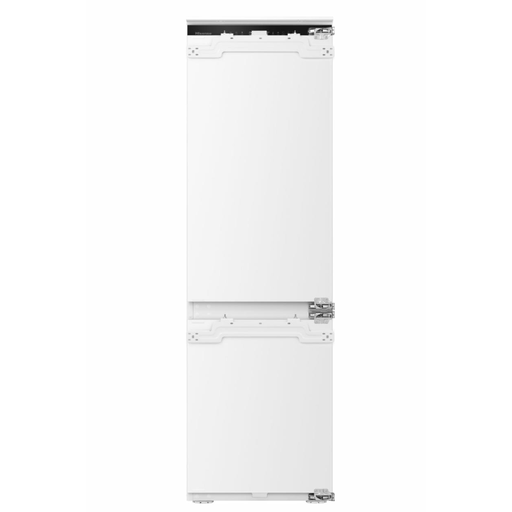 Image unavailable
Hisense RB3B250SAWC, 252 L built-in fridge-freezer
Worth considering if you want two compartments in a compatible kitchen unit. The Joybuy listing gives a stated noise level of 34 dB(A); this figure alone can’t tell you how intrusive it might be near where you sleep.
The product name lists a capacity of 252 L, No Frost and energy class C. Check the required housing unit dimensions, door fitting and ventilation instructions before choosing this model.
View on Joybuy
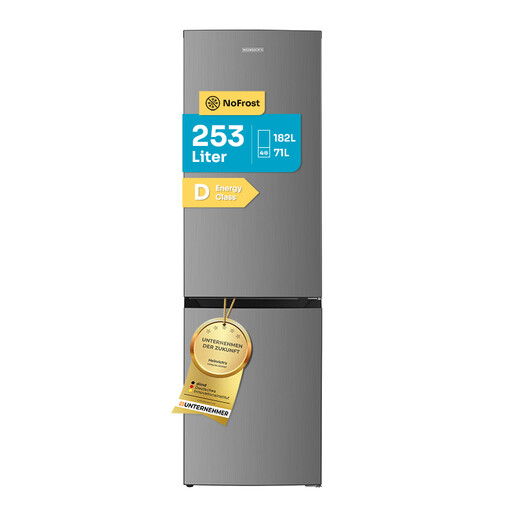 Image unavailable
Heinrich´s, 253 L fridge-freezer, stainless steel finish
Consider this model if you need both fridge and freezer space without opting for a very large appliance. Its stated noise level is 39 dB; check how this figure is presented on the model’s label.
The product name lists a total capacity of 253 L, split between 182 L of fridge space and 71 L of freezer space. It also mentions No Frost and a reversible door hinge. Measure the space and door clearance before buying.
View on Joybuy
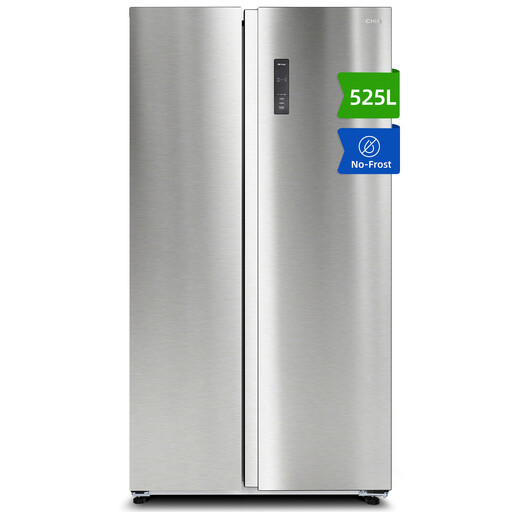 Image unavailable
CHiQ JR525WSE, 525 L side-by-side fridge-freezer
This capacity suits a household that needs plenty of storage, provided the access route and available space are suitable. The product name lists a noise level of 37 dB; check the dimensions and door clearance for your kitchen too.
It lists 333 L of fridge space, 192 L of freezer space, No Frost and energy class E. To compare its energy use with another model, check the annual kWh figure on both labels.
View on Joybuy
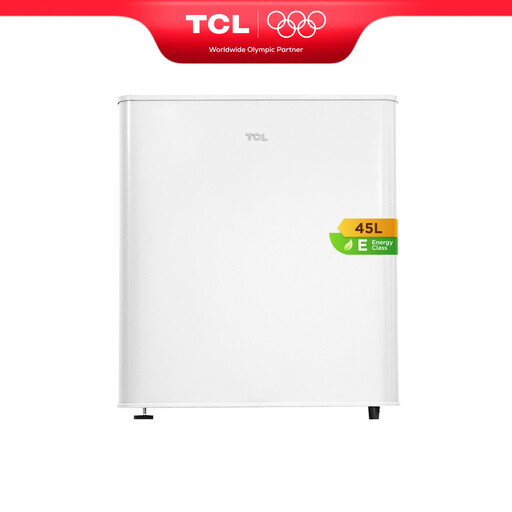 Image unavailable
TCL RF60DWE0FR, 45 L mini fridge
Worth considering if you have limited space and don’t need much storage. The Joybuy listing gives a noise level of 40 dB; check the unit and noise class in the model information rather than assuming that a small fridge will be quiet.
The product name lists a capacity of 45 L and energy class E. If you need to store frozen food or several days’ worth of shopping, check the capacity of each compartment and the dimensions before choosing this format.
View on Joybuy
 Image unavailable
Sonlu CC-520WE, 444 L fridge-freezer
Worth considering if storage capacity matters more to you than a small footprint. The product name lists a noise level of 40 dB, but that doesn’t tell you how noisy it will feel in a living space.
It lists a total capacity of 444 L, No Frost and energy class E. Check the dimensions, door opening direction and capacity of each compartment to see if it will suit your kitchen.
View on Joybuy
Frequently asked questions
What should you look for on the energy label when comparing noise levels?
For fridges covered by European Regulation 2019/2016, compare the stated airborne noise emissions in dB(A) re 1 pW and their noise class. The dB(A) figure is rounded to the nearest whole number. Also check the compartment capacities and annual energy consumption so you don’t choose on noise alone.
Does a lower dB figure always mean less noise disturbance?
No. It can help you shortlist models, but it doesn’t fully describe what you’ll hear during their operating cycles. UFC-Que Choisir points out that perception also depends on the type of sound and vibrations. If the fridge will be near your bed or living room, look for an assessment of the exact model’s noise.
Is a built-in fridge always quieter?
No. A built-in model is primarily designed to meet your kitchen layout needs, and doesn’t guarantee a particular noise level. Compare the stated noise level for the exact model, then check the housing unit dimensions, door fixing system and ventilation requirements in its instructions.
How should you manage ventilation after buying?
Follow the clearances in the instructions and, if your setup allows, avoid placing the appliance near a heat source. UFC-Que Choisir gives general guidance of 10 cm above and behind freestanding refrigeration appliances; the manufacturer’s instructions take precedence, especially for built-in models.


