
Livraison le jour même ou le lendemain

Qualité garantie

Débloquez vos offres de bienvenue: Livraison GRATUITE | Jusqu'à -80 % | 30 jours d'essai gratuits à JoyPlus
Téléchargez l'application
The intense summer heat often forces a tough trade-off?: put up with the heatwave, or endure the racket of a fan?? For remote workers, light sleepers, or families with young children, a noisy appliance is simply a deal-breaker. The challenge is finding a quiet fan that combines performance with discretion.
Faced with a huge range of options and often confusing technical specs, it's easy to feel overwhelmed. This article is here to guide you. As the Head of Product Recommendations at Joybuy, my mission is to provide you with practical advice and a selection of appliances that meet strict criteria for silence, performance, and comfort.
Before we unveil our top picks, let's review the key factors to help you make the right choice—one that's truly suited to your home and lifestyle.
This is THE most important criterion. For optimal comfort, especially in a bedroom, aim for a device with a minimum noise level below the 30?dB mark. For comparison:
Models equipped with direct current (DC) motors are generally quieter and allow for more precise speed adjustments. This is a major plus.
The device's form factor has a direct impact on its performance and how it fits into your home.
Certain options can transform a simple fan into a true daily comfort ally:
After analysing technical specifications and user feedback, here are three models that stand out for their quiet operation and effectiveness.
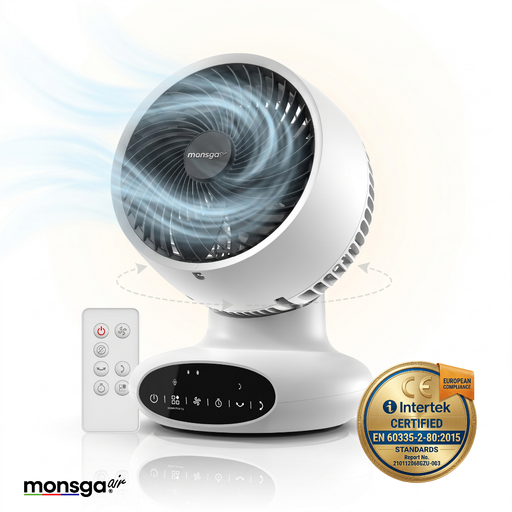
Why it stands out?: This compact model is a pure air circulator designed for silence. Its lowest noise level of 25?dB makes it ideal for nighttime use. Its dual oscillation (horizontal and vertical) ensures perfectly even air distribution throughout the room.
Pros?:
Who is it for?? Ideal for bedrooms, offices, and small living areas where silence is non-negotiable.

Why it stands out?: This pedestal fan is the perfect blend of power and silence. Capable of projecting an airflow up to 25 metres, it's built to cool large spaces. Its DC motor allows it to operate at just 20?dB on low speed—a record-breaking achievement.
Pros?:
Who is it for?? Perfect for large living rooms, spacious bedrooms, and open-plan areas that require powerful yet discreet air circulation.
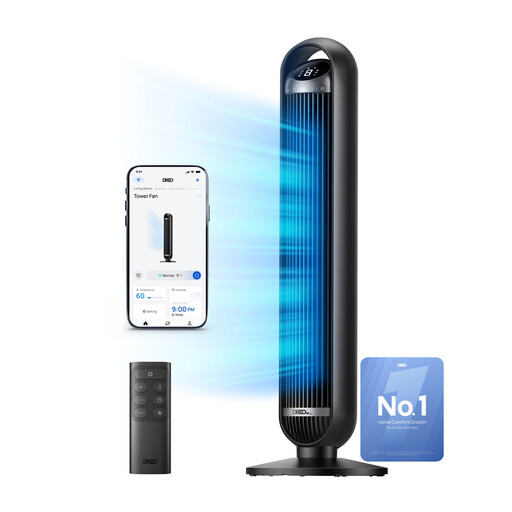
Why it stands out?: This smart tower fan is the tech-lover's choice. With a noise level of 25?dB and compatibility with voice assistants (Alexa, Google Assistant) and its mobile app, it offers total, customised control.
Pros?:
Who is it for?? For smart home enthusiasts and anyone looking for a fully customisable and connected cooling experience.
The models featured here are designed for fixed indoor use. If you need mobility, for example, to cool down outdoors or on the go, other options are available.
For on-the-go cooling, we invite you to explore our selection of portable misting fans.
Discover our range of Rechargeable Portable Misting Fans
1. What's the difference between a standard fan and an air circulator?? A standard fan simply pushes air in one direction, creating a very localised cooling sensation. An air circulator, on the other hand, is designed to move the entire volume of air in a room. It creates a vortex that circulates air from floor to ceiling, evening out the temperature and providing a more immersive feeling of comfort, even at low speeds.
2. Is a low-energy fan really more economical?? Yes, and the difference is significant. Models with a DC (direct current) motor, often called low-energy fans, consume up to 70% less electricity than a conventional fan with an AC (alternating current) motor. Although their purchase price may be slightly higher, the savings on your electricity bill make them more cost-effective in the long run. Not to mention, these motors are also quieter.
3. How do I maintain my fan to keep it quiet?? Regular maintenance is crucial. Dust buildup on the blades and grilles can unbalance the mechanism and generate noise, in addition to being unhygienic. Before handling, always unplug the device. Use a vacuum cleaner with a soft brush attachment or a slightly damp microfibre cloth to dust the grilles. If the model allows, remove the front grille to clean the blades. A clean appliance is a more efficient, hygienic, and quieter appliance.