You run the dishwasher while you’re at home
If you can’t put off washing up, especially in an open-plan kitchen, noise is a factor worth considering. ADEME and Que Choisir both include it among the points to consider when choosing a dishwasher.


If you use your dishwasher while you’re at home, start by comparing its noise level and noise class, then check that its capacity suits your everyday washing-up. The energy label also shows water and energy consumption, as well as the duration of the eco programme, but these figures don’t automatically apply to other programmes. Finally, choose a format that fits your space, any required door panel and the planned connections.
If you can’t put off washing up, especially in an open-plan kitchen, noise is a factor worth considering. ADEME and Que Choisir both include it among the points to consider when choosing a dishwasher.
You’re looking for a capacity that suits your loads and consumption figures that are relevant to the cycles you use. ADEME recommends waiting until the dishwasher is full before starting a cycle.
You’ll need to check the appliance’s dimensions and, for an integrated model, make sure the door panel and hinges are compatible. Bosch and Electrolux installation guides explain how these requirements vary by model and service.
If you use your dishwasher while you’re at home, decide what matters most to you: noise, load size, consumption, cycle duration or installation requirements.
| Criteria | What to check before you buy | Who should prioritise it |
|---|---|---|
| Noise level | Compare the decibel ratings and noise class; check the figures for the programme you plan to use. | If the appliance runs while you’re at home in an open-plan kitchen or nearby, you’ll want to limit the noise you hear. Around 34% of consumers concerned put quiet operation first. |
| Usable capacity | Compare the stated number of place settings with the size of your load and the layout of the racks. | If you want to fit your everyday dishes into one load, you’ll need a capacity suited to your needs. Around 20% of consumers concerned prioritise usable capacity. |
| Water and energy | Compare kWh per 100 eco cycles and litres per cycle, then take your usage frequency into account. | If you run the appliance often, you’ll want to compare consumption against the cycles you actually use. Around 20% of consumers concerned put water and energy use first. |
| Cycle duration | Check the duration of the eco programme and consult the manual for details of other programmes and options. | If you need your dishes ready by a particular time, cycle duration can affect how you organise your household routine. Around 13% of consumers concerned prioritise having their dishes ready when they need them. |
| Installation compatibility | Check the dimensions, door panel and any hinges, then confirm the planned connections. | If a cabinet space, worktop or door panel places limits on your options, confirm compatibility before choosing secondary features. Around 13% of consumers concerned make installation their top priority. |
Cycle times and consumption can vary depending on the programme and options. The European Commission uses the eco programme as the reference for energy label information; a Bosch manual explains that figures vary according to the programme selected and the functions activated.
Check the manual for figures for the programme you’ll actually use.
Services vary by retailer and model. Electrolux’s pre-installation guide explains that the service described doesn’t include certain carpentry, plumbing or electrical work, or fitting the door panel.
Before you buy, confirm which hinge system is compatible and exactly what the service includes.
Compact doesn’t tell you how an appliance is installed or how much it can hold. If your load is too large for the appliance, you may need to run several cycles.
Compare the dimensions and stated capacity with your dishes, then check the model’s noise label.
Its ranges cover several installation types and rack configurations, which can help you assess how an appliance will fit and how its interior is organised.
Its documentation includes a fully integrated compact dishwasher and pre-installation guidance.
Its French catalogue features several types of dishwasher, including freestanding, integrated and fully integrated models.
The models below include compact countertop dishwashers and a fully integrated model. Compare the format with your available space and the stated capacity with your everyday dishes.
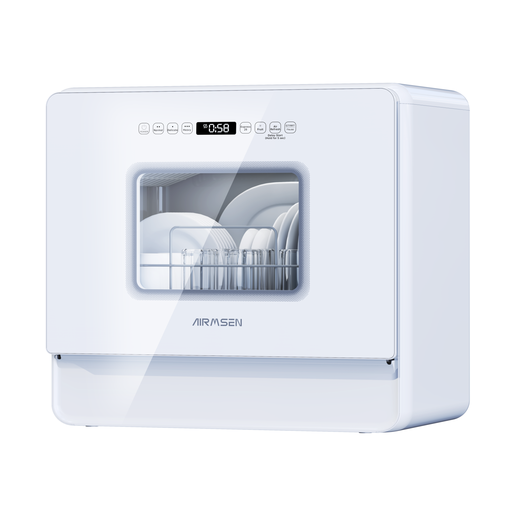 Image unavailable
Worth considering if you’re looking for a countertop appliance; check that its size and capacity suit your everyday needs.
The title lists a built-in 5 L water tank, a two-tier rack and a 12-hour delay start. Check the appliance’s stated water supply requirements.
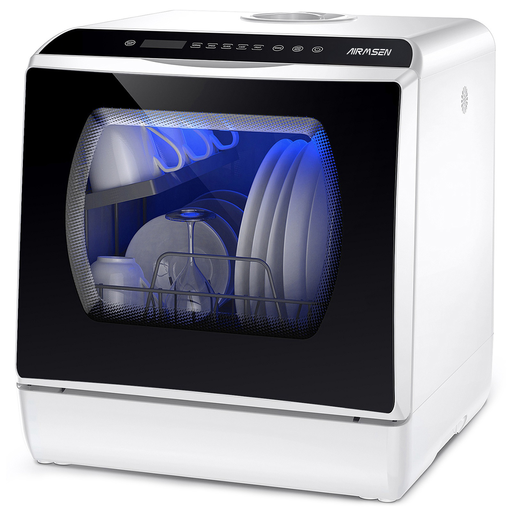 Image unavailable
Consider this if you’re looking for a compact appliance for your worktop; check its capacity against the size of your load.
The title lists 5+1 programmes, a built-in 5 L water tank and a double-layer tempered glass door. It says no plumbing connection is required; check the model’s installation instructions.
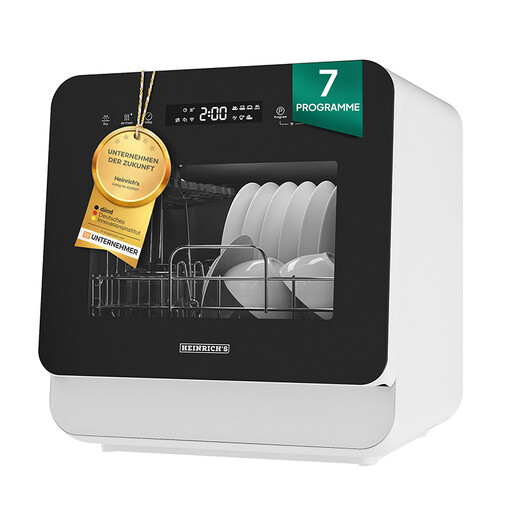 Image unavailable
This tabletop model may suit smaller loads; compare its stated capacity with the amount of washing-up you do each day.
The title lists 3 place settings, 7 programmes, a 24-hour delay start and a noise level of 56.3 dB.
 Image unavailable
Its tabletop format and stated capacity may appeal if you’re looking for a compact appliance; check that it can handle your everyday load.
The title lists 6 place settings, 7 programmes, a 24-hour delay start, 47 dB and energy rating D.
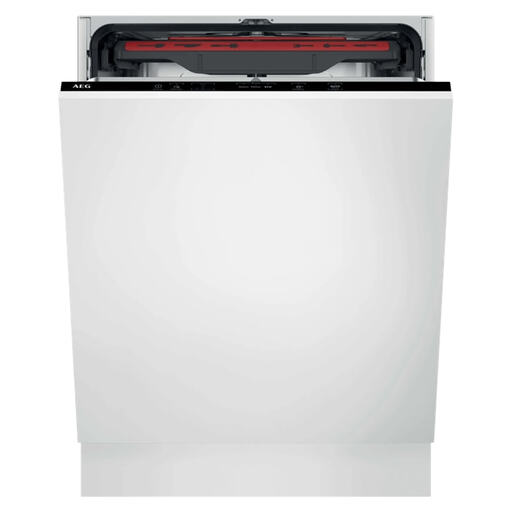 Image unavailable
Only consider this fully integrated model if your cabinet space and door panel are compatible; check the model’s installation requirements.
The title lists a width of 60 cm, a capacity of 14 place settings and energy rating C.
No. Energy ratings and noise classes are separate indicators. To compare noise, check the decibel rating and noise class; to compare consumption, look at the kWh and litres shown on the label.
No. The European Commission uses the eco programme as the reference for energy label information. Check the model’s manual for details of other programmes and options, as their consumption may differ.
Compare the appliance’s dimensions with the space available, then check the door panel and hinges for an integrated model. Also confirm the planned connections and usable capacity in the model’s manual; a compact appliance isn’t necessarily freestanding.
ADEME advises against pre-rinsing dishes under the tap. Remove any large food scraps and follow your appliance’s manual, particularly for loading and ensuring the spray arms can rotate.
Compare the stated capacity with your everyday load and how often you can run a cycle. If your dishes exceed the appliance’s capacity, you may need to split them across several cycles.