Joybuy Insights

Quiet Dehumidifier Guide: How to Choose the Right Model

Excessive humidity in a home is a real scourge. Window condensation, musty odours, and worse, the appearance of mould threaten your comfort and health. An electric dehumidifier seems like the obvious solution, but the market is flooded with models whose promises don't always deliver. As the Head of Product Recommendations at Joybuy, my mission is to help you navigate the options.

Before you commit, watch out for these common pitfalls that can turn a good investment into a noisy, inefficient disappointment.

  • The "Zero Noise" Trap: Many devices are marketed as "silent," but this promise is often vague. A compressor dehumidifier—the most common and effective type—will always produce some background noise. The only reliable metric is the sound level measured in decibels (dB). A model advertised as quiet without this specific data should be an immediate red flag.
  • Overstated Extraction Capacity: The advertised capacities in "litres per day" (L/day) are almost always measured under lab conditions (e.g., 30°C and 80% humidity), which are rarely achieved in a typical home. A capacity that looks impressive on paper can be disappointing in practice. Instead, rely on the recommended coverage area in square metres (m?).
  • Gimmicky Features That Distract from the Essentials: Ambient lighting or futuristic designs can divert attention from the fundamentals: efficiency, noise level, and energy consumption. A device must, above all, fulfill its primary mission: to dehumidify. Effectively and quietly.

Key Criteria for a Smart Purchase

To avoid these pitfalls, focus on a few foolproof technical indicators. They will ensure you get a device perfectly suited to your needs and your peace of mind.

1. Sound Level (dB): The Key to Discretion

This is the number one criterion for a quiet air dehumidifier. For use in a living room or a bedroom, a good appliance should know how to blend into the background.

  • Under 35 dB: This is the level of a whisper. Ideal for a bedroom, especially if the unit has a "night mode" that reduces the fan speed to a minimum.
  • Between 35 and 45 dB: Comparable to the background noise in a library. This is an excellent compromise for a living room or office.
  • Above 45 dB: The device becomes noticeably louder. This sound level is suitable for a basement, laundry room, or garage, where noise is a secondary concern.

2. Extraction Capacity (L/day) and Coverage Area (m?)

Rather than focusing solely on litres per day, cross-reference this data with the area you want to treat.

  • Small Rooms (< 15 m?): A small electric moisture absorber or a Peltier (compressor-free) model may be sufficient for a bathroom, walk-in closet, or office.
  • Living Areas (15-40 m?): A compressor model with a capacity of 10 to 16 L/day is usually well-sized. This is the most common choice for an effective anti-mould solution in a living room or large bedroom.
  • Large Spaces or Severe Cases (> 40 m?): For a very damp basement, a laundry room, or an entire home, look for units with a capacity of 20 L/day or more.

3. Features That Genuinely Simplify Your Life

Certain options transform a simple appliance into a true daily ally.

  • Continuous Drainage: Essential for use in a basement or if you don't want to empty the tank manually every day. The unit comes with a hose to connect to a drain.
  • Laundry Dry Function: A mode that pushes the unit to its maximum setting to speed up drying clothes indoors. A real bonus in winter or in rainy regions.
  • Wi-Fi Connected Dehumidifier: Allows you to control the unit remotely via an app, schedule operating times, and monitor the humidity level. This helps you optimise its electricity consumption and run it only when necessary.
  • R290 Refrigerant: More and more models are switching to R290 gas. This natural refrigerant combines a low environmental impact with excellent energy efficiency. A win for the planet and your wallet.

Our Recommended Models

Here are a few devices that meet specific needs, selected according to the criteria we've just detailed.
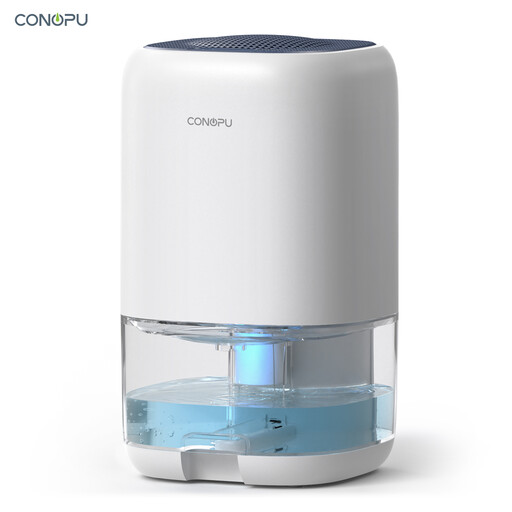
IDEAL FOR: SMALL SPACES & MAXIMUM DISCRETION
CONOPU Dehumidifier CS01H

CONOPU Dehumidifier CS01H, 1000ml Tank

Why it's a match: Perfect for a small bedroom, office, or walk-in closet (up to 15 m?). Its semiconductor technology (compressor-free) ensures near-total silence, making it ideal for running at night without disturbing your sleep.

How it avoids the pitfalls

It doesn't promise an overblown capacity. Its performance is perfectly calibrated for small spaces, and its silence isn't just a marketing claim but a direct result of its compressor-free technology.

Key Strengths

Ultra-quiet operation; very low power consumption; compact and lightweight design.
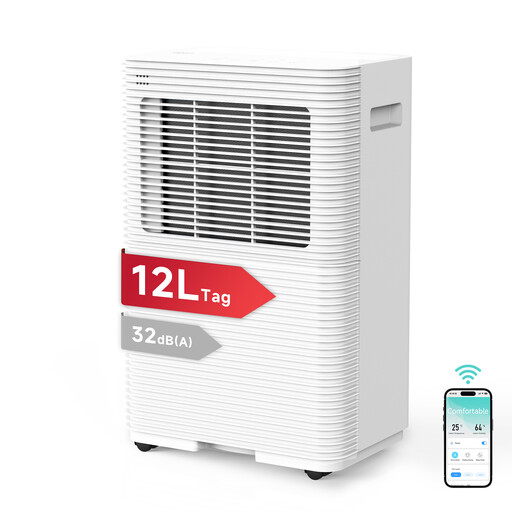
IDEAL FOR: THE PERFECT EVERYDAY BALANCE
VINO 12L Smart Dehumidifier, WiFi Control

VINO 12L Smart Dehumidifier, WiFi Control

Why it's a match: This is the Swiss Army knife of dehumidifiers, ideal for living areas up to 24 m?. It combines efficient extraction capacity with a record-low sound level of 32 dB in night mode, making it perfect even for a bedroom. The icing on the cake? Its Wi-Fi control for remote management.

How it avoids the pitfalls

It provides a verifiable and highly competitive sound level (32 dB), avoiding the vague "silent" trap. Its connectivity lets you keep an eye on consumption to prevent surprises on your electricity bill.

Key Strengths

Ultra-quiet night mode (32 dB); Wi-Fi connected dehumidifier for scheduling; integrated laundry dry function.
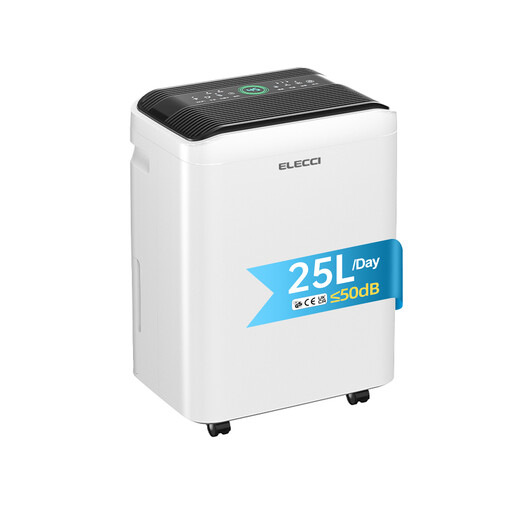
IDEAL FOR: HEAVY-DUTY NEEDS (BASEMENTS, LARGE SPACES)
ELECCI 25L/D Dehumidifiers, 4.8L Water Tank

ELECCI 25L/day Dehumidifier, 4.8L Tank

Why it's a match: With its high 25 L/day capacity for areas up to 50 m?, this unit is built for the toughest jobs: a very damp basement, cellar, or laundry room. Its large tank and continuous drainage option give it formidable autonomy.

How it avoids the pitfalls

It doesn't sacrifice acoustic comfort for power. With a very contained sound level for its category (36 dB), it avoids the classic trap of an overpowered but deafening unit. Its capacity is designed for large spaces, ensuring flawless efficiency.

Key Strengths

High extraction capacity (25 L/day); very quiet operation (36 dB); continuous drainage option and large 4.8 L tank.

Looking for other options?

We've compiled a complete, up-to-date selection of products that meet our demanding selection criteria.

Your Questions, Our Answers

How much electricity does a dehumidifier use?

The consumption of an electric dehumidifier depends on its power (in Watts) and how long it runs. A 200W model running for 8 hours a day will consume 1.6 kWh. To keep your bill in check, the secret is to choose a model with a humidistat: it automatically shuts off once the target humidity level is reached and only restarts when necessary. Models using R290 refrigerant are also known for their energy efficiency.

Can a dehumidifier really be quiet at night?

Yes, provided you choose the right one. For a bedroom, aim for a model that clearly states a sound level below 35-40 dB. The presence of a "Night" or "Sleep" mode is an excellent indicator: it reduces the fan speed to a minimum, allowing you to sleep soundly.

Continuous Drain or Water Tank: Which to Choose?

It all depends on your use case.

  • The water tank is practical for occasional use or in rooms with moderate humidity. You just need to empty it manually when the indicator light comes on or the unit stops.
  • Continuous drainage is a real convenience booster for very humid places (basement, laundry room) or if you are often away. It allows the device to run without interruption or supervision and frees you from the chore of emptying it.