
Livraison le jour même ou le lendemain

Qualité garantie

Débloquez vos offres de bienvenue: Livraison GRATUITE | Jusqu'à -80 % | 30 jours d'essai gratuits à JoyPlus
Téléchargez l'application
Navigating the world of televisions in 2026 can be dizzying. Between the technical acronyms and the myriad of models, it's easy to feel lost. QLED TV (Quantum Dot Light Emitting Diode) technology has become a mainstay, renowned for its vibrant colours and impressive brightness.
As a product expert at Joybuy, my role is to help you see clearly and make the right choice, offering targeted recommendations without the unnecessary marketing jargon. This guide breaks down the essential features and presents a selection of models suited for every use case and budget.
Before diving into our selection, here are a few key points to consider to guide your choice.
The term QLED TV refers to LCD TVs equipped with a quantum dot filter, which enhances the purity and richness of colours. It's an excellent foundation for enjoying a beautiful picture.
For an even more striking visual experience, MiniLED TV technology marks a significant leap forward. It uses thousands of mini-diodes for backlighting, ensuring much finer control over the light. The result? Deeper blacks, spectacular contrast, and a sharp reduction in the "halo" effect (blooming) around bright objects on dark backgrounds.
A modern Smart TV must be intuitive and responsive. The Google TV interface has established itself as the gold standard, centralising your streaming apps, personalised recommendations, and voice control via Google Assistant.
When it comes to picture and sound, compatibility with cutting-edge formats is a decisive factor.
For gamers, connectivity is a crucial point. An HDMI 2.1 gaming TV port is essential to unlock the full potential of new-generation consoles (PlayStation 5, Xbox Series X). It provides access to key features like:
Here are three models from the METZ TV brand that stand out for their specs and target audience, each designed for a specific use case.
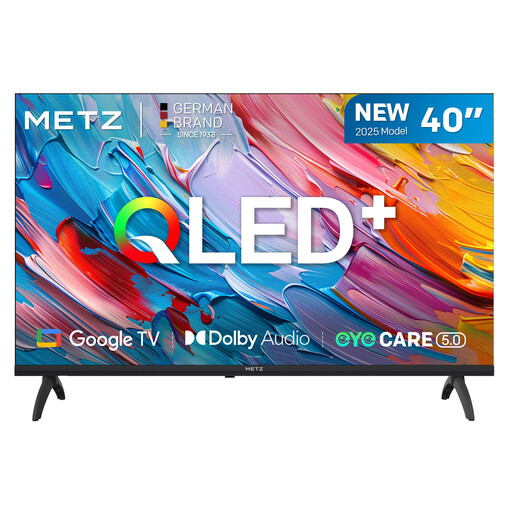
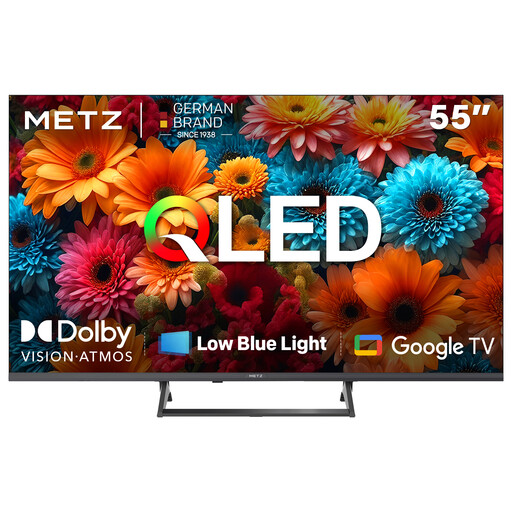
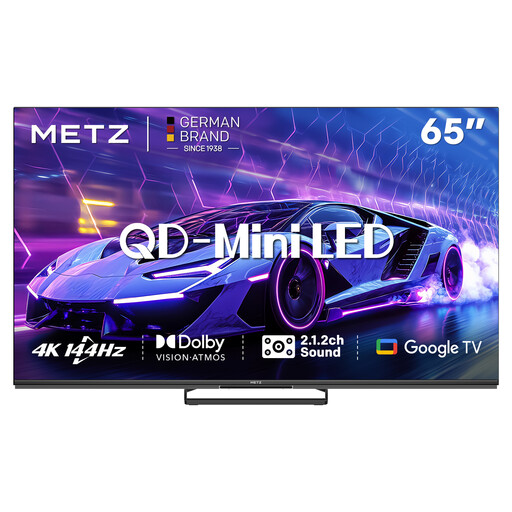
A great TV is the heart of your setup, but ambient lighting plays an equally crucial role in creating a truly immersive experience. To perfect your home cinema or gaming setup, ambient lighting can make all the difference.
Discover our selection of smart LED lights to sync colours with your screen and transform your living room into a true entertainment venue.
The main difference lies in the backlighting technology. A QLED TV uses a light source (LED or MiniLED) that passes through a quantum dot filter to generate colours. It offers very high brightness, ideal for well-lit rooms, and has no risk of screen burn-in. OLED, on the other hand, uses self-emissive pixels that turn on and off individually. This allows for absolute blacks and very wide viewing angles, but with a peak brightness that is generally more contained.
Absolutely. A QLED TV is an excellent choice for video gaming, especially models with dedicated features. For the best experience, look for a TV with an HDMI 2.1 port, a high refresh rate (120Hz or 144Hz), and support for VRR (Variable Refresh Rate). These features guarantee a smooth, responsive, and tear-free image.
Low blue light TV (or "Eye Care") technology aims to reduce the amount of high-energy blue light emitted by the screen, which is known to increase eye strain during long viewing sessions, especially at night. While not a magic bullet, it can provide noticeable viewing comfort for those who spend many hours in front of their television.