
Livraison le jour même ou le lendemain

Qualité garantie

Débloquez vos offres de bienvenue: Livraison GRATUITE | Jusqu'à -80 % | 30 jours d'essai gratuits à JoyPlus
Téléchargez l'application
A Qi2 magnetic wireless charger makes charging simpler at home, in the office or in the car. The magnet keeps your phone perfectly aligned with the charging area, while the Qi2 standard supports power of up to 15 W, depending on your smartphone, the mains adapter and the charger you use.
However, be aware: not all products labelled as “fast” or “magnetic” are created equal. Before buying a MagSafe charger, a wireless charging station or a magnetic power bank, it’s worth knowing the three most common pitfalls.
A charger rated at 15 W won’t necessarily deliver that power all the time. Your phone needs to support the stated charging level, and the mains adapter must be powerful enough. Some models require a 20 W or higher USB-C PD adapter, which is sometimes sold separately.
Temperature, case thickness and proper phone alignment can also affect performance. A non-magnetic or overly thick case may reduce stability and slow down charging.
“Magnetic” doesn’t automatically mean “Qi2 compatible” or “MagSafe compatible”. An iPhone with MagSafe is designed to work with a compatible magnetic mount. With an Android smartphone, check for Qi2 support and, if needed, use a compatible magnetic case or ring.
A simple magnetic mount may hold your phone in place without enabling wireless charging.
In the car, the quality of the vent clip, suction cup or adhesive base matters just as much as the charging power. Vibrations, rough roads and heat build-up behind the windscreen can quickly cause problems for a poorly secured model.
Also, choose a device with protection against overheating, overcharging, power surges and foreign object detection. Metal objects, bank cards and keys should never be placed between your phone and the charging surface.
The Qi2 standard uses a magnetic alignment system and can deliver up to 15 W to compatible devices. A MagSafe charger may also work with certain iPhones, but exact compatibility depends on your phone model and the manufacturer’s instructions.
To choose a wireless charger for iPhone, check in particular:
For a Qi2 charger compatible with Android, check both your smartphone’s specifications and the charger’s. A magnetic case may be needed for a secure hold.
A fixed station will naturally find its place on a bedside table or desk. A foldable model is easier to slip into a bag. A magnetic power bank is better for on-the-go use, while a car mount with wireless charging should prioritise stability and good screen orientation.
If you own several Apple devices, a 3-in-1 charger for iPhone, Apple Watch and AirPods helps reduce the number of cables and plugs. However, do check the power allocated to each slot.
A 15 W charger may need a suitable USB-C PD power supply. Some products come with the mains adapter, while others include only the cable. This difference can significantly affect the total cost of your setup.
In a warm environment, a thermal control system or foreign object detection contributes to safer use. Wireless charging can also generate more heat than wired charging: make sure not to block any ventilation areas.
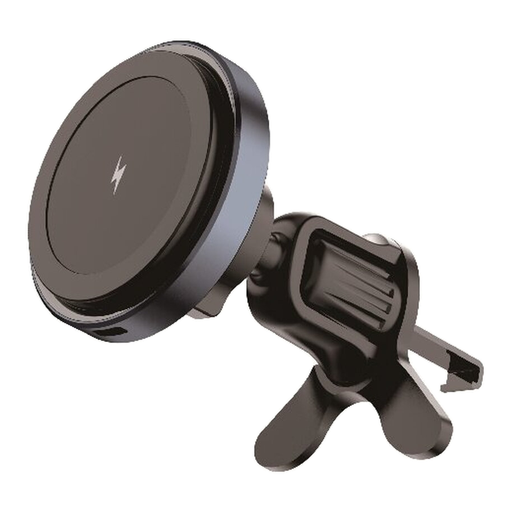
Why this choice suits this profile: This mount combines magnetic attachment, wireless charging rated up to 15 W and 360° rotation, without cluttering your car with extra accessories.
The listing mentions rotation and anti-slip grip. Still, check your phone or case’s magnetic compatibility before buying.
Aluminium alloy, wireless charging rated at 15 W and adjustable orientation.
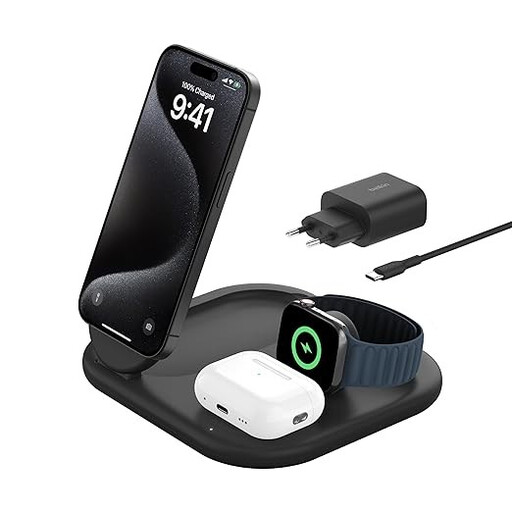
Why this choice suits this profile: This foldable station charges an iPhone, Apple Watch and AirPods simultaneously, at home or on the go.
The 36 W mains adapter and USB-C cable are included. That means fewer extra purchases and no nasty surprises with the power supply.
Qi2 up to 15 W for iPhone, Apple Watch module at 5 W, AirPods slot and tilt from 0° to 90°.
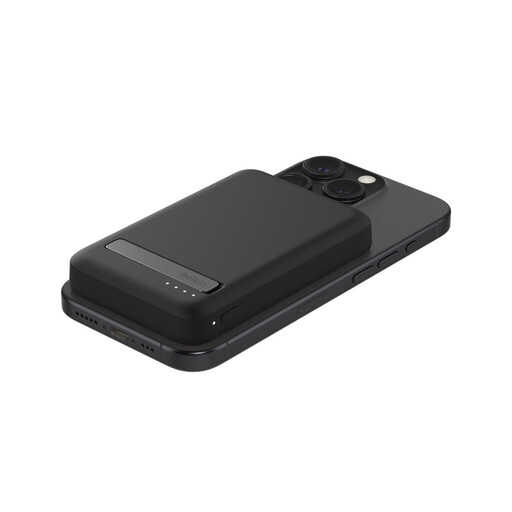
Why this choice suits this profile: This magnetic power bank is aimed at users who are often on the move and want the option to charge their phone via USB-C as well.
Its 8,000 mAh capacity and 20 W USB-C PD port take over when wireless charging isn’t enough.
Qi2 15 W, wired output 20 W, simultaneous charging of two devices and pass-through charging function.
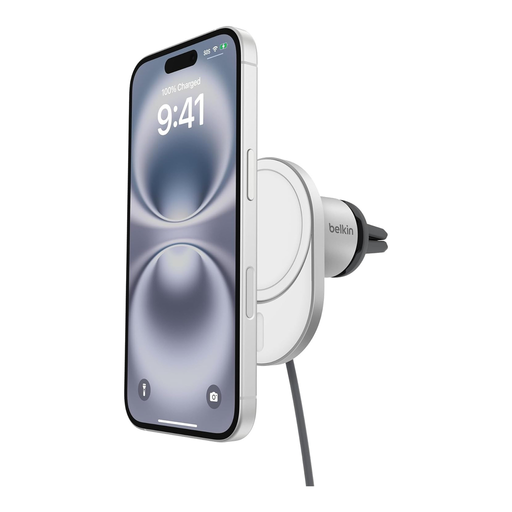
Why this choice suits this profile: This car mount with wireless charging attaches to your air vent and rotates 360° so you can use navigation in portrait or landscape mode.
The listing states compatibility with MagSafe cases up to 3 mm thick, and a 1.5 m USB-C cable is included. You’ll still need to supply a car charger adapter.
Qi2 up to 15 W, 360° rotation and integrated cable storage.
We’ve put together a comprehensive, real-time updated selection of products that meet these demanding criteria and European safety standards.
No. Your smartphone must support Qi2 wireless charging, or be used with a compatible magnetic case and accessory. Otherwise, charging may work without the magnetic hold, or may not work at all.
Generally, yes. Depending on the model, a 20 W or higher USB-C PD adapter may be required. Always check the manufacturer’s recommendations and see if the power supply is included in the box.
Power consumption depends on the wattage used, charging time and losses from wireless transmission. It’s usually modest in daily use, but poor alignment or a thick case can extend charging time. To minimise losses, position your phone correctly and unplug the charger if you’re not using it for a long period.