
Livraison le jour même ou le lendemain

Qualité garantie

Débloquez vos offres de bienvenue: Livraison GRATUITE | Jusqu'à -80 % | 30 jours d'essai gratuits à JoyPlus
Téléchargez l'application
The promise of wireless charging is alluring: just set down your smartphone, and it powers up. Goodbye, tangled mess of cables. In reality, however, the experience often turns into a headache. Between excruciatingly slow charging and a smartphone that turns into a hand warmer, it's hard to know what to choose. The new Qi2 standard is a game-changer, especially for owners of recent iPhones.
But how can you tell the difference between a high-performance, genuine Qi2 charger and a gadget full of marketing fluff? We'll explain the pitfalls to avoid and the key points to check to ensure you make the right choice.
The market is flooded with products that make tempting promises but unfortunately hide their true colors. Their flaws only become apparent once you get them home.
To avoid these traps, you just need to focus on a few non-negotiable technical points.
The Qi2 standard is much more than a simple update. It incorporates the Magnetic Power Profile (MPP), a technology developed by Apple and previously exclusive to its MagSafe ecosystem.
In practical terms, what does this mean for you?
A 15W Qi2 charger needs a power source that's up to the task. While most models come with a USB-C cable, they very often leave out the power adapter. To take full advantage of the 15W, you must pair it with a USB-C Power Delivery (PD) power adapter of at least 20W. Anything less, and your charger will simply be throttled.
The choice of form factor depends entirely on your daily routine.
Rather than an endless list, we've selected models that meet specific needs and, most importantly, avoid the pitfalls we've just described.
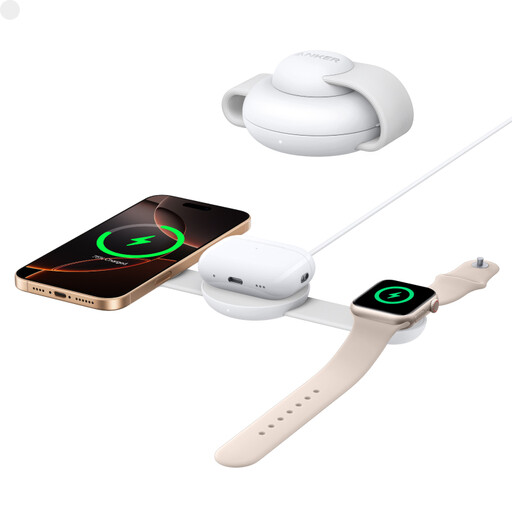
Why we love it: Its foldable, ultra-compact design fits in the palm of your hand. It simultaneously charges an iPhone, Apple Watch, and AirPods—the perfect travel companion for packing light. Bonus: the 40W power adapter is included.
The Qi2 certification ensures fast, safe 15W charging for the iPhone. Say goodbye to false speed claims and overheating risks.
It charges 3 Apple devices with a single foldable unit. Since the adapter and cable are included, it's ready to use right out of the box.
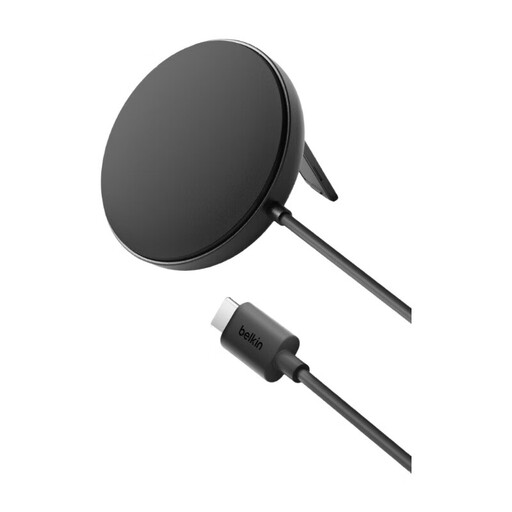
Why we love it: Simple, efficient, and minimalist. Its angled stand is perfect for keeping an eye on notifications, making video calls, or using iOS's StandBy mode, all while charging your iPhone at full speed.
Its Qi2 certification and strong magnet guarantee perfect alignment and a stable 15W charge, with no risk of falling or overheating.
Its long 2-meter (6.6 ft) USB-C cable offers excellent flexibility to place it wherever you want.
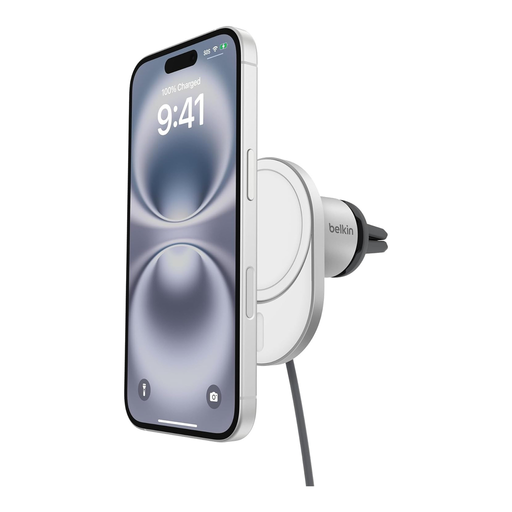
Why we love it: Built for the road, this mount clips onto your air vent and holds your iPhone securely, even on bumpy roads. It lets you follow your GPS in landscape mode while enjoying a fast 15W charge.
Its extra-strong magnet is designed to withstand vibrations, avoiding the pitfall of a falling phone. Qi2 certification ensures efficient charging, even when power-hungry apps like Waze or Google Maps are running in the background.
The 360° ball joint allows you to orient it in portrait or landscape mode. By attaching to the air vent, it leaves your windshield completely clear for perfect visibility.
Explore our full selection of products that meet our demanding selection criteria and European safety standards.
Yes, the Qi2 standard is backward compatible. A Qi2 charger can therefore charge any device compatible with standard Qi wireless charging (iPhone 8 to 12, Android smartphones, etc.). Charging will simply occur at a standard speed (usually 7.5W for iPhones) and without the magnetic alignment feature.
Not necessarily. Most Qi2 chargers work through thin cases (less than 3mm). However, for a perfect magnetic connection and optimal charging, a MagSafe or Qi2 compatible case is highly recommended. Be aware that metal cases or those with accessories on the back (rings, PopSockets, card holders) will always block charging.
No, as long as you use a certified charger. Qi2 chargers integrate advanced safety features, including precise temperature control that prevents overheating. This mechanism protects your battery's long-term health, making its wear and tear comparable to that of quality wired charging. The real danger comes from cheap, uncertified chargers that skip these vital protections.