
Livraison le jour même ou le lendemain

Qualité garantie

Débloquez vos offres de bienvenue: Livraison GRATUITE | Jusqu'à -80 % | 30 jours d'essai gratuits à JoyPlus
Téléchargez l'application
A baby's first steps are an unforgettable moment. To support them on this great adventure, choosing the right aid is crucial. Forget traditional sit-in walkers, which are frequently discouraged by experts. Today, the push walker is the top choice for specialists, as it promotes a natural posture and gives children the confidence they need.
This guide breaks down the essential criteria and presents our selection of the best models to help you find the perfect push toy for your child.
Before selecting a model, several key points should be checked to ensure your child's safety and the toy's developmental value.
The absolute priority for a walking aid is stability. This is a non-negotiable criterion. Here are the points to examine closely:
Much more than just a walking aid, the walker is often a complete mobile play station. A good activity walker is perfect for stimulating fine motor skills, hand-eye coordination, and curiosity. Look for models that include:
A removable activity panel is a very smart bonus: it allows the baby to play on the floor long before they can stand on their own.
The choice of material isn't just a matter of taste; it affects the walker's durability, weight, and overall appearance.
Ultimately, it's a trade-off between the authentic charm of wood and the high-tech convenience of plastic.
To guide you, our editorial team has reviewed several models. Here are the ones that caught our attention.
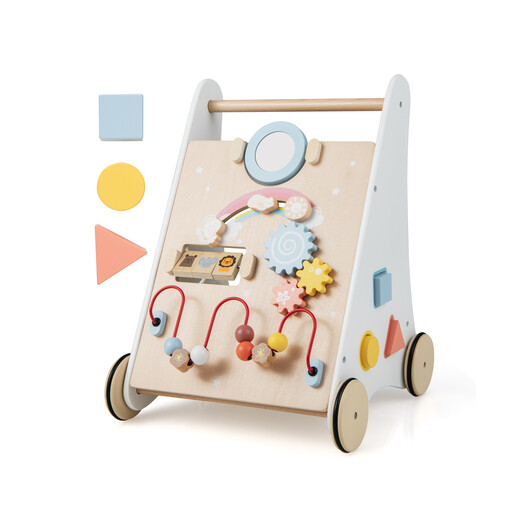
What sets it apart: This model perfectly combines the aesthetics of wood with a 7-in-1 concept. It's both a reliable walking aid and an ultra-comprehensive play centre to stimulate all of your baby's senses.
Key Features:
Who is it for? Parents looking for a gift for a 1-year-old that is beautiful, educational, and built to last. An excellent investment.
What sets it apart: More than a walker, this 4-wheel ride-on toy is the ideal transition for developing balance and coordination. It's designed for toddlers from 18 months who are already comfortable walkers and ready for new adventures.
Key Features:
Who is it for? Families looking for a developmental toy to follow the push walker stage. An excellent next step for confident little explorers.
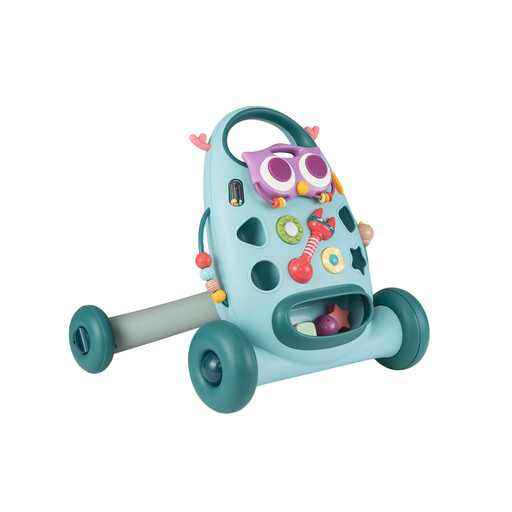
What sets it apart: The key strength of this 2-in-1 model is its removable electronic activity panel. This impressive versatility allows the child to play while sitting on the floor and later practise walking.
Key Features:
Who is it for? Parents who appreciate smart, versatile, and developmental toys. The combination of a secure walking aid and an electronic activity centre makes it a very comprehensive product.
Every child develops at their own pace, and the ideal toy for one might not be right for another. If our selection doesn't quite meet your needs, or if your baby isn't yet pulling up to stand, don't worry.
Explore our complete collection of motor skills development toys to find inspiration and options suited for every stage of their development.
Generally, a child is ready for a push walker as soon as they can pull themselves up to a standing position by holding onto furniture, often between 9 and 12 months. They should already have developed some leg strength. Of course, it must always be used under adult supervision.
The difference is crucial. With a sit-in walker, the baby is suspended in a seat and moves around on their tiptoes. This practice is widely discouraged by paediatricians because it can hinder the development of a natural walking gait. In contrast, a push walker is pushed from behind. The child stands upright, which promotes proper body alignment and much healthier motor development.
For risk-free use, the environment must be made safe. Clear the area of any obstacles and only use the walker on flat surfaces, far from stairs or any bodies of water. If the model offers it, adjust the wheel speed to match your child's confidence level. Finally, and this is the golden rule: never let your child use it without supervision.