
Livraison le jour même ou le lendemain

Qualité garantie

Débloquez vos offres de bienvenue: Livraison GRATUITE | Jusqu'à -80 % | 30 jours d'essai gratuits à JoyPlus
Téléchargez l'application
The moment has arrived: your child is pulling themselves up and getting ready to explore the world! To support them in this great adventure, a push walker (or walking cart) is a fantastic tool. But with the overwhelming number of models available, how can you find your way? Our editorial team cuts through the noise to help you make an informed choice, far from the marketing hype.
Before you dive in, let's review the two classic mistakes that can turn a good investment into a purchase you'll quickly regret.
To avoid falling into these traps, focus on concrete features that guarantee the toy's safety and educational value. Here are the two criteria you absolutely must check.
A good walking aid must be rock-solid. Your child's safety depends on it.
The value of a push toy doesn't end with the first steps. The smartest models are those that evolve to support your child's development.
Rather than an endless list, we've selected models that meet specific needs while respecting our essential criteria for safety and adaptability.
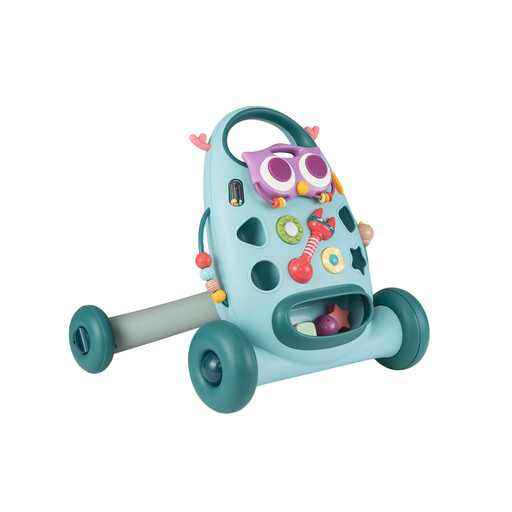
Why we love it: This 2-in-1 model checks all the boxes. It combines a stable walking aid with a removable, Montessori-inspired activity panel. It's the ultimate grow-with-me toy that will be useful long after the first steps are taken.
Its triangular structure and braked wheels guarantee rock-solid stability. The activity panel is engaging without being overstimulating, promoting concentration.
Removable play panel for floor-based play. Adjustable wheel speed to match the child's progress.
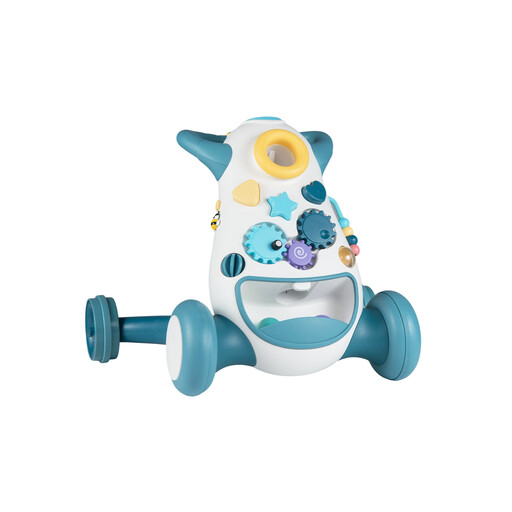
Why we love it: Ideal if you're looking for a walker that can capture your baby's attention with well-balanced interactions. The lights and music are there to stimulate, but never overwhelm, encouraging learning through play.
There's no incessant noise here. The sound and light features are activated by the child, which helps them understand cause and effect. The wide base ensures a safe walk.
Shape sorter and gears to develop fine motor skills. Musical and light-up functions for controlled sensory stimulation.
If these models aren't quite what you're looking for, or if you want to explore other types of developmental toys, check out our selection of products tested and approved by our editorial team.
There's no specific age, as it all depends on your child's development. The key signal is when they start pulling themselves up to a standing position by holding onto furniture, usually between 9 and 12 months. They must be able to support their own weight to start using a walking cart.
The only reliable solution is to choose a model with adjustable-speed wheels. This braking system, often a simple dial, allows you to slow down the cart to match your baby's hesitant first steps. It's an essential safety feature.
The difference is critical. The push walker (or walking cart) is placed in front of the child, who pushes it while walking. This position promotes a natural walking posture and proper body alignment. In contrast, a seated walker is a wheeled seat in which the child is suspended. This type of device is now unanimously discouraged by paediatricians and physical therapists because it hinders proper motor and postural development.