
Same-day & Next-day Delivery

Quality Guaranteed

Unlock Your Welcome Offers: FREE Delivery | Up to 80% OFF | Free 30-day JoyPlus trial
Download the APP
Purple sweet potato is just as appealing for its naturally intense colour as for its gently sweet flavour. But not every product sold under this name is the same. Some contain mostly grains, while others include only a small amount of purple sweet potato. Several desserts, meanwhile, are actually made with taro or purple yam.
Before filling your basket with Asian snacks, porridges or colourful desserts, it is worth carrying out a few checks to avoid disappointment.
Taro, purple yam and purple sweet potato are three distinct ingredients. A taro mochi or purple taro ice cream can have a very similar colour without containing any purple sweet potato at all. It is therefore better to read the ingredients list than to rely solely on the colour of the packaging.
In a purple rice porridge or breakfast porridge, the sweet potato may be present in limited quantities. The boxed Daliyuan porridge, for example, states 2% purple sweet potato and 4% black rice. The recipe therefore also relies on oats, buckwheat, beans and several other grains.
Other products contain more. Family Whole flakes, for example, contain 8% purple sweet potato, along with 25% oat flakes and 2% yam. This difference affects the flavour, texture and positioning of the product.
A product presented as a tuber-based snack may also contain sugar, glucose syrup, oil or various additives. Jiajianchengchu dried purple sweet potato contains sugar and maltose syrup, while some products may contain sulphites.
Remember to check the allergens too: gluten, peanuts, soya, sesame, milk or eggs may be present depending on the recipe. As for storage, purple sweet potato bread or frozen taro will generally need to be kept at –18°C, unlike canned products and dry snacks.
To compare purple sweet potato-based products, start with the ingredients list and the quantitative declaration. A statement such as ‘purple sweet potato 8%’ tells you much more than a simple purple illustration on the packet.
For porridge or purple sweet potato oat flakes, also check the proportion of cereals, sugar and fat. In ice cream or mochi, the texture often depends on a blend of sugar, starch, milk and other texturising agents.
The packaging should suit how you intend to use the product:
The preparation instructions also deserve a quick look. Family Whole flakes are prepared with approximately 175 ml of boiling water for one 35 g sachet. Daliyuan porridge must be shaken before consumption and should not be reheated directly in a saucepan or microwave.
In France, the label must state the ingredients, allergens, net quantity, best-before date or use-by date depending on the product, as well as the storage conditions. For imported products, also check that a responsible person established in the European Union is listed where required by the regulations.
A bulging tin, unusual smell or damaged packaging are all good reasons not to consume the product. Once opened, ready-to-eat foods should generally be consumed quickly. A defrosted product should not be refrozen if the label prohibits it.
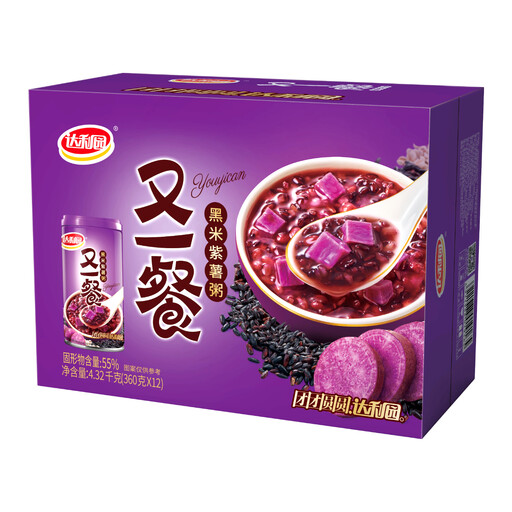
Why this choice suits this profile : A ready-to-eat box for discovering Asian porridge without buying a large multipack or getting out a saucepan.
The stated ingredients and percentages clearly show that this is a grain blend containing 2% purple sweet potato, rather than a product made mainly from the tuber.
360 g format, delicious hot or cold, with oats, buckwheat and beans. Allergens to watch out for: gluten, peanuts and sesame.
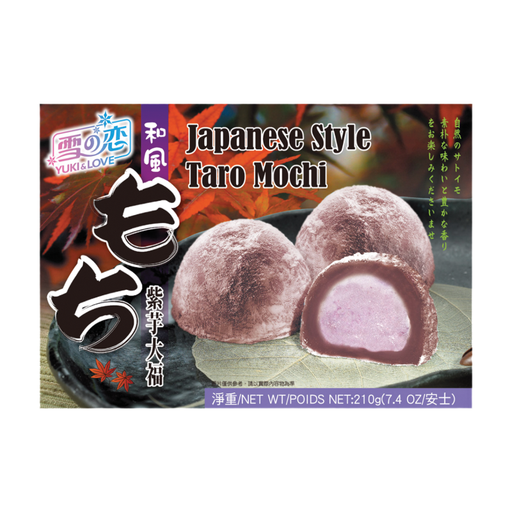
Why this choice suits this profile : This daifuku combines a soft, chewy dough with a taro filling for a more refined Asian dessert experience.
The product information specifies that this is taro, not purple sweet potato. This is a useful distinction that prevents the confusion often caused by the product’s colour.
210 g format, taro filling and ambient storage. Contains soya and may contain traces of gluten, peanuts, milk, nuts and sesame.
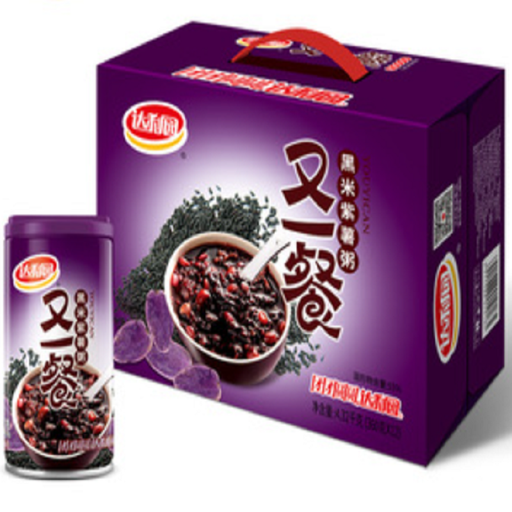
Why this choice suits this profile : With twelve boxes, this multipack is ideal for families and anyone who wants to keep a no-cook breakfast or snack close at hand.
The packaging, cereals and allergens are clearly stated. However, make sure you have a dry storage space and consume each box immediately after opening.
Twelve 360 g boxes, served hot or cold, with a recipe combining black rice, purple sweet potato and several cereals. Contains gluten, peanuts and sesame.
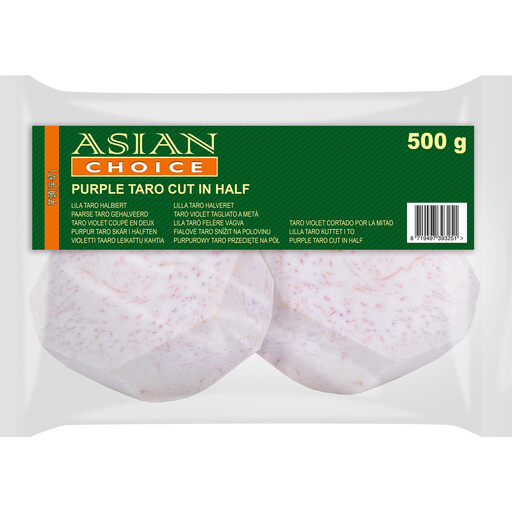
Why this choice suits this profile : This frozen taro is designed for those who prefer to prepare their own mash, soups, steamed dishes or desserts.
The ingredients state 100% taro, with no blend of purple sweet potato and no added flavouring. The product is also clearly presented as frozen.
500 g bag of pieces, with no declared allergens, suitable for several preparation methods. Keep at –18 °C and do not refreeze after defrosting.
For a quick breakfast, tinned porridge and instant flakes fit easily into your routine. For a snack to take with you, dried purple sweet potato, sachima-style bites or small sweet tubers are more convenient.
Those with a sweet tooth may prefer purple taro ice cream or taro mochi, while keeping an eye on the sugar content and allergens. For cooking, frozen taro or purple sweet potato bread require extra care when it comes to the cold chain and preparation method.
No. Purple sweet potato is a variety of sweet potato, whereas taro is a different tuber. Their colour and some uses in Asian baking may make them seem similar, but their composition and texture are not the same.
Before opening, keep it in a cool, dry place away from light, following the instructions on the packaging. Once opened, consume it immediately. A swollen tin or one showing visible damage should be thrown away.
No, it depends entirely on the recipe. Snacks and desserts often contain sugar, syrup or other sweetening ingredients, whereas a raw or frozen product may have a much shorter ingredients list. To compare products, checking the ingredients and nutrition table remains the most reliable method.